Blog
An Actionable Buyer’s Guide to Green Tea Chinese Tea: 7 Key Factors for Your First Purchase


Abstract
This exploration examines the multifaceted world of green tea from China, a beverage deeply embedded in cultural history and agricultural artistry. It posits that a genuine appreciation of this tea requires an understanding that transcends simple consumption. The analysis focuses on seven pivotal factors that collectively define the quality and character of any given Chinese green tea. These include the profound influence of terroir—the unique environmental conditions of a growing region—and the specific varietal of the Camellia sinensis plant. The document further investigates the critical role of processing techniques, particularly the “kill-green” step, which distinguishes green tea from other categories. It provides a framework for sensory assessment of both dry and brewed leaves, considers the significance of harvest timing, and outlines brewing methodologies for optimal flavor extraction. Finally, it addresses the complex interplay between historical health narratives and the modern challenge of ensuring authenticity in a global market, offering a comprehensive guide for both novice buyers and seasoned connoisseurs.
Key Takeaways
- Understand that terroir, the tea’s origin, fundamentally shapes its flavor profile and identity.
- Familiarize yourself with famous varieties like Longjing and Biluochun to guide your initial purchases.
- Assess leaf quality by observing its shape, color, uniformity, and aroma before brewing.
- Recognize that early spring harvests, like Pre-Qingming, yield the most delicate and prized teas.
- Use cooler water (around 80°C or 175°F) to brew green tea Chinese tea to avoid bitterness.
- Explore different brewing methods, from simple glass steeping to the ritual of Gongfu Cha.
- Purchase from reputable sources that provide transparent information about origin and harvest date.
Table of Contents
- An Introduction to the Living Art of Chinese Green Tea
- Factor 1: The Soul of the Soil: Understanding Terroir and Famous Origins
- Factor 2: A Tapestry of Leaves: Decoding the Varieties of Green Tea Chinese Tea
- Factor 3: The Artisan’s Touch: The Art and Science of Green Tea Processing
- Factor 4: Reading the Leaves: A Visual and Olfactory Guide to Assessing Quality
- Factor 5: The Rhythm of the Seasons: Why Harvest Timing is Paramount
- Factor 6: The Alchemy of Water and Leaf: The Ritual of Brewing
- Factor 7: Pursuing Purity: Navigating Health Narratives and Authenticity
- Frequently Asked Questions About Green Tea Chinese Tea
- A Parting Steep
- References
An Introduction to the Living Art of Chinese Green Tea
To approach the world of green tea from China is to enter a dialogue that has been unfolding for millennia. It is a conversation between the earth and the sky, between the patient hands of a farmer and the delicate leaf, between ancient tradition and modern appreciation. This is not merely a beverage one consumes; it is an experience one engages with, a sensory and intellectual pursuit that rewards curiosity with profound layers of flavor, aroma, and feeling. The journey of a single leaf from a mountainside in Zhejiang to your cup is a story of specificity. Unlike standardized commodity products, true artisanal tea speaks of its unique place, its specific moment of harvest, and the particular skill of its maker. To learn about green tea Chinese tea is to learn a new language—a language of subtle astringency, of lingering sweetness (huigan), of aromas that evoke everything from toasted chestnuts to spring orchids. This guide is structured as an intellectual and practical apprenticeship, designed to equip you with the foundational knowledge to navigate this beautiful and complex world. We will move through seven distinct but interconnected domains of understanding, building a holistic picture that empowers you to select, brew, and most importantly, appreciate the remarkable creation that is authentic Chinese green tea.
Factor 1: The Soul of the Soil: Understanding Terroir and Famous Origins
The concept of terroir, a term borrowed from the world of wine, is perhaps the most fundamental starting point in understanding the essence of any fine agricultural product. It refers to the complete natural environment in which a particular tea is produced, including factors such as the soil’s mineral composition, the topography of the land, the specific climate, and the amount of sunlight and rainfall. Terroir is the unique signature of a place, the irreducible identity that imparts a specific character to the leaves grown there. It is the reason why a Longjing tea grown in its historic home around Hangzhou’s West Lake possesses a character that cannot be replicated elsewhere, even if the same plant cultivar and processing methods are used.
Thinking about terroir invites us to consider the relationship between a product and its origin in a more profound, almost philosophical way. Does the tea simply come from a place, or is it an expression of that place? The traditions surrounding Chinese tea lean heavily toward the latter. The names of many famous teas are inextricably linked to their geographical homes: Huangshan Maofeng is “Yellow Mountain Fur Peak,” and Taiping Houkui is “Peaceful Monkey Leader,” named for a village in Anhui. This connection is not mere marketing; it reflects a deep-seated understanding that the spirit of the mountain, the quality of the mist, and the richness of the soil are present in the final cup.
The Pillars of Terroir: Soil, Climate, and Elevation
To break down this concept, we can examine its core components. The soil provides the foundational nutrients. The rocky, mineral-rich soils of the Wuyi Mountains, for instance, contribute to the characteristic “rock rhyme” (yan yun) of its famous oolongs, a principle that also affects the green teas from mineral-laden regions. Climate, encompassing temperature, humidity, and rainfall, dictates the growth cycle of the tea plant. Regions with significant temperature fluctuations between day and night and persistent cloud cover or mist are often ideal. This gentle stress encourages the plant to develop more complex aromatic compounds as a protective measure, resulting in a more flavorful tea. A classic example is the environment around West Lake, where the interplay of water and surrounding hills creates a uniquely humid microclimate perfect for Longjing.
Elevation is another critical element. High-altitude tea gardens, often between 800 and 1,500 meters, benefit from cooler temperatures, which slow the growth of the leaves. This slower maturation allows the leaves to accumulate a higher concentration of amino acids, particularly L-theanine, which is responsible for a smoother, sweeter taste and a sense of calm focus. The reduced oxygen at higher altitudes and increased exposure to ultraviolet light also contribute to the development of a richer profile of antioxidants like catechins.
A Tale of Two Terroirs: West Lake vs. Dongting
To make this tangible, let’s compare the terroirs of two of China’s most revered green teas: West Lake Longjing and Dongting Biluochun. Their distinct characteristics are born from their equally distinct homes.
| Feature | West Lake (for Longjing) | Dongting Mountains (for Biluochun) |
|---|---|---|
| Location | Hills surrounding West Lake, Hangzhou, Zhejiang Province | Dongting East & West Mountains, Lake Tai, Suzhou, Jiangsu Province |
| Topography | Rolling hills, gentle slopes | Peninsula and island mountains surrounded by a massive freshwater lake |
| Climate | Humid, subtropical monsoon climate with abundant cloud cover and mist from the lake | Temperate and humid, heavily influenced by the “lake effect” of Lake Tai, creating a misty, moderate environment |
| Soil | Slightly acidic, sandy loam known as “bai sha tu” (white sand soil) | Fertile, sandy soil enriched by lake sediments |
| Unique Factor | The constant interplay of water evaporation from the lake and the surrounding hills creates a protective, flavor-concentrating mist. | Tea bushes are traditionally intercropped with fruit trees (plum, peach, apricot), which are said to impart a natural fruity aroma to the tea. |
| Resulting Tea Profile | Toasty, chestnut-like aroma with a mellow, smooth, and sweet taste. | Delicate, intensely fruity and floral aroma with a brisk, refreshing, and complex flavor. |
This comparison illuminates how terroir is not an abstract concept but a direct cause of the sensory experience in your cup. The toasty quality of Longjing is a product of its soil and the specific pan-frying technique developed to suit the leaves from that environment. The legendary fruity notes of Biluochun are a direct consequence of its unique ecosystem, where it grows in the fragrant company of blossoming fruit trees. When you choose a tea based on its origin, you are choosing to taste a place.
Factor 2: A Tapestry of Leaves: Decoding the Varieties of Green Tea Chinese Tea
Once you have an appreciation for place, the next step is to become acquainted with the inhabitants—the teas themselves. China is the birthplace of tea, and its landscape is dotted with hundreds, if not thousands, of distinct varieties of green tea. However, a handful have achieved legendary status, often designated as “China’s Famous Teas.” Familiarizing yourself with these titans of the tea world provides an excellent map for your initial explorations. Each of these teas has a unique shape, a captivating legend, and a distinct flavor profile that serves as a benchmark for the category.
Xihu Longjing (West Lake Dragon Well)
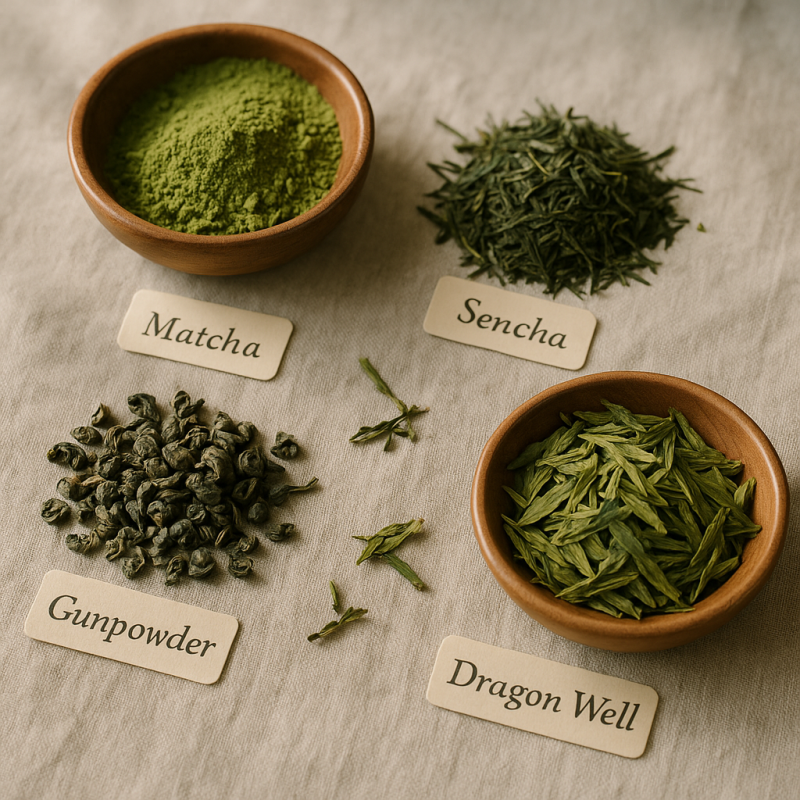
Arguably the most famous green tea Chinese tea, Longjing is as much a cultural icon as it is a beverage. Its name translates to “Dragon Well,” a reference to a well in Hangzhou said to be home to a dragon. The tea’s defining visual characteristic is its smooth, flattened shape, a result of the masterful pan-firing process where a tea master presses the leaves against the surface of a hot wok. This process not only creates the shape but also imparts the tea’s signature gentle, toasty aroma, often compared to roasted soybeans or chestnuts.
Authentic Xihu Longjing must come from the designated protected area around West Lake. The highest grades are harvested in early spring, before the Qingming festival on April 5th. This “Pre-Qingming” tea consists of the most tender buds and leaves, offering a sublime delicacy and a complex, lasting sweetness. When brewed, it produces a yellow-green liquor that is exceptionally smooth with no bitterness. For those seeking a truly representative experience of this historic tea, an exquisite Pre-Qingming Longjing offers an unparalleled glimpse into the pinnacle of the craft. Its flavor is a testament to the perfect harmony of terroir, cultivar, and human skill.
Dongting Biluochun (Green Snail Spring)
If Longjing is the stately emperor of green teas, Biluochun is the ethereal fairy. Hailing from the Dongting mountains around Lake Tai in Jiangsu, its name offers a perfect description. “Bi” refers to its jade-green color, “luo” to its tightly spiraled shape resembling a snail’s shell, and “chun” to its spring harvest. The leaves are incredibly tiny and covered in a fine, white down, a sign of a very early and tender pluck.
The legend of Biluochun tells of a tea picker who ran out of space in her basket and placed the fresh leaves in her blouse. The warmth of her body caused the leaves to release an astonishingly intense, fruity fragrance, revealing the tea’s hidden potential. This aromatic intensity is the hallmark of Biluochun. It is famously grown amongst fruit trees, and connoisseurs claim it absorbs the floral and fruity scents of the surrounding environment. When you smell the dry leaves, you are greeted with a powerful, sweet fragrance. The brewed tea is brisk, refreshing, and complex, with a lingering fruity sweetness that dances on the palate.
Huangshan Maofeng (Yellow Mountain Fur Peak)
From the majestic, mist-shrouded peaks of Huangshan (Yellow Mountain) in Anhui province comes this elegant and refined tea. Its name paints a picture of its appearance: “Mao” means fur or down, referring to the silvery hairs on the young buds, and “feng” means peak, alluding to both its origin and the sharp, pointed shape of the processed leaves. The typical leaf set for high-quality Maofeng is a bud and one or two adjacent young leaves, which resemble the tongue of a sparrow.
Unlike the toasty character of Longjing or the fruity profile of Biluochun, Huangshan Maofeng is celebrated for its fresh, floral aroma, often likened to magnolias or orchids. The tea is processed with a gentle baking technique that preserves this delicate fragrance. The resulting brew is a pale, clear liquor with a light, refreshing taste that is both sweet and slightly vegetal. It has a clean finish and a subtle floral aftertaste that lingers beautifully. Huangshan Maofeng is a wonderful example of a tea that captures the essence of its high-mountain environment—it tastes pure, clean, and invigorating, much like the air on Yellow Mountain itself.
Taiping Houkui (Peaceful Monkey Leader)
Taiping Houkui stands out as one of the most visually striking of all Chinese teas. Its leaves are extraordinarily long and flat, sometimes reaching up to 6-7 centimeters. Each leaf is meticulously hand-pressed against a cloth mesh, which imparts a subtle crisscross pattern on its surface. This tea comes from the Taiping Lake area in Anhui, and its name, “Monkey Leader,” is tied to a local legend about a monkey king whose death was mourned by his companions, who then transformed into tea trees.
Despite its large size, Taiping Houkui is a remarkably delicate and nuanced tea. The processing is designed to bring out its unique aroma, which is intensely floral and orchid-like but without any grassiness. It has a deep, underlying sweetness and a very smooth, thick mouthfeel. When brewed in a tall glass, the long leaves stand upright and sway gracefully in the water, a beautiful sight often called the “phoenix dance.” The flavor is refreshing, clean, and surprisingly complex for such a large leaf, with a long-lasting, cooling finish. It is a tea that engages all the senses.
Factor 3: The Artisan’s Touch: The Art and Science of Green Tea Processing
The transformation of a fresh, green leaf from the Camellia sinensis plant into the stable, aromatic product we call green tea is a process of immense skill and precision. What fundamentally defines all green tea is the prevention of oxidation. Oxidation is the same enzymatic browning process that occurs when you slice an apple and leave it exposed to the air. In tea, allowing oxidation to occur leads to the creation of oolong and black teas. To make green tea, this process must be halted swiftly after the leaves are harvested.
This crucial step is called “kill-green” or shāqīng (杀青). By applying heat, the enzymes responsible for oxidation are denatured, locking in the leaf’s green color and its fresh, vegetal characteristics. The method of applying this heat is a primary determinant of a green tea’s final flavor profile, and it represents a major dividing line in the world of green tea production.
The Heart of the Matter: Pan-Frying vs. Steaming
In China, the overwhelmingly dominant method for the kill-green step is pan-frying or pan-roasting. This involves tossing the leaves in a large, heated wok. The direct contact with the hot metal surface imparts a subtly toasted or nutty character to the tea. The skill of the tea master is paramount here; the temperature of the wok and the duration of the firing must be controlled with incredible precision to cook the leaves enough to stop oxidation without scorching them. This is the method used for famous teas like Longjing, where the master simultaneously presses the leaves to achieve their flat shape, and Biluochun.
In contrast, the traditional method in Japan involves steaming. The leaves are passed through hot steam for a very short period (typically 15-45 seconds). Steaming yields a very different result. It tends to produce a brighter, more vibrant green color in the finished leaves and a flavor profile that is more overtly vegetal, with notes often described as grassy, marine, or umami-rich (like seaweed).
| Processing Step | Pan-Frying (Chinese Method) | Steaming (Japanese Method) |
|---|---|---|
| Heat Application | Direct, conductive heat from a hot wok. | Indirect, convective heat from steam. |
| Effect on Enzymes | Enzymes are denatured by high, dry heat. | Enzymes are denatured by high, moist heat. |
| Typical Flavor Profile | Toasted, nutty, chestnut-like, sweet, floral. | Grassy, spinach-like, marine, umami, savory. |
| Aroma Profile | Warmer, roasted, and sometimes floral aromas. | Fresher, more intensely green and vegetal aromas. |
| Color of Liquor | Typically ranges from pale yellow to a soft yellow-green. | Typically a vibrant, cloudy green or emerald. |
| Famous Examples | Longjing, Biluochun, Huangshan Maofeng, Gunpowder. | Sencha, Gyokuro, Matcha. |
Understanding this distinction is key to managing your flavor expectations. If you are accustomed to the taste of Japanese Sencha, your first encounter with a pan-fired green tea Chinese tea like Longjing might be surprising. Neither method is inherently “better”; they are simply different artistic paths that lead to vastly different, yet equally valid, expressions of the tea leaf.
Beyond Kill-Green: Rolling and Drying
After the kill-green step, the leaves, now soft and pliable, are rolled or shaped. This step serves two purposes: it breaks down the cell walls of the leaf, which allows the aromatic oils to be more easily released during brewing, and it gives the tea its distinctive final shape. This can be the tight spiral of Biluochun, the flat spear of Longjing, the rolled pellet of Gunpowder tea, or the simple, twisted style of many other varieties.
Finally, the leaves must be thoroughly dried to reduce their moisture content to around 3-5%. This makes them shelf-stable and prevents the growth of mold. Drying must be done carefully to avoid over-cooking the tea, which would destroy its delicate flavors. This can be done in the wok, in specialized ovens, or sometimes, in the case of certain high-end teas, over charcoal fires, which can add another layer of subtle complexity to the final aroma. Each step in this sequence is a decision point for the artisan, and the sum of these decisions is what creates the unique character of the tea in your cup.
Factor 4: Reading the Leaves: A Visual and Olfactory Guide to Assessing Quality
Before a single drop of water touches the tea, the dry leaves themselves have a story to tell. Learning to read this story is a vital skill for any tea enthusiast. It allows you to make more informed purchasing decisions and to develop a deeper appreciation for the craftsmanship involved. This sensory assessment is a practice in mindful observation, engaging your eyes, your nose, and your sense of touch.
The Visual Examination: Shape, Color, and Uniformity
First, place a small amount of the tea leaves on a white plate or in the palm of your hand. Look closely.
Shape and Integrity: What is the shape of the leaves? Are they flat spears, tightly rolled pearls, or delicate twists? Whatever the intended shape for that specific type of tea, high-quality examples will display it clearly and consistently. More importantly, observe the integrity of the leaves. Are they mostly whole and unbroken? The presence of a large amount of “fannings” or “dust”—small, broken particles—is a sign of rough handling or lower-quality machine processing. Whole leaves are a hallmark of careful, artisanal production and will yield a more complex and less bitter brew, as they release their compounds more slowly and evenly.
Color and Luster: The color should be vibrant and have a certain luster or freshness to it. For green tea Chinese tea, this doesn’t always mean a bright, electric green. The color can range from a deep forest green to a yellowish-green or even a silvery-green, depending on the variety and processing. What you want to avoid is a dull, lifeless, or brownish color, which can indicate that the tea is old, was improperly stored, or was poorly processed. For teas known for their downy buds, like Biluochun or Huangshan Maofeng, look for the presence of these fine, silvery-white hairs, as they are a sign of a tender spring pluck.
Uniformity: Look at the consistency of the leaves in the batch. Are they all roughly the same size, shape, and color? A high degree of uniformity suggests that the leaves were harvested from the same cultivar at the same time and were processed with skill and care. A batch with a wide variety of leaf sizes and colors may indicate a blend of different grades or harvests, which will result in a less focused and harmonious flavor profile.
The Olfactory Assessment: The Aroma of the Dry Leaf
After you have looked at the leaves, bring them close to your nose and inhale deeply. The aroma of the dry leaf is your first true introduction to the tea’s character. A high-quality green tea should have a distinct and pleasant fragrance. The scent should be fresh and clean. What specific notes can you detect? Is it toasty and nutty like Longjing? Fruity and sweet like Biluochun? Floral and ethereal like Taiping Houkui? Or fresh and vegetal like many other varieties?
The intensity of the aroma is also an indicator of freshness. A tea that has a strong, vibrant scent is likely to be from a recent harvest. If the tea smells faint, dusty, or has no discernible aroma at all, it is likely old and will produce a flat, uninteresting brew. Trust your nose; it is one of your most powerful tools in assessing tea quality. This pre-brewing ritual is not just a technical step; it is part of the pleasure of the experience, a moment of anticipation that connects you more deeply to the tea.
Factor 5: The Rhythm of the Seasons: Why Harvest Timing is Paramount
In the world of artisanal tea, not all harvests are created equal. The specific time of year when the tea leaves are plucked has a profound impact on their chemical composition, their flavor, and ultimately, their market value. For green tea Chinese tea, the most prized and celebrated harvests occur in the very early spring. This is when the tea plant, after a winter of dormancy, channels all its stored energy and nutrients into producing the first tender new shoots.
Mingqian Cha: The Prized “Pre-Qingming” Tea
The most revered of all spring teas is known as Mingqian (明前), which translates to “before Qingming.” The Qingming festival, or Tomb-Sweeping Day, is a traditional Chinese holiday that falls on the 15th day after the Spring Equinox, usually around April 4th or 5th. Teas harvested before this date are considered the absolute pinnacle of quality for several reasons.
During the cold early spring, the tea leaves grow very slowly. This slow growth results in a higher concentration of amino acids, especially L-theanine, which contributes a desirable sweetness and a savory umami character to the tea. At the same time, the leaves have a lower concentration of catechins (a type of polyphenol), which are responsible for bitterness and astringency. This combination creates a tea that is exceptionally smooth, sweet, and complex, with virtually no bitterness.
These early buds are also incredibly tender and small, meaning it takes a vast number of them to produce a small amount of finished tea. The plucking requires immense skill and patience, and the window for harvesting is very short. A sudden change in weather can ruin the entire Mingqian crop. This combination of superior flavor, limited supply, and high labor cost makes Mingqian tea the most expensive and sought-after green tea of the year. When you see a tea advertised as “Pre-Qingming,” you know you are looking at a product that is valued for its supreme delicacy and refined character.
Guyu Cha and the Later Harvests
The period immediately following Qingming, up until the “Guyu” (谷雨, “Grain Rain”) festival around April 20th, also produces excellent tea, known as Guyu tea. These leaves are slightly more mature than their Mingqian counterparts. They have a bit less of the delicate sweetness but often possess a more robust and pronounced aroma. They represent a fantastic balance of quality and value, offering a rich and satisfying flavor profile at a more accessible price point.
As the weather gets warmer and the days get longer, the tea plant begins to grow much more rapidly. Summer harvests tend to be much higher in catechins and lower in amino acids, resulting in teas that are more bitter and astringent. While these teas are perfectly suitable for iced tea or for use in tea bags, they lack the nuance and complexity of the spring harvests. Autumn harvests can sometimes produce a “second spring,” with cooler weather yielding a final flush of decent quality leaves, but they rarely match the excellence of the true spring pluck.
Understanding the harvest calendar is crucial for a buyer. It explains the vast price differences you will see for the same type of tea. It also allows you to align your purchase with your intention. If you are seeking the most sublime, delicate, and complex experience, investing in a Mingqian tea is worthwhile. If you desire a robust, flavorful daily drinker, a later spring or even an autumn harvest might be more appropriate. Always look for the harvest year and, if possible, the specific season on the packaging. A reputable vendor will always provide this information.
Factor 6: The Alchemy of Water and Leaf: The Ritual of Brewing
You have selected a beautiful tea, appreciating its origin, variety, and the quality of its leaves. Now comes the final, transformative act: brewing. The way you apply water to the leaf is not a mere technicality; it is the moment you unlock all the potential that the farmer and artisan have so carefully cultivated. Brewing green tea, in particular, is an act of gentle persuasion rather than forceful extraction. The key is to coax out the sweet, aromatic compounds while leaving the more bitter ones behind.
The Golden Rule: Control Your Temperature
If there is one single piece of advice to take away about brewing green tea Chinese tea, it is this: do not use boiling water. Boiling water (100°C or 212°F) is far too hot for delicate green tea leaves. It will scorch them, destroying their subtle aromas and extracting an excessive amount of catechins and other polyphenols, resulting in a brew that is harsh, bitter, and astringent.
The ideal water temperature for most Chinese green teas is around 80°C (175°F). For the most delicate, early-spring teas like a Mingqian Longjing or Biluochun, you might even go slightly lower, to 75°C (167°F). How can you achieve this without a special temperature-controlled kettle? The simplest method is to boil the water and then let it cool. As a general rule, letting it sit for about two to three minutes in the kettle, or one minute after pouring it into your brewing vessel, will bring it down to a suitable temperature. You can also “listen” to the water; the roaring boil will subside into a gentler simmering sound, which is a good indicator.
Gongfu Cha: The Art of Concentrated Infusions
For those who wish to delve deeper into the tea experience, the Gongfu Cha (工夫茶) method offers a way to explore the full spectrum of a tea’s flavor over multiple short infusions. This method uses a high leaf-to-water ratio, typically in a small teapot or a lidded bowl called a gaiwan.
A typical Gongfu session might look like this:
- Warm the Vessels: First, rinse the small teapot/gaiwan and cups with hot water to warm them.
- Add Leaf: Place a generous amount of tea leaves into the warmed pot—enough to cover about one-fifth to one-quarter of its volume.
- The Rinse: Pour in your 80°C water, filling the pot. Immediately pour this first infusion out. This is not for drinking. This “rinse” or “awakening of the leaves” serves to wash away any dust and gently open up the compressed leaves, preparing them for the first proper infusion.
- First Infusion: Refill the pot with water. Let it steep for a very short time, perhaps only 15-20 seconds. Pour the tea liquor completely into a small serving pitcher (gong dao bei, or “fairness cup”) to ensure the strength is consistent, and then serve in tiny tasting cups.
- Subsequent Infusions: For the second infusion, you might steep for 20-25 seconds. For the third, 30-35 seconds, and so on, gradually increasing the steeping time for each round.
A high-quality green tea can yield anywhere from 4 to 8 or more infusions using this method. What is fascinating is how the flavor profile evolves with each steeping. The first infusion might be intensely aromatic and light, the middle infusions will reveal the core body and sweetness of the tea, and the later infusions may become softer and more subtle. Gongfu Cha transforms tea drinking from a single event into a dynamic, unfolding process.
Western Style and “Grandpa Style”: Simplicity and Ease
Of course, you do not need special equipment to enjoy a wonderful cup of tea. For a simpler “Western style” approach, use about 2-3 grams of tea leaf (roughly one teaspoon) for every 6-8 ounces (180-240ml) of water. Using your 80°C water, steep for about 1.5 to 3 minutes, depending on your taste. You can often get a second, slightly longer infusion from the same leaves.
There is also the wonderfully pragmatic “Grandpa Style” (lǎoyé chā), common throughout China. Simply place a pinch of leaves in a tall, heatproof glass, add hot water, and drink directly from the glass, using your lips to filter the leaves. As the water level goes down, you just top it up with more hot water throughout the day. This method offers a constantly evolving brew and a rustic, honest connection to the tea. It is a testament to the fact that enjoying great tea does not have to be complicated.
Factor 7: Pursuing Purity: Navigating Health Narratives and Authenticity
The dialogue surrounding green tea is often intertwined with discussions of its health benefits. For centuries, Traditional Chinese Medicine has regarded green tea as a substance that can clear heat, sharpen the mind, and promote well-being. Modern science has sought to understand these traditional observations by identifying specific compounds within the tea leaf. The most notable of these are antioxidants, particularly a class of polyphenols called catechins. The most abundant and studied of these is epigallocatechin gallate (EGCG), which has been the subject of research for its potential role in cellular health (Khan & Mukhtar, 2018).
Another key compound is the amino acid L-theanine. This remarkable substance is known to promote the generation of alpha brain waves, which are associated with a state of “alert relaxation.” This is why many people find that tea provides a calm, focused energy, distinct from the jittery buzz that can be associated with coffee. L-theanine works synergistically with caffeine, smoothing out its stimulating effects.
While these components are fascinating, it is wise to approach health claims with a critical and balanced perspective. Consuming green tea can be a wonderful part of a healthy lifestyle, but it is not a panacea. The most profound benefit may be the ritual itself—the simple act of slowing down, preparing a cup with intention, and savoring the moment.
The Challenge of Authenticity
In a globalized market, the very fame of teas like Longjing creates a challenge: counterfeits and misrepresentations abound. A tea might be labeled “Longjing” but be grown far from West Lake, or it might be a late-season harvest sold at a premium price. How can a buyer protect themselves and ensure they are getting the real article?
- Source Matters: Your most powerful tool is choosing a reputable vendor. A trustworthy tea merchant will provide transparent and detailed information about their products. Look for specifics: the exact origin (e.g., Shi Feng village for Longjing), the harvest date (e.g., Spring 2025, Pre-Qingming), the cultivar, and the name of the farmer or producer if possible. Companies that build direct relationships with farmers are often the most reliable sources ().
- Price as an Indicator: While a high price doesn’t guarantee quality, an unusually low price for a famous tea is a major red flag. The labor and rarity of a genuine Mingqian Longjing mean it will never be cheap. If a deal seems too good to be true, it almost certainly is.
- Use Your Senses: Apply the assessment skills we discussed earlier. Look at the leaves. Do they match the description of the tea you are buying? Is a tea sold as authentic West Lake dragon well tea composed of flat, uniform, yellowish-green leaves, or is it a jumble of broken, dark green fragments? Smell the aroma. Does it align with expectations?
- Ask Questions: Do not be afraid to contact the seller and ask for more information. A passionate and knowledgeable vendor will be happy to share the story of their tea. Their willingness to engage is often a good sign of their integrity.
Navigating the world of tea is a journey of developing your own palate and knowledge. Every cup is a learning experience. By starting with authentic, high-quality leaves, you give yourself the best possible foundation for this delightful and rewarding exploration.
Frequently Asked Questions About Green Tea Chinese Tea
1. What is the main difference between Chinese and Japanese green tea? The primary difference lies in the “kill-green” processing step. Chinese green teas are typically pan-fired, which gives them a toastier, nuttier, or more floral flavor profile. Japanese green teas are typically steamed, resulting in a more vegetal, grassy, or marine (umami) flavor profile.
2. How much caffeine is in green tea? Green tea contains caffeine, but typically less than black tea and significantly less than coffee. A standard cup might have 25-50mg of caffeine, compared to 95mg or more in a cup of coffee. However, the amount can vary widely based on the tea variety, harvest time (early spring buds are often higher in caffeine), and brewing method (hotter water and longer steeping extract more caffeine).
3. Is it true that green tea is healthier than black tea? Both green and black tea come from the same plant and contain beneficial compounds like polyphenols and L-theanine. The processing of green tea preserves a higher level of certain catechins like EGCG, while the oxidation process that creates black tea forms different compounds, such as theaflavins and thearubigins. Both have been studied for their health benefits, and one is not definitively “healthier” than the other. The best choice is the one you enjoy and will drink regularly.
4. How should I store my green tea to keep it fresh? Green tea is sensitive to its environment. To maintain its freshness, you must protect it from air, light, heat, moisture, and strong odors. The best way is to store it in an opaque, airtight container in a cool, dark, and dry place. A kitchen cabinet away from the stove or sink is ideal. For long-term storage of larger quantities, you can vacuum-seal the tea and keep it in the refrigerator, but be sure to let it come to room temperature before opening to avoid condensation.
5. Why is some green tea so expensive? The price of high-end green tea is determined by several factors, primarily labor, rarity, and terroir. The most expensive teas are hand-plucked in the very early spring (like Mingqian teas), when buds are tiny and the harvest window is short. It takes an enormous amount of skilled labor to pick and process a small amount of this tea. Furthermore, teas from famous, historically significant locations (protected terroirs) command a premium due to their unique flavor and limited supply.
6. Can I re-steep the leaves? Absolutely. High-quality loose-leaf green tea is designed to be steeped multiple times. Each infusion will reveal a slightly different facet of the tea’s character. Using the Gongfu method, you can get many short infusions. Even with Western-style brewing, you can typically get at least one or two additional steepings from a good set of leaves. Just increase the steeping time for each subsequent infusion.
7. What does “umami” taste like in tea? Umami is often described as a savory, brothy, or mouth-filling taste. It’s one of the five basic tastes, alongside sweet, sour, salty, and bitter. In tea, it is primarily attributed to the presence of the amino acid L-theanine. While more commonly associated with Japanese green teas, a subtle and pleasant umami character can also be found in high-quality, early-spring Chinese green teas.
A Parting Steep
To embark on the path of appreciating green tea Chinese tea is to cultivate a relationship with nature, with culture, and with your own senses. It is a practice that invites slowness and rewards attention. The seven factors explored here—terroir, variety, processing, leaf assessment, harvest time, brewing, and authenticity—are not rules to be rigidly memorized but rather lenses through which to view and understand this remarkable world. They form a vocabulary that allows you to articulate your own experiences and to navigate the vast landscape of choices with confidence.
The journey does not end with reading this guide. In fact, it has only just begun. The true learning happens in the act of tasting, of comparing a Longjing from one village to another, of noticing the difference a few degrees in water temperature can make, of sharing a pot of tea with a friend. May your cup be ever full, your palate ever curious, and your journey into the world of tea be a source of constant discovery and delight.
References
Duckler, D. (2022, March 1). Different types of tea: Your guide to the perfect cup. Verdant Tea.
Khan, N., & Mukhtar, H. (2018). Tea polyphenols in promotion of human health. Nutrients, 11(1), 39. https://doi.org/10.3390/nu11010039
Mei Leaf. (n.d.). True tea with Mei Leaf. Retrieved January 1, 2025, from
Purdue University Center for New Crops & Plant Products. (n.d.). Camellia sinensis. In J. A. Duke, Handbook of Energy Crops.
Rare Tea Company. (n.d.). The world’s best loose leaf tea. Retrieved January 1, 2025, from
Rishi Tea & Botanicals. (n.d.). Tea education. Retrieved January 1, 2025, from
Teapigs. (n.d.). Green tea. Retrieved January 1, 2025, from
Zhi Tea. (n.d.). Our tea collection. Retrieved January 1, 2025, from