Blog
7 Practical Flower Tea Recipes: Your Expert Guide to Better Sleep, Skin & Calm in 2026


Abstract
This article serves as a comprehensive guide to the practice of preparing and consuming flower tea for modern wellness, framed within the context of 2026. It examines the therapeutic and sensory dimensions of seven distinct floral recipes, each formulated to address specific contemporary ailments such as sleep disruption, skin health degradation, and pervasive anxiety. The discourse moves beyond mere instruction, delving into the historical, botanical, and scientific rationales behind the pairings of key botanicals like rose, blue lotus, and chrysanthemum. It distinguishes between various forms of floral beverages, including herbal infusions (tisanes), scented teas, and blooming teas, clarifying common terminological ambiguities. By presenting a structured methodology for preparation and an empathetic exploration of the sensory experience, the guide posits the act of drinking flower tea as a deliberate ritual of self-care. It aims to equip the reader with the practical knowledge and philosophical context necessary to integrate these botanical preparations into a daily routine, thereby fostering a greater sense of calm, physical radiance, and overall well-being.
Key Takeaways
- Master seven practical recipes for better sleep, skin, and calm.
- Understand the science and history behind rose, blue lotus, and chamomile.
- Learn to distinguish between tisanes, scented teas, and blooming teas.
- Adopt simple brewing techniques to create potent floral infusions at home.
- Source high-quality, organic flower tea for maximum therapeutic benefit.
- Establish a daily tea ritual to reduce stress and enhance well-being.
- Recognize how internal nourishment from botanicals supports external radiance.
Table of Contents
- The Enduring Allure of Floral Infusions
- Recipe 1: The Serene Sleep Elixir with Blue Lotus & Chamomile
- Recipe 2: The Radiant Skin Infusion with Rose & Hibiscus
- Recipe 3: The Quiet Mind Brew with Lavender & Lemon Balm
- Recipe 4: The Digestive Calm Tonic with Chrysanthemum & Mint
- Recipe 5: The Morning Glow Ritual with Calendula & Osmanthus
- Recipe 6: The Focused Afternoon Reset with Jasmine & White Tea
- Recipe 7: The Moon Cycle Soother with Rose & Raspberry Leaf
- A Deeper Understanding of Floral Beverages
- A Note on Sourcing, Quality, and Safety
- Frequently Asked Questions
- A Ritual of Return
- References
The Enduring Allure of Floral Infusions
The human relationship with flowers is one of profound and ancient significance. Long before they were cultivated solely for their ornamental beauty, their petals, leaves, and roots were integral to our pharmacopeia, our spiritual practices, and our culinary traditions. The act of steeping these botanicals in hot water to create a fragrant, therapeutic beverage is a practice that stretches across nearly every culture and continent. What we broadly call flower tea is not a monolithic category but a rich and varied world of sensory experience and gentle healing. It is a quiet rebellion against the frantic pace of modern life, an invitation to pause and partake in a ritual that nourishes from the inside out.
Before we explore the practical recipes that can transform your daily well-being, it is necessary to establish a clear understanding of what we mean by flower tea. The term is often used as a catch-all, but a discerning appreciation requires a finer distinction. At its core, what most people refer to as flower tea is more accurately termed a tisane or herbal infusion. This is a beverage made by steeping parts of a plant—be it flowers, leaves, bark, roots, or seeds—other than the Camellia sinensis plant, from which true teas (green, black, oolong, white) are derived. A cup of pure chamomile or rosehip tea is a tisane. These infusions are almost always naturally caffeine-free and are consumed for their specific flavors and therapeutic properties.
Then we have scented teas. These are true teas, typically green or white tea, that have been infused with the aroma of fresh flowers. The classic example is Jasmine Green Tea. During processing, layers of tea leaves are alternated with layers of fresh jasmine blossoms. The tea leaves, being naturally hygroscopic, absorb the fragrant oils from the flowers. The blossoms are then often removed, leaving behind tea leaves that carry the ghost of their floral companions. Here, the flower is not the primary ingredient but a source of aroma, lending its perfume to the tea leaf.
Finally, there is the category of blooming teas, also known as flowering teas. These are marvels of artistry, where a bundle of dried tea leaves, usually white or green, are skillfully hand-tied around one or more dried flowers . When steeped in hot water, this bundle unfurls—or “blooms”—into a beautiful, submerged bouquet. The experience is as much visual as it is gustatory. While these often use flowers like jasmine, lily, or osmanthus, the base of the beverage is still true tea. You can explore a curated selection of these beautiful blooming flower teas to experience this art form firsthand.
For the purpose of our exploration into recipes for wellness, we will primarily focus on tisanes—pure floral infusions—as their properties are direct and unadulterated. We will also touch upon a scented tea to illustrate the beautiful synergy that can exist between flower and tea leaf. Understanding these distinctions allows us to approach the world of flower tea not as a passive consumer, but as an informed participant, capable of choosing and crafting the perfect brew for our specific needs and desires. It is a journey that begins with a single petal and unfolds into a lifetime of discovery.
| Botanical | Primary Energetic Property (TCM/Herbalism) | Key Bioactive Compounds | Modern Wellness Application |
|---|---|---|---|
| Blue Lotus | Psychoactive, Nervine, Relaxant | Aporphine, Nuciferine | Promoting restful sleep, reducing anxiety |
| Rose | Cooling, Qi & Blood Mover | Flavonoids, Vitamin C, Geraniol | Soothing skin inflammation, balancing mood |
| Chamomile | Warming, Relaxant, Anti-inflammatory | Apigenin, Chamazulene | Calming the nervous system, aiding sleep |
| Lavender | Cooling, Nervine, Anxiolytic | Linalool, Linalyl Acetate | Easing anxiety and tension, sleep aid |
| Hibiscus | Cooling, Diuretic | Vitamin C, Anthocyanins, Organic Acids | Supporting skin health, cardiovascular support |
| Chrysanthemum | Cooling, Heat-Clearing | Flavonoids, Sesquiterpenes | Reducing inflammation, soothing eye strain |
| Calendula | Warming, Lymphatic, Vulnerary | Triterpenoids, Carotenoids | Supporting lymphatic drainage, skin healing |
Recipe 1: The Serene Sleep Elixir with Blue Lotus & Chamomile
In our hyper-connected, perpetually illuminated world, the simple act of falling into a deep and restorative sleep has become an elusive luxury for many. We seek solutions in pharmaceuticals, in elaborate sleep-tracking technology, and in rigid bedtime protocols, often overlooking the gentle yet profound assistance offered by the botanical world. This first recipe is a nocturnal potion, a fragrant lullaby designed to quiet the chattering mind and prepare the body for the profound journey of sleep. It pairs the ancient, dream-like qualities of Blue Lotus with the familiar, comforting embrace of Chamomile.
The Philosophy Behind the Blend
The pursuit of sleep is not a battle to be won but a surrender to be embraced. This blend is formulated to facilitate that surrender. Its philosophy is one of gentle persuasion rather than forceful sedation. From a traditional herbalist perspective, sleep disturbances often arise from an overactive mind or “spirit,” what Traditional Chinese Medicine might call a disturbed Shen. The herbs in this blend work to calm this internal restlessness. Blue Lotus, with its history steeped in the ceremonial and spiritual practices of ancient Egypt, was revered for its ability to induce a state of tranquil euphoria and heightened awareness, bridging the gap between the conscious and subconscious realms. It doesn’t simply switch off the mind; it coaxes it into a more poetic, less anxious state. Chamomile, a staple of Western herbalism, acts as the grounding force in this pairing. It is the warm, maternal hug in a cup, working on the physical body to release tension, soothe the digestive system, and calm the nerves, creating a safe and comfortable vessel for the mind to rest within. The combination is a holistic approach to sleep, addressing both the ethereal and the earth-bound aspects of our being.
Profile of the Botanicals
Blue Lotus (Nymphaea caerulea): This is not a true lotus but a water lily, famously depicted in ancient Egyptian art. Its mystique comes from two primary alkaloids, aporphine and nuciferine, which have mild psychoactive properties. They are not hallucinogenic but are known to be calming and anxiety-reducing, promoting a state of peaceful relaxation that can be conducive to both meditation and sleep (Farag et al., 2021). The experience is often described as a gentle lifting of mental burdens, making it easier to drift off without being ensnared by the day’s worries. Its aroma is deeply floral and slightly ethereal, a scent that feels both ancient and otherworldly.
Chamomile (Matricaria recutita): The humble chamomile flower is one of the most well-known and well-researched calming herbs. Its power lies in a flavonoid called apigenin, which binds to specific receptors in the brain (the benzodiazepine receptors) to decrease anxiety and initiate sleep (Srivastava et al., 2010). Unlike pharmaceutical sedatives, it does so without causing grogginess the next day. Its flavor is apple-like, honeyed, and deeply comforting, a taste of childhood and gentle care that is itself a form of medicine.
Step-by-Step Preparation
Crafting this sleep elixir is a ritual that begins the process of unwinding long before the first sip.
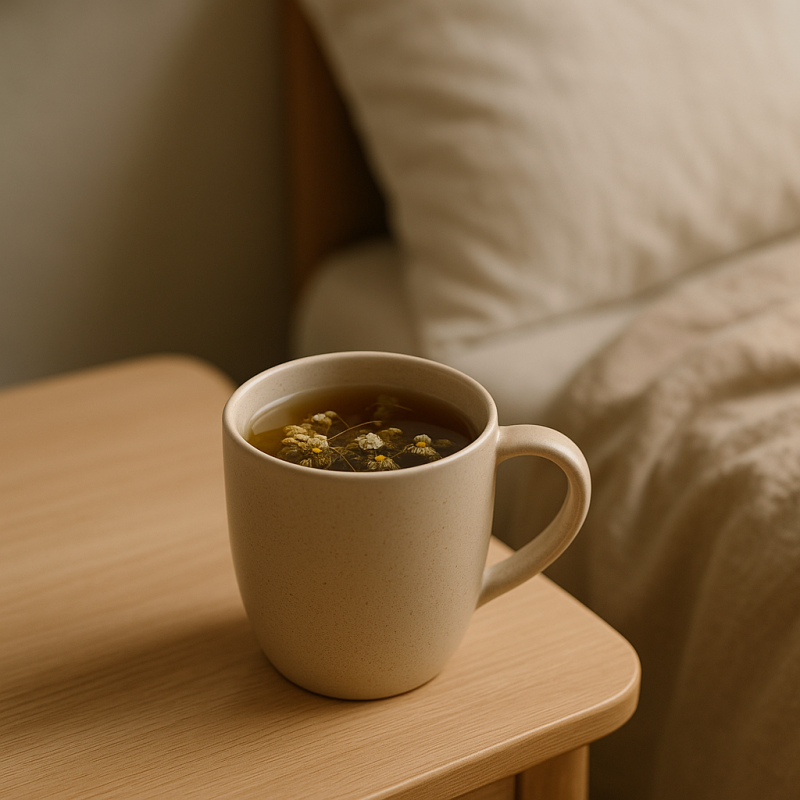
- Measure the Botanicals: In a small bowl, combine one dried Blue Lotus flower (or about 1 teaspoon of crushed petals) with one tablespoon of high-quality, whole dried Chamomile flowers. The visual contrast of the deep blue-purple against the sunny yellow and white is the first part of the sensory experience.
- Heat Your Water: Bring approximately 10 ounces (about 300 ml) of fresh, filtered water to a temperature just below boiling, around 200°F (93°C). Using water that is too hot can scorch the delicate flowers and introduce bitter notes.
- Combine and Steep: Place the floral blend into your favorite mug or a small teapot with an infuser. Pour the hot water over the flowers. Cover the vessel immediately to trap the volatile oils—this is where much of the aroma and therapeutic benefit resides.
- Wait Patiently: Allow the tea to steep for 7 to 10 minutes. This longer steeping time is necessary to fully extract the compounds from the dense Blue Lotus flower. Use this time to disconnect. Put away your phone, dim the lights, and simply be present with the unfolding aroma.
- Strain and Serve: Strain the flowers from the liquid. The resulting brew will be a beautiful golden color. It is best consumed without any additions to fully appreciate the nuanced flavors, but a tiny drop of honey can be added if desired.
The Sensory Experience
To drink this flower tea is to engage in a conversation with the night. The aroma rises from the cup with the sweet, apple-like warmth of chamomile, but underneath, there is a more complex, almost perfumed floral note from the Blue Lotus. The first sip is comforting and familiar, the taste of pure chamomile. As it rests on the palate, the more exotic flavor of the Blue Lotus emerges—a taste that is hard to describe, at once floral, slightly fruity, and with a hint of something ancient and mysterious. The liquid feels soft and smooth in the mouth. As you drink, you may notice a gentle relaxation spreading from your core, a softening of the shoulders, a quieting of the mental static. It is a slow, graceful descent into tranquility, the perfect prelude to a night of deep and peaceful dreams.
Recipe 2: The Radiant Skin Infusion with Rose & Hibiscus
Our skin is a remarkable organ. It is our protective barrier, our largest sensory organ, and a living canvas that reflects our internal state of health. We often seek to perfect this canvas with an arsenal of topical creams, serums, and treatments, yet overlook the fundamental principle that true, lasting radiance is cultivated from within. This infusion is a beauty tonic in the truest sense, a vibrant, ruby-red elixir that works to cool, hydrate, and nourish the skin at a cellular level. It brings together the gentle, balancing grace of Rose with the zesty, antioxidant-rich power of Hibiscus.
The Philosophy Behind the Blend
In many traditional healing systems, skin conditions like acne, redness, and irritation are seen as manifestations of internal “heat” or inflammation. This blend is designed as an internal cooling system. Its philosophy is to pacify inflammation and provide the building blocks the skin needs to repair and regenerate itself. Rose, with its long history in Persian, Ayurvedic, and Chinese medicine, is considered an herb that cools the blood, soothes the heart, and calms the spirit. Its effect on the skin is a direct reflection of its effect on the emotions—it eases redness and irritation just as it eases frustration and grief. Hibiscus, a botanical celebrated from the Caribbean to Southeast Asia, brings a vibrant, purifying energy to the blend. It is a powerful cleanser, rich in antioxidants and organic acids that help to gently detoxify the body and promote cellular turnover. Together, they create a synergy: Rose provides the gentle, calming, and moisturizing element, while Hibiscus provides the potent, vitamin-rich, and clarifying action. Drinking this flower tea is an act of tending to your inner garden, with the faith that its beauty will inevitably bloom on the surface.
Profile of the Botanicals
Rose (Rosa damascena or Rosa centifolia): The petals and buds of the rose are more than just a symbol of love; they are a sophisticated botanical medicine. They are packed with antioxidant compounds like flavonoids and polyphenols, which help protect skin cells from damage caused by UV radiation and environmental pollutants (Thring et al., 2011). Rose also has gentle astringent properties, which can help to tone the skin, and its anti-inflammatory action makes it superb for calming conditions like rosacea and eczema. Its flavor and aroma are intoxicatingly floral, sweet, and slightly fruity, a universally beloved profile that has an immediate uplifting effect on the mood.
Hibiscus (Hibiscus sabdariffa): The deep red calyces of the hibiscus flower are a powerhouse of skin-supportive nutrients. They are exceptionally high in Vitamin C, a crucial component for collagen synthesis, the protein that gives skin its firmness and elasticity. Hibiscus is also rich in a class of antioxidants called anthocyanins, which give it its vibrant color and help fight free-radical damage. Furthermore, it contains gentle organic acids, like citric acid and malic acid, which act as natural alpha-hydroxy acids (AHAs), promoting exfoliation and a brighter, more even-toned complexion (Deliorman-Orhan, 2016). Its flavor is distinctly tart, cranberry-like, and deeply refreshing.
Step-by-Step Preparation
Brewing this infusion is like creating a liquid jewel.
- Measure the Botanicals: Combine one tablespoon of dried, whole hibiscus calyces with one tablespoon of dried rosebuds or petals. The visual contrast between the deep crimson of the hibiscus and the soft pink of the rose is stunning.
- Heat Your Water: Bring about 12 ounces (350 ml) of fresh, filtered water to a full boil. The robust nature of hibiscus calyces means they can withstand higher temperatures without becoming bitter.
- Combine and Steep: Place the flowers in a glass teapot or a large mug. A glass vessel is particularly lovely for this blend, as it allows you to watch the color transform. Pour the boiling water over the botanicals.
- Watch the Magic: Cover the vessel and steep for 5 to 7 minutes. You will see the water almost immediately begin to blush, deepening into a rich, vibrant ruby red as the anthocyanins are extracted from the hibiscus.
- Strain and Serve: Strain the tea. It can be enjoyed hot, where its warmth is deeply comforting, or it can be chilled to make a spectacular and refreshing iced tea. The natural tartness of hibiscus is pronounced, so this is a tea that takes well to a small amount of sweetener. A touch of raw honey or a few drops of stevia can balance the flavors beautifully.
The Sensory Experience
This flower tea is a feast for the senses. Visually, it is captivating, a liquid gemstone that glows in the cup. The aroma is a delightful dialogue between the two flowers: the tart, fruity scent of hibiscus leads, followed by the soft, sweet, and luxurious perfume of rose. The first sip is a jolt of bright, zesty tartness from the hibiscus, reminiscent of fresh cranberries or pomegranate. This initial sharpness then mellows on the palate, making way for the delicate, floral sweetness of the rose to emerge in the finish. The mouthfeel is crisp and cleansing. Drinking it feels like an act of purification, a vibrant internal rinse that leaves you feeling refreshed and revitalized. With consistent use, this internal nourishment can translate into a complexion that is clearer, calmer, and visibly more radiant.
Recipe 3: The Quiet Mind Brew with Lavender & Lemon Balm
Anxiety, in its many forms, is a defining feature of the human condition in the 21st century. It is the low-grade hum of unease, the racing heart in the middle of the night, the feeling of being perpetually overwhelmed. While the sources of our anxiety are complex, the path to finding moments of quiet can be surprisingly simple. This herbal brew is a sanctuary in a cup, a gentle but effective blend designed to soothe the nervous system and untangle the knots of a worried mind. It marries the famously calming aroma of Lavender with the bright, uplifting spirit of Lemon Balm.
The Philosophy Behind the Blend
This blend operates on the principle of nervous system regulation. It does not seek to numb the mind or erase worries, but rather to create a state of “calm alertness” where one can observe thoughts without being consumed by them. The philosophy is one of creating space—space between stimulus and response, space between anxious thoughts, and space for the breath to deepen. Lavender, a revered nervine in European folk medicine, works directly on the brain’s neurochemistry to promote a state of relaxation. It is the anchor of this blend, providing a deep, grounding sense of peace. Lemon Balm, a member of the mint family with a cheerful citrusy scent, acts as the uplifting counterpart. While also calming, its primary gift is to elevate the mood and gladden the heart, a quality recognized since ancient Greece. The combination prevents the blend from being overly sedating. It quiets the noise without dulling the senses, making it an ideal flower tea for daytime use when you need to reduce anxiety while remaining functional and focused. It is a reminder that tranquility and clarity can coexist.
Profile of the Botanicals
Lavender (Lavandula angustifolia): The purple flowers of English Lavender are a treasure trove of calming compounds. The primary active constituents are linalool and linalyl acetate, aromatic oils that have been extensively studied for their anxiolytic (anxiety-reducing) effects. Inhaling lavender aroma or consuming it as a tea has been shown to modulate the parasympathetic nervous system, the body’s “rest and digest” mode. It also appears to enhance the activity of GABA, a neurotransmitter that has an inhibitory effect on nerve transmission in the brain, effectively telling the nervous system to slow down (Koulivand et al., 2013). Its flavor is intensely floral, perfumed, and slightly pungent, a taste that demands to be sipped slowly.
Lemon Balm (Melissa officinalis): The leaves of this unassuming herb release a beautiful, bright lemon scent when bruised. For centuries, it has been cherished as a mood-lifter and a gentle calmative. Its therapeutic action comes from a complex mix of compounds, including rosmarinic acid, which also contributes to GABAergic activity in the brain (Kennedy et al., 2004). Lemon Balm is particularly effective for anxiety that manifests with physical symptoms like nervous tension, heart palpitations, or a “nervous stomach.” It soothes both the mind and the digestive tract, which are deeply interconnected. Its flavor is bright, citrusy, and herbaceous, a welcome burst of sunshine.
Step-by-Step Preparation
Creating this calming brew is a simple act of mindfulness.
- Measure the Botanicals: In a small bowl, combine one tablespoon of dried Lemon Balm leaves with one teaspoon of dried Lavender flowers. A little lavender goes a long way; using too much can result in a soapy or overly perfumed taste. The ratio should favor the Lemon Balm.
- Heat Your Water: Bring about 10 ounces (300 ml) of water to a temperature just under boiling, around 195°F (90°C). Boiling water can dissipate some of the delicate volatile oils, particularly from the Lemon Balm.
- Combine and Steep: Place the herbs in an infuser and set it in your mug. Pour the hot water over them and immediately cover the mug with a small plate or lid. This crucial step prevents the precious, calming aromatic compounds from escaping with the steam.
- Steep for Calm: Allow the infusion to steep for 10 minutes. This is a perfect window for a short mindfulness exercise. Close your eyes and focus on your breath, noticing the gentle rise and fall of your chest.
- Strain and Enjoy: Remove the infuser. The resulting liquid will be a pale, greenish-gold. The aroma that is released when you lift the lid is a potent dose of aromatherapy in itself.
The Sensory Experience
Bringing the cup to your nose is the first step of the therapy. The bright, zesty, and green scent of Lemon Balm is the first to greet you, a scent that feels immediately cheerful and clarifying. Beneath it lies the deeper, floral, and unmistakable perfume of lavender. The first sip is a surprise. The lemon flavor is dominant, but it’s a soft, herbal lemon, not a sharp, acidic one. The lavender flavor is more of a subtle afternote, a floral resonance that lingers at the back of the palate. The combination is beautifully balanced, both uplifting and grounding at the same time. As you drink, you might notice a subtle release of tension in your jaw, a slowing of your thoughts, a feeling of being more present in your body. It is a flower tea that doesn’t force calmness but simply reminds your nervous system what it feels like to be at ease.
Recipe 4: The Digestive Calm Tonic with Chrysanthemum & Mint
Our digestive system is often called our “second brain,” a testament to its complexity and its profound influence on our overall well-being and mood. When it is out of balance, the discomfort can radiate throughout our entire being, manifesting as bloating, indigestion, or a general feeling of sluggishness. This soothing tonic is designed to bring peace and harmony to a troubled gut. It pairs the cooling, anti-inflammatory wisdom of Chrysanthemum from the East with the carminative, refreshing power of Mint from the West.
The Philosophy Behind the Blend
This blend approaches digestive wellness from two complementary perspectives. From the viewpoint of Traditional Chinese Medicine (TCM), many digestive issues, especially those accompanied by burning sensations, acid reflux, or inflammation, are related to “Stomach Heat” or “Liver Fire overacting on the Spleen.” Chrysanthemum is a premier herb for gently clearing this type of heat. It is cooling and dispersing, helping to reduce inflammation and soothe the irritation in the digestive tract. Its action is gentle and systemic. From the perspective of Western herbalism, the primary issue is often poor motility and trapped gas. Peppermint is a classic carminative, meaning it helps to relax the smooth muscles of the digestive tract, including the lower esophageal sphincter. This relaxation allows trapped gas to be released and can ease the cramping associated with indigestion (Khanna et al., 2014). The menthol in peppermint also provides a refreshing, cooling sensation that is itself soothing. The philosophy of the blend is therefore twofold: Chrysanthemum addresses the underlying inflammatory “heat,” while Mint provides immediate symptomatic relief by relaxing muscles and moving stagnation.
Profile of the Botanicals
Chrysanthemum (Chrysanthemum morifolium or Chrysanthemum indicum): In the Chinese herbal tradition, the flower known as Ju Hua is highly valued. It is classified as an herb that is pungent, sweet, bitter, and slightly cold, and it enters the Lung and Liver meridians. Its ability to “disperse wind-heat” and “pacify the Liver” makes it excellent for headaches and eye strain, but its heat-clearing properties also extend to the digestive system, helping to cool an inflamed stomach lining. It has a light, floral, and slightly herbaceous flavor that is very pleasant and refreshing.
Peppermint (Mentha piperita): This robust and aromatic herb is a staple in kitchens and apothecaries worldwide. Its primary active compound is menthol, which is responsible for its characteristic cooling sensation and its antispasmodic effects on the smooth muscles of the gut. It is incredibly effective for relieving symptoms of Irritable Bowel Syndrome (IBS), such as bloating, gas, and abdominal pain. Its pungent and aromatic nature also helps to stimulate the flow of bile, which aids in the digestion of fats. The flavor is bold, sweet, and intensely refreshing.
Step-by-Step Preparation
Brewing this digestive aid is a quick and simple process.
- Measure the Botanicals: Combine one tablespoon of dried, whole Chrysanthemum flowers with one teaspoon of dried Peppermint leaves. Peppermint is potent, so a smaller quantity is sufficient to impart its flavor and benefits without overwhelming the delicate chrysanthemum.
- Heat Your Water: Bring about 10 ounces (300 ml) of water to a full boil. Both of these botanicals are robust enough to handle high heat.
- Combine and Steep: Place the herbs in an infuser in your mug. Pour the boiling water over them and cover to trap the aromatic menthol.
- Steep for Relief: Let the infusion steep for 5 to 7 minutes. A shorter steep will yield a more mint-forward flavor, while a longer steep will draw out more of the floral, herbaceous notes of the chrysanthemum.
- Strain and Sip: Remove the infuser and enjoy the tea warm. This blend is particularly effective when sipped slowly after a meal.
The Sensory Experience
The aroma that greets you is unmistakably minty—cool, sharp, and invigorating. It has an immediate clarifying effect on the senses. As you inhale more deeply, the softer, sweeter floral scent of the chrysanthemum emerges from beneath the mint, adding a layer of complexity. The first sip is a wave of cool peppermint that washes over the palate, instantly refreshing. The floral character of the chrysanthemum follows, providing a gentle, sweet, and slightly earthy counterpoint that prevents the mint from being one-dimensional. The tea feels light and clean in the mouth, and the cooling sensation of the menthol can be felt as it travels down to the stomach. Drinking this flower tea after a heavy meal feels like a welcome reset, helping to dispel fullness and bring a sense of light and ease back to the body.
Recipe 5: The Morning Glow Ritual with Calendula & Osmanthus
The way we begin our day sets the tone for the hours that follow. Instead of reaching for a jolt of harsh caffeine, consider a morning ritual that gently awakens the body and nurtures your inner radiance. This golden-hued infusion is designed to do just that. It is a subtle but powerful tonic that supports the body’s natural detoxification pathways and imparts a beautiful, uplifting aroma to start your day with a moment of sensory pleasure. It pairs the sunny, lymphatic-moving power of Calendula with the intoxicatingly fragrant, mood-lifting qualities of Osmanthus.
The Philosophy Behind the Blend
This blend is founded on the principle of “gentle awakening.” It supports the body’s natural morning processes rather than shocking the system into action. In traditional herbalism, the lymphatic system is seen as a key pathway for clearing metabolic waste from the body. A sluggish lymphatic system can contribute to a dull complexion, puffiness, and a general feeling of lethargy. Calendula is a premier lymphatic herb, gently stimulating the flow of lymph to help the body cleanse itself from the inside out. This internal cleansing is the foundation of a clear, glowing complexion. Osmanthus, a flower treasured in East Asia, brings the element of pure joy and sensory delight to the ritual. Its aroma is believed in TCM to move Qi and dispel melancholy. The philosophy here is that a beauty ritual should not be a chore but a moment of pleasure. The combination of Calendula’s physical action with the uplifting emotional and aromatic properties of Osmanthus creates a holistic morning tonic that nurtures both body and spirit, preparing you to meet the day with grace and a natural glow.
Profile of the Botanicals
Calendula (Calendula officinalis): Also known as pot marigold, the bright orange and yellow petals of this flower are a staple in Western herbalism. They are known for their profound affinity for the skin and the lymphatic system. Calendula is a potent vulnerary (promotes wound healing) and anti-inflammatory, but its most subtle and important action when taken internally is as a lymphatic stimulant. It helps to move stagnant fluid, which is crucial for detoxification and reducing puffiness (Arora et al., 2013). The petals are also rich in carotenoids, the antioxidants that give them their vibrant color. Its flavor is mild, slightly resinous, and subtly bitter.
Osmanthus (Osmanthus fragrans): The tiny, cream-colored flowers of the osmanthus tree pack an unbelievably powerful fragrance. In China, it is a beloved flower associated with the autumn moon festival. The aroma is complex and enchanting, often described as a mix of ripe apricot, peach, and gardenia. In TCM, its aromatic nature is used to warm the body and disperse stagnation. While not as medicinally potent as other herbs, its primary role in this blend is sensorial and emotional. Its beautiful aroma can elevate the mood and transform a simple cup of tea into a luxurious experience. Its flavor is intensely sweet and fruity.
Step-by-Step Preparation
Brewing this liquid sunshine is a beautiful way to greet the day.
- Measure the Botanicals: Combine one tablespoon of dried Calendula petals with one teaspoon of dried Osmanthus flowers. The visual of the bright orange petals mixed with the tiny cream-colored flowers is lovely.
- Heat Your Water: Bring about 12 ounces (350 ml) of water to just under a boil, around 200°F (93°C).
- Combine and Steep: Place the flowers in an infuser. Pour the hot water over them and cover to capture the magnificent osmanthus fragrance.
- Steep for Radiance: Let the infusion steep for 5 to 8 minutes. Use this time to set an intention for your day as you inhale the uplifting aroma.
- Strain and Savor: Remove the infuser. The tea will be a beautiful, clear golden-orange color. The natural sweetness from the osmanthus means that no additional sweetener is needed.
The Sensory Experience
This flower tea is an aromatic masterpiece. The moment you pour the water, the room is filled with the stunning fragrance of osmanthus—a scent so rich and fruity it’s almost unbelievable that it comes from such a tiny flower. It smells of ripe apricots and a warm summer evening. The flavor is just as enchanting. The sweet, fruity taste of osmanthus is the dominant note, a pure, nectar-like sweetness that coats the palate. The calendula provides a subtle, slightly resinous and earthy base note that grounds the ethereal sweetness of the osmanthus, adding a welcome complexity. The experience of drinking this tea is one of pure, simple pleasure. It feels like sipping on sunlight, a gentle and joyful way to awaken your senses and begin the day with an act of self-love that supports your skin from the inside out.
Recipe 6: The Focused Afternoon Reset with Jasmine & White Tea
The mid-afternoon often brings a familiar slump, a dip in energy and focus that sends many reaching for another cup of coffee or a sugary snack. This recipe offers a more refined and balanced alternative, a beverage designed to gently lift the mind, sharpen focus, and soothe the spirit without the jitters of excessive caffeine. This is not a pure tisane but a scented tea, showcasing the exquisite synergy between a delicate tea leaf and a fragrant flower. It combines the subtle, nuanced character of White Tea with the iconic, calming perfume of Jasmine.
The Philosophy Behind the Blend
This blend is crafted to achieve a state of “calm alertness,” a highly desirable mental state for productivity and creative work. The philosophy hinges on the unique biochemical partnership between the components of the tea leaf and the aroma of the jasmine flower. True tea from the Camellia sinensis plant contains a unique amino acid called L-theanine. L-theanine is known for its ability to promote the production of alpha brain waves, which are associated with a state of relaxed wakefulness (Dodd et al., 2015). It works in concert with the tea’s natural caffeine, smoothing out its stimulating effects and preventing the anxiety or jitters that coffee can sometimes cause. White tea, being the least processed of all teas, has a particularly high concentration of L-theanine and a relatively low caffeine content, making it ideal for this purpose. The jasmine aroma is not merely a pleasant scent; it is a form of aromatherapy. The fragrance has been shown to have a calming effect on the nervous system. The combination is therefore masterful: the white tea provides the focused energy, while the jasmine provides the calm, creating a perfect mental equilibrium for tackling the rest of the day.
Profile of the Botanicals
White Tea (Camellia sinensis): We are using a base of “White Peony” (Bai Mu Dan), which consists of a young tea bud and the first two leaves. This provides more body and flavor than a pure bud tea like Silver Needle, but is still incredibly delicate. The processing is minimal: the leaves are simply withered and dried. This preserves their natural, downy-white appearance and their subtle, nuanced flavor profile. White tea tastes of melon, light honey, and a hint of hay. Its low processing also means it is exceptionally rich in antioxidants.
Jasmine (Jasminum sambac): The flowers of night-blooming jasmine are used in the traditional scenting process. High-quality jasmine tea is not simply a tea with flowers mixed in. Instead, the finished white tea leaves are layered with fresh, unopened jasmine buds in a controlled environment. As the evening progresses, the buds open and release their intense, sweet perfume, which is readily absorbed by the tea leaves. This process is often repeated multiple times over several nights to achieve a deep, lasting aroma. The flowers are then sieved out, leaving only the scented tea.
Step-by-Step Preparation
Brewing a delicate scented tea requires a gentle hand.
- Measure the Tea: Use about one tablespoon of high-quality Jasmine White Tea for 12 ounces (350 ml) of water. The leaves are voluminous, so don’t be shy.
- Heat Your Water: This is the most critical step. White tea is delicate and will become bitter if brewed with water that is too hot. Heat your water to a temperature between 175-185°F (80-85°C). If you don’t have a variable temperature kettle, simply bring water to a boil and let it cool for 3-5 minutes.
- Combine and Steep: Place the tea leaves in your teapot or mug. Pour the cooled water over the leaves. Do not cover the vessel completely; leaving a small gap allows some of the initial “steamy” notes to escape, resulting in a cleaner flavor.
- Steep Briefly: Steep for only 2 to 3 minutes. White tea infuses quickly, and over-steeping is the primary cause of bitterness. The leaves will unfurl beautifully in the water.
- Strain and Appreciate: Strain the tea into your cup. The same leaves can, and should, be re-steeped multiple times. Each subsequent infusion will reveal a slightly different facet of the tea’s flavor and will require a slightly longer steeping time.
The Sensory Experience
This is a tea of supreme elegance. The liquor is a pale, shimmering gold. The aroma is pure, unadulterated jasmine—sweet, heady, and intoxicatingly floral. It is a scent that immediately calms and centers the mind. The first sip reveals the beautiful interplay between flower and leaf. The initial flavor is that of the sweet jasmine perfume, but this is immediately followed by the soft, smooth, and nuanced taste of the white tea base—notes of honeydew melon, a hint of apricot, and a creamy mouthfeel. There is zero bitterness, only a lingering sweetness. The combination of L-theanine and caffeine provides a gentle but noticeable lift, a sharpening of the senses, and a clearing of the afternoon brain fog. It is a productive pause, a reset button that is both effective and exquisitely beautiful.
Recipe 7: The Moon Cycle Soother with Rose & Raspberry Leaf
For many women, the monthly menstrual cycle brings with it a host of discomforts, from physical cramping to emotional volatility. This gentle, supportive infusion is designed to be a companion during that time, a warm and comforting brew that works with the body to ease tension and balance mood. It combines the heart-opening, circulation-moving properties of Rose with the traditional, uterine-toning wisdom of Raspberry Leaf.
The Philosophy Behind the Blend
This blend is rooted in the principles of traditional women’s herbalism, which seeks to support the body’s natural rhythms. The philosophy is one of gentle toning and emotional soothing rather than aggressive pain relief. From a TCM perspective, menstrual pain is often caused by the stagnation of Qi and Blood in the lower abdomen. Rose is a wonderful herb for this. Its slightly warm and aromatic nature gently “invigorates the blood” and “moves Qi,” helping to ease the cramping that comes from this stagnation. Its universally loved aroma also has a profound effect on the spirit, helping to soothe the irritability and sadness that can accompany hormonal fluctuations. Raspberry Leaf has a different, more structural role. It is not an acute pain reliever but a uterine tonic. For centuries, midwives and herbalists have used it to tone and strengthen the muscles of the pelvic region, including the uterus (Parsons et al., 1999). The theory is that a well-toned uterus functions more efficiently and with less cramping. It is rich in minerals like magnesium, which can also help to relax muscles. The combination is therefore holistic: Raspberry Leaf works on the long-term tone and health of the uterus, while Rose provides more immediate relief from stagnation and emotional support.
Profile of the Botanicals
Rose (Rosa damascena): As we’ve seen, rose is a multifaceted herb. In this context, its anti-inflammatory and mood-lifting properties are paramount. It helps to reduce the inflammatory prostaglandins that contribute to menstrual cramps, while its beautiful aroma provides a real, measurable boost to mood, helping to combat feelings of premenstrual sadness or anxiety.
Raspberry Leaf (Rubus idaeus): The leaves of the raspberry plant are one of the most famous herbs for women’s health. They contain an alkaloid called fragarine, which is believed to be responsible for its toning effect on the uterine muscles. It is important to note that its effects are cumulative; it is most effective when consumed regularly throughout the month, but it can still provide comfort and support when consumed during menstruation. Its flavor is pleasantly robust and astringent, similar to a black tea, but without the caffeine.
Step-by-Step Preparation
Brewing this supportive flower tea is a simple act of self-care.
- Measure the Botanicals: In a bowl, combine two tablespoons of dried Raspberry Leaf with one tablespoon of dried Rosebuds or petals. The robust, green-gray raspberry leaves provide a nice visual contrast to the delicate rose petals.
- Heat Your Water: Bring about 12 ounces (350 ml) of water to a full boil. The tough raspberry leaves require high heat to extract their constituents.
- Combine and Steep: Place the herbal blend in a teapot or infuser. Pour the boiling water over the herbs and cover the vessel.
- Steep for Strength: Allow the infusion to steep for a longer period, at least 10 to 15 minutes, to ensure a strong, therapeutic brew.
- Strain and Comfort: Strain the tea into a large mug. A hot water bottle on the abdomen and a warm mug of this tea in your hands is a classic and effective combination for easing menstrual discomfort.
The Sensory Experience
The aroma of this tea is a comforting balance of the two ingredients. The rich, almost tea-like scent of the raspberry leaf is the foundation, upon which the sweet, floral perfume of the rose rests. The flavor reflects this balance. The primary taste is that of a full-bodied, slightly tannic herbal tea from the raspberry leaf. It’s earthy and satisfying. The floral sweetness of the rose is not a dominant flavor but a beautiful, high note that emerges in the finish, softening the astringency of the raspberry leaf and leaving a pleasant, perfumed aftertaste. Drinking this tea feels like a warm, internal embrace. It is grounding and centering, a simple ritual that honors the body’s cycles and provides a moment of gentle, nurturing support when it is most needed.
A Deeper Understanding of Floral Beverages
To truly become a connoisseur of flower tea, it helps to build upon the foundational distinctions we made earlier. The world of floral infusions is rich with nuance, and understanding the different ways flowers are incorporated into beverages can greatly enhance your appreciation and guide your choices. Let us revisit and expand upon the categories of tisanes, scented teas, and blooming teas, and introduce the related category of herbal blends.
Tisanes: The Essence of the Plant
As we established, a tisane is an infusion made from any part of a plant other than Camellia sinensis. When we speak of a pure “flower tea” like chamomile, hibiscus, or lavender, we are speaking of a tisane. The defining characteristic is that the flower (or other plant part) is the primary source of both flavor and therapeutic action. There is no tea leaf base. This category is vast and can be further subdivided based on the part of the plant used:
- Flower Tisanes: Chamomile, Rose, Lavender, Hibiscus.
- Leaf Tisanes: Peppermint, Lemon Balm, Raspberry Leaf.
- Root Tisanes: Ginger, Turmeric, Dandelion Root.
- Seed/Spice Tisanes: Fennel, Cardamom, Anise.
- Bark Tisanes: Cinnamon, Pau d’Arco.
The advantage of a pure tisane is its directness. You are experiencing the unadulterated profile of a single botanical, which makes it an excellent way to learn the specific character and effects of individual plants.
Herbal Blends: The Art of Synergy
Most of the recipes we have explored are, in fact, herbal blends. A blend is simply a tisane that combines multiple botanicals. This is where the true artistry of herbalism comes into play. Blending is done for several reasons:
- Synergy: Combining herbs can create a therapeutic effect that is greater than the sum of its parts. For example, in our sleep blend, the psychoactive properties of Blue Lotus and the nervine properties of Chamomile work together on different pathways to promote relaxation.
- Balance: Herbs can be used to balance each other’s energetic properties. A very “cold” herb might be blended with a “warming” herb like ginger to make it more suitable for a person with a “cold” constitution.
- Flavor: Blending is a key tool for creating a palatable and enjoyable beverage. A highly effective but intensely bitter medicinal herb can be blended with sweet-tasting herbs like licorice root or pleasant-smelling flowers like rose to improve the sensory experience. Our Digestive Calm Tonic, for instance, uses the pleasant floral notes of chrysanthemum to soften the intense menthol of peppermint.
Scented Teas: A Marriage of Perfume and Leaf
This category represents a true marriage between the world of tea and the world of flowers. As exemplified by our Jasmine White Tea recipe, the goal is not to taste the flower itself, but to imbue the tea leaf with its soul. The process is labor-intensive and requires great skill. The quality of a scented tea depends on three factors:
- The Quality of the Tea Base: A fine jasmine tea must start with a fine green or white tea. The tea provides the body, texture, and underlying flavor.
- The Quality of the Flowers: The flowers must be fresh, intensely fragrant, and harvested at the precise moment before they bloom.
- The Skill of the Scenting Process: The number of scenting rounds, the control of temperature and humidity, and the final drying process all contribute to the final product. The finest scented teas have a deep, integrated aroma that does not taste artificial or “perfumey.”
Other classic examples of scented teas include Rose Black Tea and Osmanthus Oolong.
Blooming Teas: A Visual Spectacle
Blooming teas, or flowering teas, prioritize the visual experience. They are a modern innovation, developed in China in the 1980s, that has become popular for its dramatic presentation . The process is a form of craft. Tea artisans take long, pliable leaves of green or white tea and sew them together with cotton thread, enclosing one or more dried flowers in the center. Common flowers used include globe amaranth, chrysanthemum, jasmine, and lily. The bundle is then shaped, often into a ball or mushroom, and dried.
When placed in a glass teapot and covered with hot water, the bundle slowly rehydrates and opens up, revealing the hidden flower in a beautiful, slow-motion performance. The resulting infusion has the flavor of the base tea (usually a mild green or white tea) with a subtle floral note from the encased flower. While the flavor may be less complex than a high-grade single-origin tea or a masterfully scented tea, the primary appeal of a blooming tea is the ritual and the beauty of the experience itself. It turns the act of making tea into a captivating event, perfect for sharing with guests or for a moment of quiet aesthetic contemplation.
| Beverage Type | Primary Ingredient(s) | Contains Caffeine? | Primary Purpose | Example |
|---|---|---|---|---|
| Tisane | Flowers, leaves, roots (non-tea plants) | No (usually) | Therapeutic action, flavor | Chamomile Tea, Peppermint Tea |
| Herbal Blend | A mix of non-tea plant botanicals | No (usually) | Synergistic therapeutic action, balanced flavor | Rose & Hibiscus Tea |
| Scented Tea | True tea leaves (Camellia sinensis) + flower aroma | Yes | Flavor, aroma, calm alertness | Jasmine Green Tea |
| Blooming Tea | Hand-tied tea leaves with a flower inside | Yes | Visual experience, mild flavor | A tea ball that unfurls |
A Note on Sourcing, Quality, and Safety
As we embrace the world of flower tea, our role shifts from passive consumer to active participant in our own wellness. This participation extends to the crucial act of sourcing our ingredients. The therapeutic potency and sensory pleasure of your floral infusion are directly proportional to the quality of the botanicals you use. A dusty, faded, or conventionally grown flower will not only lack the desired benefits but may also introduce unwanted chemicals into your cup.
The Importance of Quality Sourcing
When you seek out herbs for your tea, you are looking for plants that have been grown, harvested, and dried with care. Here is what to look for:
- Vibrant Color: Dried flowers should retain a significant amount of their natural color. Lavender should be a deep purple, rosebuds a rich pink or red, and calendula a bright, sunny orange. Faded, brownish colors indicate age or poor storage.
- Strong Aroma: Crush a small amount of the herb between your fingers. It should release a potent, characteristic aroma. Weak or dusty smells are a sign of degradation.
- Whole Forms: Whenever possible, choose whole flowers, buds, and leaves over powders or “tea bag cut” fragments. The whole form preserves the volatile oils and allows you to visually inspect the quality.
- Organic and Ethical Sourcing: Opt for certified organic herbs whenever possible. This ensures they were grown without synthetic pesticides, herbicides, or fertilizers. Furthermore, consider suppliers who practice ethical and sustainable harvesting, protecting both the environment and the communities that cultivate these plants. Finding a purveyor of high-quality botanical tea infusions that is transparent about their sourcing is paramount.
A Word on Safety and Contraindications
While herbal teas are generally very safe, it is wise to approach them with respect and awareness. They are not inert substances; they contain active compounds that interact with our bodies.
- Allergies: If you have known allergies to plants in the same family (e.g., ragweed and chamomile are in the Asteraceae family), exercise caution or avoid that herb.
- Pregnancy and Breastfeeding: Many herbs are not recommended during pregnancy or while breastfeeding due to a lack of safety data or known contraindications. Herbs like Blue Lotus and Raspberry Leaf (outside of the third trimester under guidance) should be avoided. Always consult with a qualified healthcare provider.
- Medication Interactions: Herbs can interact with prescription medications. For example, herbs that have a calming effect may potentiate the effects of sedatives, and herbs that affect circulation could interact with blood thinners. It is essential to speak with your doctor or a clinical herbalist if you are taking any medications.
- Moderation: More is not always better. The recipes provided are intended for general wellness and should be consumed in moderation. Do not consume large quantities of any single herb for extended periods without professional guidance.
Listen to your body. It is your most reliable guide. If a tea doesn’t feel right or causes any discomfort, discontinue use. The journey with flower tea is one of partnership with the plant world, a partnership built on wisdom, respect, and mindful attention.
Frequently Asked Questions
Can I drink flower tea every day?
For many gentle, nourishing flower teas, daily consumption is perfectly fine and can be a wonderful part of a wellness routine. Blends like Rose & Hibiscus or Calendula & Osmanthus are generally safe for daily use. However, more medicinally potent herbs or those with psychoactive properties, like Blue Lotus, are best reserved for occasional use when their specific effects are needed. It is always a good practice to rotate the types of herbal teas you drink to ensure a broad spectrum of benefits and to prevent building up a sensitivity to any single plant.
Does flower tea contain caffeine?
Pure flower teas, more accurately called tisanes, are made from plants other than the Camellia sinensis tea plant and are therefore naturally caffeine-free. This makes them ideal for evening consumption or for individuals who are sensitive to caffeine. The exception is “scented teas,” such as Jasmine Green Tea or Rose Black Tea, where flowers are used to perfume a true tea base. These beverages will contain caffeine, with the amount depending on the base tea used (white and green teas generally have less than black tea).
What is the best way to store dried flowers for tea?
To preserve the color, aroma, and potency of your dried botanicals, you must protect them from their four main enemies: light, air, moisture, and heat. The best storage method is to keep them in airtight containers, such as glass jars with tight-fitting lids or sealed tins. Store these containers in a cool, dark, and dry place, like a pantry or cupboard, away from the stove and any strong-smelling spices. Avoid storing them in clear containers on an open shelf where they will be exposed to light.
Can I mix different flower teas together?
Absolutely. Blending botanicals is the foundation of herbalism. You can certainly experiment with creating your own unique blends based on your flavor preferences and wellness goals. However, it is helpful to start with an understanding of the individual properties of each flower. A good approach is to begin with a simple two-herb blend, paying attention to how the flavors and effects combine. As you become more familiar with the plants, you can create more complex and nuanced formulas.
Why does my flower tea taste bitter?
Bitterness in a flower tea can usually be traced to one of two main causes: brewing temperature or steeping time. Delicate flowers like chamomile, lavender, or those used in a white tea base can be “scorched” by water that is at a full, rolling boil, which extracts an excess of bitter-tasting tannins. Try using water that is just under boiling. The second cause is over-steeping. Leaving the flowers in the water for too long will also lead to an over-extraction of bitter compounds. Try reducing your steep time. If a tea is naturally very bitter (a characteristic of some medicinal roots), it can be balanced with a sweet-tasting herb like licorice root or a small amount of honey.
A Ritual of Return
In a world that constantly pulls our attention outward, the simple act of preparing and drinking a cup of flower tea is a profound ritual of return. It is a return to the self, a conscious choice to carve out a moment of peace and sensory awareness amidst the noise. It is a return to the wisdom of the earth, a reconnection with the ancient partnership between humans and the plant kingdom. The recipes and principles explored here are more than just instructions; they are invitations to engage in this quiet, beautiful practice.
Each blend offers a different path back to equilibrium. The Serene Sleep Elixir guides us back to the restorative depths of rest. The Radiant Skin Infusion reminds us that true beauty is an inside job, a reflection of internal health. The Quiet Mind Brew offers a sanctuary from the storms of anxiety, while the Moon Cycle Soother provides a compassionate embrace during times of physical and emotional sensitivity. These are not magic potions, but rather gentle allies, tools that support our body’s innate capacity for healing and balance.
To brew a flower tea is to engage all of your senses—to appreciate the visual beauty of the dried petals, to inhale the complex fragrance released by hot water, to feel the warmth of the mug in your hands, and to savor the nuanced flavors on your palate. This mindful engagement is itself a form of medicine. It anchors us in the present moment, a rare and precious state in our distracted age. May your cup be a source of calm, a moment of beauty, and a gentle reminder of the profound nourishment that nature so generously offers.
References
Arora, D., Rani, A., & Sharma, A. (2013). A review on phytochemistry and ethnopharmacological aspects of genus Calendula. Pharmacognosy Reviews, 7(14), 179–187. https://doi.org/10.4103/0973-7847.120520
Deliorman-Orhan, D. (2016). An overview on the cosmetic and topical applications of Hibiscus sabdariffa L. Journal of Biologically Active Products from Nature, 6(3), 159-168.
Dodd, F. L., Kennedy, D. O., Riby, L. M., & Haskell-Ramsay, C. F. (2015). A double-blind, placebo-controlled study evaluating the effects of caffeine and L-theanine both alone and in combination on cerebral blood flow, cognition and mood. Psychopharmacology, 232(14), 2563–2576.
Farag, M. A., Ezzat, S. M., Salama, M. M., & Tadros, M. G. (2021). A phytochemical and biological overview of the genus Nymphaea with an emphasis on the sacred Egyptian blue lily (Nymphaea caerulea). Journal of Advanced Research, 34, 51-70.
Kennedy, D. O., Scholey, A. B., Tildesley, N. T., Perry, E. K., & Wesnes, K. A. (2004). Modulation of mood and cognitive performance following acute administration of Melissa officinalis (lemon balm). Pharmacology Biochemistry and Behavior, 72(4), 953-964. (02)00777-3
Khanna, R., MacDonald, J. K., & Levesque, B. G. (2014). Peppermint oil for the treatment of irritable bowel syndrome: A systematic review and meta-analysis. Journal of Clinical Gastroenterology, 48(6), 505–512. https://doi.org/10.1097/MCG.0b013e3182a88357
Koulivand, P. H., Khaleghi Ghadiri, M., & Gorji, A. (2013). Lavender and the nervous system. Evidence-Based Complementary and Alternative Medicine, 2013, 681304. https://doi.org/10.1155/2013/681304
Parsons, M., Simpson, M., & Ponton, T. (1999). Raspberry leaf and its effect on labour: Safety and efficacy. Australian College of Midwives Incorporated Journal, 12(3), 20–25. (99)80008-7
Srivastava, J. K., Shankar, E., & Gupta, S. (2010). Chamomile: A herbal medicine of the past with bright future. Molecular Medicine Reports, 3(6), 895–901. https://doi.org/10.3892/mmr.2010.377
Thring, T. S. A., Hili, P., & Naughton, D. P. (2011). Antioxidant and potential anti-inflammatory activity of extracts and formulations of white tea, rose, and witch hazel on primary human dermal fibroblast cells. Journal of Inflammation, 8(1), 27. https://doi.org/10.1186/1476-9255-8-27