Blog
A Practical 2026 Buyer’s Guide: 7 Factors for Perfect Tea Gift Baskets


Abstract
The selection of a gift represents a complex act of interpersonal recognition, aiming to convey care, respect, or celebration. When the object of this act is a tea gift basket, the gesture transcends the mere exchange of goods, becoming an invitation to a ritual of calm, a sensory exploration, or a tangible expression of wellness. This guide undertakes a systematic examination of the principles underlying the thoughtful composition of tea gift baskets in 2026. It moves beyond superficial recommendations to establish a robust framework for choice, grounded in an empathetic understanding of the recipient’s palate, lifestyle, and aesthetic sensibilities. Through a detailed analysis of constituent elements—from the curation of specific tea varietals and their complementary food pairings to the inclusion of artisanal teaware that elevates the brewing process—this text provides a structured methodology for the giver. The objective is to empower a selection that is not only appropriate but also profoundly meaningful, transforming the gift into a lasting artifact of consideration and a genuine enhancement of the recipient’s daily existence.
Key Takeaways
- Assess the recipient’s tea experience level to guide your selection.
- Choose loose-leaf tea for superior flavor and a more authentic ritual.
- Pair teas with complementary foods like honey or biscuits for a complete experience.
- Include a quality brewing vessel, like a teapot or gaiwan, to elevate the gift.
- The best tea gift baskets communicate a story through thoughtful presentation.
- Consider a subscription for a gift that offers continuous discovery.
- Look for detailed brewing instructions to ensure a perfect cup every time.
Table of Contents
- A Foundational Inquiry: Understanding the Recipient
- The Heart of the Matter: Curating the Tea Selection
- The Art of Complements: Selecting Food Pairings
- Elevating the Ritual: The Importance of Teaware
- The Narrative of Presentation: Aesthetics and Storytelling
- Navigating Value: Budget Considerations and Quality
- Beyond the Physical: Experiential and Recurring Gifts
- Frequently Asked Questions
- Conclusion
- References
A Foundational Inquiry: Understanding the Recipient
The act of choosing a gift is, at its core, an exercise in empathy. It requires a deliberate movement away from one’s own preferences and a sincere attempt to inhabit the perspective of another. To assemble a truly resonant tea gift basket, one must begin not with the objects themselves, but with a thoughtful consideration of the person for whom they are intended. Their daily rhythms, sensory proclivities, and relationship with moments of quietude form the essential context that gives the gift its meaning. A failure to engage in this preliminary inquiry risks presenting an item that is merely beautiful or expensive, rather than one that is genuinely welcome and useful. The goal is to match an experience to a person, a task that demands a measure of reflection and observation.
The Novice, the Curious, and the Connoisseur
Human beings engage with any specialized field, from music to viticulture, along a spectrum of experience. Tea is no different. Identifying where your recipient falls on this spectrum is the single most critical determinant in shaping your gift. We might think of three broad archetypes: the Novice, the Curious Explorer, and the Seasoned Connoisseur.
The Novice is someone whose experience with tea may be limited to conventional tea bags from the supermarket. They may enjoy a cup of tea but have not yet ventured into the world of loose-leaf varieties or specialized brewing. For this individual, a gift that is overly complex or esoteric can be intimidating rather than generous. A rare, unflavored pu-erh requiring a specific brewing protocol might be perceived as a burden. The objective here is to provide a welcoming and accessible entry point. A well-curated sampler pack that offers a guided tour of different tea types—a classic black tea, a fragrant jasmine green, a fruity herbal blend—is an excellent choice. The gift should feel like an open door, not a high wall. It should include clear, simple instructions and perhaps familiar flavors to ground the experience, as seen in many starter sets from retailers like .
The Curious Explorer has moved beyond the basics. They may have a few boxes of loose-leaf tea, perhaps a favorite green or black tea, and are actively interested in learning more. They are open to new flavors and experiences but may lack the deep knowledge to navigate the vast tea landscape on their own. For this person, a tea gift basket can serve as a guided expedition. A thematic collection, such as a duo of complementary Chinese teas from , or a set exploring the range of oolong teas from light to dark, would be both exciting and educational. The gift acknowledges their interest and provides the tools for deeper exploration.
The Seasoned Connoisseur possesses a developed palate and a deep appreciation for the nuances of tea. They likely have a dedicated collection of teas and teaware, and strong opinions about oxidation levels in oolongs or the terroir of Darjeelings. Gifting for this person requires a more nuanced approach. A generic sampler may feel impersonal or redundant. The goal is to demonstrate a respect for their expertise. This could mean sourcing a high-grade, single-origin tea from a specific estate or a rare vintage they may not have tried. It could be a unique, handcrafted piece of teaware that complements their existing collection, such as a Yixing clay pot for their pu-erh. The gift becomes a dialogue, a respectful nod to their passion.
| Recipient Profile | Primary Goal | Ideal Tea Selection | Ideal Teaware | Potential Pitfall |
|---|---|---|---|---|
| The Novice | Introduction & Accessibility | Broad variety sampler with familiar flavors (e.g., Earl Grey, Mint, Jasmine Green) | A simple mug with a quality basket infuser | Overwhelming them with complex, unflavored teas |
| The Curious Explorer | Guided Exploration & Variety | Thematic sets (e.g., Oolong spectrum, Regional Chinese teas), high-quality blends | A versatile glass or porcelain teapot, a gaiwan to learn with | Gifting something too basic that they have already tried |
| The Connoisseur | Rarity, Quality, & Respect | Single-origin, estate-grade, or aged teas (e.g., First Flush Darjeeling, aged Sheng Pu-erh) | Artisanal, specialized teaware (e.g., Yixing clay pot, handcrafted chawan) | Gifting a generic, low-quality blend or tea |
Lifestyle and Ritual
Beyond their level of expertise, a person’s daily habits and the role tea plays in their life offer vital clues. A tea gift basket should ideally integrate seamlessly into the recipient’s routine, enhancing it rather than disrupting it.
Consider the individual who begins each day with a strong, bracing cup to sharpen their focus. For them, a collection of robust breakfast black teas—perhaps comparing an Irish Breakfast, an English Breakfast, and a malty single-estate Assam—would be a highly practical and appreciated gift. In contrast, think of the person who struggles to unwind in the evening, who seeks a ritual to demarcate the end of the workday and the beginning of a restful period. For them, a wellness-focused basket would be a profound gesture of care. Such a basket might feature a range of high-quality, caffeine-free herbal infusions, or tisanes. A selection could include calming chamomile, soothing peppermint, and a relaxing blend with lavender or valerian root. As noted by Numi Tea, chamomile is well-regarded for its gentle, calming properties, making it a staple for evening consumption (numitea.com). Accompanied by a beautiful mug and perhaps a small jar of artisanal honey, this gift becomes a complete self-care toolkit.
Does the recipient work in a busy office environment? They might appreciate the convenience of high-quality, whole-leaf pyramid sachets that they can easily brew at their desk. Do they enjoy hosting friends for afternoon gatherings? A gift set centered around a beautiful large teapot and a selection of crowd-pleasing teas, like a fragrant Earl Grey or a fruity oolong, would empower their hospitality. The empathetic giver asks: “How, when, and where will this person enjoy this gift?” The answer to that question illuminates the path toward a truly thoughtful selection.
The Heart of the Matter: Curating the Tea Selection
The soul of any tea gift basket is, self-evidently, the tea itself. All other components, however beautiful or delicious, are supporting players. The curation of the tea is an act of storytelling; it sets the theme, defines the quality, and delivers the central sensory experience of the gift. A thoughtful selection demonstrates an understanding of quality and a desire to share something genuinely special, transforming the basket from a simple assortment of goods into a curated journey.
Loose-Leaf vs. Sachets: A Question of Quality and Ritual
A fundamental choice in curating the tea is its format. While the convenience of the tea bag is undeniable, it almost always represents a significant compromise in quality. Most conventional, flat paper tea bags are filled with “fannings” and “dust”—the smallest particles of tea leaves left over from the processing of higher grades. The small particle size leads to a rapid, but often bitter and one-dimensional, infusion. The restrictive bag prevents the tea from fully expanding, which is necessary for the release of its complete range of aromatic compounds (Pettigrew, 2008).
Loose-leaf tea, conversely, consists of whole or large, broken leaves. When steeped, these leaves have the space to unfurl and dance in the water, releasing a complex array of subtle flavors and volatile oils that are simply absent in their dust-and-fannings counterparts. The process of measuring the leaves, observing them in their dry state, and watching them expand during infusion is a ritual in itself. It encourages a slower, more mindful engagement with the beverage. For a gift to be truly exceptional, and to provide the most authentic expression of the tea’s character, choosing loose-leaf is almost always the superior path.
In recent years, the “pyramid sachet” has emerged as a worthy compromise. These three-dimensional mesh bags are large enough to hold whole-leaf tea and allow for more complete expansion and water circulation. When selecting a pre-made tea gift basket, it is wise to inspect the format. If it contains high-quality, whole-leaf sachets from a reputable brand like Harney & Sons, it can still be an excellent gift for someone who prioritizes convenience (). However, for the purpose of gifting an experience of discovery and quality, a selection of loose-leaf teas remains the gold standard.
Understanding Tea Families: A Framework for Curation
All “true” tea—black, green, oolong, white, and pu-erh—originates from a single plant species, Camellia sinensis. The vast differences in their flavor, color, and aroma are the result of how the leaves are processed after harvesting, with the key variable being oxidation (Sharma & Joshi, 2019). A well-curated tea gift basket should ideally showcase some of this diversity.
| Tea Family | Oxidation Level | Typical Flavor Profile | Best For a Gift That Aims For… |
|---|---|---|---|
| White Tea | Minimal (5-15%) | Delicate, subtle, sweet, floral, notes of melon or apricot | Understated luxury, subtlety, and calm. Perfect for a sophisticated palate. |
| Green Tea | Unoxidized (0%) | Grassy, vegetal, savory (umami), nutty, marine | Freshness, vitality, and wellness. A great choice for the health-conscious. |
| Oolong Tea | Partial (15-85%) | Widest range; from light and floral to dark, roasty, and fruity | Complexity, artistry, and exploration. Ideal for the curious explorer. |
| Black Tea | Full (100%) | Robust, malty, fruity, brisk, notes of honey or chocolate | Comfort, energy, and tradition. A familiar and welcoming choice. |
| Pu-erh Tea | Fermented & Aged | Earthy, woody, mushroomy, smooth, deep | A unique, grounding, and savory experience. Suited for the adventurous connoisseur. |
A “tour of the world” basket might include a representative from several of these families: a delicate Silver Needle white tea from Fujian, a savory Sencha green tea from Japan, a complex Tie Guan Yin oolong from Anxi, a robust Assam black tea from India, and an earthy Shou Pu-erh from Yunnan. This approach provides a fantastic educational experience, allowing the recipient to directly compare the distinct characters of each tea type.
Thematic Curation: Telling a Story with Tea
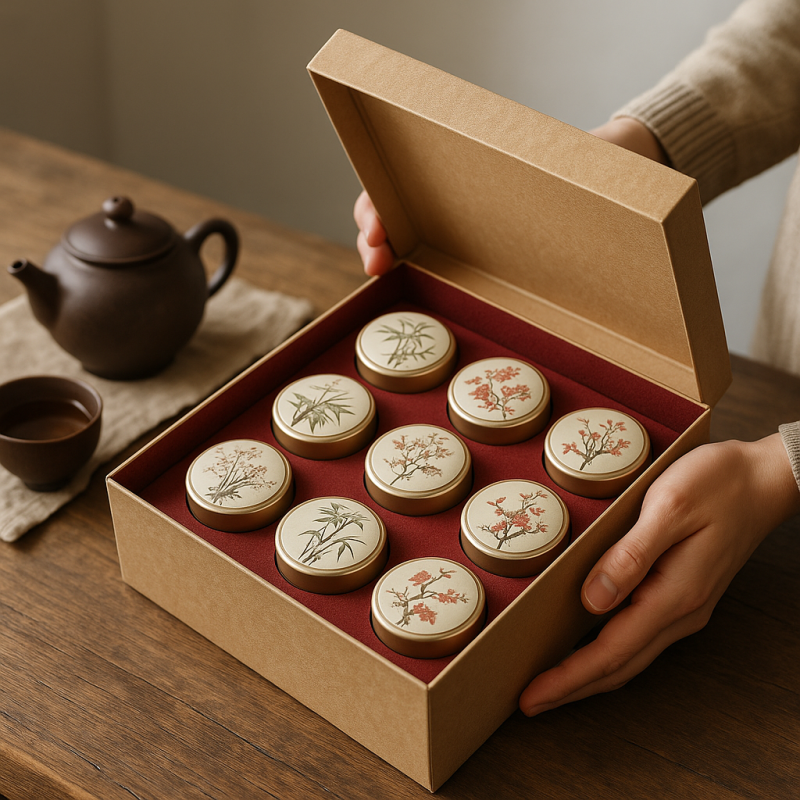
Beyond a simple survey of tea types, a more compelling approach is to build the selection around a specific theme. This adds a narrative layer to the gift, making it feel more personal and intentional. The “Tea Gift Box – Chinese Tea Duo Set” from Zenia Tea is a perfect example of this principle in action. Rather than offering random teas, it presents curated pairings within a color-coded theme, such as “Romantic Pink” (floral and fruity teas) or “Sky Blue” (classic Chinese teas) (). This thoughtful curation elevates the gift from a mere product to a designed experience.
Consider other thematic possibilities:
- A Regional Tour: Focus on the teas of a single country. A “Taste of Taiwan” basket could feature a High Mountain Oolong, an Oriental Beauty, and a Ruby #18 Black Tea, showcasing the island’s mastery of tea craftsmanship.
- A Wellness Journey: Curate a selection based on function. This might include an organic green tea for its antioxidant properties, a ginger and turmeric herbal blend for its anti-inflammatory effects, and a calming chamomile or lavender blend for relaxation.
- A Flavor Profile Exploration: For someone whose tastes you know well, a basket focused on a specific flavor can be a delight. A “Floral Fantasia” could include Jasmine Pearls, Rose Black Tea, and Osmanthus Oolong. A “Dessert Tea” collection might feature blends with notes of chocolate, vanilla, and caramel.
The key to successful thematic curation is intentionality. The collection should feel like a coherent whole, with each tea contributing to a larger story.
The Art of Complements: Selecting Food Pairings
While tea is the protagonist of the gift basket, the inclusion of carefully chosen food pairings can elevate the experience from a simple beverage tasting to a complete sensory occasion. The interaction between the flavors and textures of the tea and its edible companions can create a synergy where the whole is greater than the sum of its parts. However, the selection of these complements must be as deliberate as the selection of the teas themselves. A poorly chosen snack can clash with a delicate tea, overwhelming its nuances. A thoughtful pairing, on the other hand, can enhance and illuminate the tea’s character.
Classic and Comforting Pairings
Certain pairings have become classic for a reason: they are built on a foundation of harmonious interaction. These are often safe and universally appreciated choices, particularly for a recipient whose specific tastes may be unknown.
- Tea and Honey: This is perhaps the most fundamental pairing. A small jar of high-quality, artisanal honey is a wonderful addition to almost any tea gift basket, especially one featuring robust black teas. The natural sweetness of honey can temper the briskness of a strong breakfast blend or the earthiness of a pu-erh. To add a layer of sophistication, one can pair specific honey varietals with specific teas. A light, floral orange blossom or acacia honey complements the delicate notes of white or green teas beautifully. A darker, more robust buckwheat or chestnut honey can stand up to the strength of a malty Assam or a spicy chai.
- Tea and Biscuits (Cookies): The tradition of afternoon tea has cemented the relationship between tea and simple, baked sweets. A package of high-quality shortbread, with its rich, buttery flavor, is a perfect companion for a classic Earl Grey or a Darjeeling. For a basket with a wellness theme, oat-based biscuits could be a fitting choice. For a more decadent feel, chocolate-dipped biscotti pairs wonderfully with dessert-flavored black teas or even some darker, roastier oolongs. Retailers like often include items like sugar cookies in their standard baskets, attesting to the popularity of this classic combination.
Sophisticated and Adventurous Pairings
For a more adventurous recipient or a connoisseur, one can explore more complex and unexpected pairings that create a dynamic interplay of flavors.
- Tea and Chocolate: This pairing requires careful matching of intensity and flavor profiles. The guiding principle is to match weight with weight. A delicate, nuanced white tea would be completely overpowered by a dark, bitter 85% cacao chocolate. However, it might pair exquisitely with a high-quality white chocolate, whose creamy, sweet notes can highlight the tea’s subtle fruitiness. A robust, fruity black tea from Ceylon or a Chinese Keemun can be a fantastic partner for a 70% dark chocolate that has its own red fruit notes. The earthy, mushroomy character of a shou pu-erh can find a surprising and delightful partner in a very dark, slightly savory chocolate. A gift basket that includes a few small, craft chocolate bars with pairing suggestions can be a fun and educational experience.
- Tea and Cheese: While less common, the pairing of tea and cheese can be sublime. The tannins in a strong black tea can cut through the richness of a creamy cheese in the same way that red wine does. A strong, aged cheddar can be wonderful with a robust English Breakfast tea. The savory, vegetal, and umami notes of a Japanese Gyokuro green tea can be a fascinating counterpoint to a fresh, mild goat cheese. The key is experimentation, and including a small, hard cheese and some quality crackers in a basket can invite the recipient into this novel world of flavor combinations.
Creating a Complete Thematic Experience
The food pairings can also serve to reinforce the overall theme of the tea gift basket. If the goal is to create an “Afternoon Tea at Home” experience, the basket must include the essential edible components. This would mean not only a classic black tea blend but also small jars of high-quality strawberry jam and clotted cream, essential for serving with scones. One might even include a small package of scone mix or a recipe card. This transforms the gift from a collection of items into a complete, replicable ritual. Similarly, a “Taste of Japan” basket could include not only Sencha and Genmaicha teas but also a small package of mochi or senbei rice crackers, creating a more immersive cultural experience. The food items become part of the narrative, grounding the sensory experience of the tea in a broader culinary context.
Elevating the Ritual: The Importance of Teaware
A gift of tea provides a consumable pleasure, but a gift of teaware offers a lasting enhancement to a daily ritual. The tools used to prepare tea are not merely functional; they shape the experience, influence the flavor, and contribute to the aesthetic enjoyment of the process. Including a well-chosen piece of teaware in a tea gift basket demonstrates a profound understanding of the tea lover’s world. It is an acknowledgment that the “how” of tea is as significant as the “what.” It elevates the gift from a simple tasting to a complete brewing experience, providing an object that can be used and cherished long after the last leaf has been steeped.
The Central Role of the Brewing Vessel
While tea can be brewed in any vessel that holds hot water, dedicated brewing pots offer greater control and a more engaging experience. The two most fundamental vessels in the world of tea are the teapot and the gaiwan.
A teapot is the most familiar choice. When selecting one for a gift, several factors are crucial. The size is paramount. A large, 30-ounce teapot is suitable for serving multiple people or for brewing large batches of iced tea, but for a solo drinker exploring the nuances of fine tea, a smaller pot (8 to 16 ounces) is far more practical. It allows for a higher leaf-to-water ratio and encourages the practice of multiple infusions, which is central to appreciating the evolving flavors of oolong and pu-erh teas. The teapot should also have a well-designed, large internal infuser that gives loose leaves ample room to expand. A small, cramped infuser is little better than a restrictive tea bag.
The gaiwan, a traditional Chinese lidded bowl, is a wonderfully versatile and intimate brewing tool. It consists of three parts: a saucer, a bowl, and a lid. While it may appear daunting to a novice, its use is simple to master and offers an unparalleled connection to the brewing process. The wide opening of the bowl allows the brewer to fully appreciate the aroma of the steeping leaves. The lid is used skillfully to strain the tea while pouring. As the preferred tool of tea professionals for tasting, a porcelain gaiwan provides a neutral vessel to honestly assess a tea’s character. Gifting a gaiwan is an excellent way to introduce a curious explorer to the “gongfu” style of brewing, opening up a new dimension of their hobby.
Material Matters: The Influence of Clay, Porcelain, and Glass
The material from which a brewing vessel is made is not a trivial detail; it has a direct and tangible impact on the final cup, primarily through its properties of heat retention and porosity (Ramirez, 2020).
- Glass is the choice for the visual enthusiast. A glass teapot or gaiwan turns the brewing process into a performance, perfect for watching tightly rolled oolong pearls unfurl or an artisanal “flowering tea” bloom. Glass is neutral in flavor, but it has low heat retention, meaning the water cools quickly. This makes it a good choice for delicate green and white teas that are susceptible to scorching but less ideal for black or pu-erh teas that require sustained high temperatures.
- Porcelain is the great all-rounder. It is non-porous, meaning it will not absorb or impart any flavors, making it the perfect material for tasting a wide variety of teas. It offers moderate heat retention, making it versatile enough for almost any tea type. A simple, elegant white porcelain teapot or gaiwan is a can’t-go-wrong choice for any tea gift basket, suitable for both beginners and experts.
- Unglazed Clay, most famously Yixing “zisha” clay from China, is a specialized choice for the dedicated connoisseur. Because the clay is porous, it absorbs the aromatic oils of the tea over time, developing a “seasoning” that enhances the flavor of subsequent brews. This requires a commitment: a single clay pot should be dedicated to a single type of tea (e.g., one pot for roasted oolongs, another for raw pu-erh). Gifting a Yixing pot is a serious gesture that acknowledges a deep passion and understanding of tea culture.
- Cast Iron pots (tetsubin in Japanese) are masters of heat retention. While traditionally used for boiling water, modern versions with an enamel-lined interior are popular as teapots. They will keep tea hot for a very long time, making them suitable for robust black teas or long-steeping herbal infusions. Their substantial weight and rustic aesthetic also have a strong appeal.
Essential Accessories for a Complete Kit
Sometimes, the most thoughtful additions to a tea gift basket are the smaller accessories that refine the brewing process.
- A Quality Infuser: For a basket that doesn’t include a teapot, a high-quality, basket-style infuser is a crucial component. These large infusers sit comfortably in a mug and provide ample space for leaves to expand, a significant upgrade from small, ball-shaped infusers.
- A Digital Gram Scale: For the tea lover leaning toward connoisseurship, consistency is key. A small digital scale that measures to 0.1 grams is an inexpensive but transformative tool. It allows the brewer to precisely control the leaf-to-water ratio, removing guesswork and enabling repeatable results.
- A Tea Tray (Cha Pan): A bamboo or wooden tea tray with a reservoir to catch spills adds an element of elegance and practicality to the brewing ritual. It defines a dedicated space for tea preparation, keeping the area clean and organized. It is a central component of the gongfu tea ceremony and a beautiful addition to a more elaborate gift set.
By including thoughtful teaware, the gift giver provides not just a product, but a set of tools that empower a deeper and more rewarding engagement with the art of tea.
The Narrative of Presentation: Aesthetics and Storytelling
Human beings are narrative creatures. We seek meaning and connection not just in the content of an experience but in its presentation. A tea gift basket is not exempt from this principle. The manner in which the gift is packaged and presented constitutes its first impression, setting the stage for the sensory experience to follow. An elegant presentation communicates care, intentionality, and a respect for both the recipient and the items within. It is the visual and tactile manifestation of the thought that went into the gift’s curation.
The Aesthetics of the Unboxing
The “unboxing” experience has become a significant part of modern gift culture. A beautifully arranged basket, a stylishly designed box, or elegantly wrapped components can generate a sense of anticipation and delight that enhances the perceived value of the gift. A jumble of items thrown haphazardly into a container, even if the items themselves are of high quality, feels like an afterthought.
Consider the aesthetic principles at play. A coherent color scheme, such as the one used in Zenia Tea’s duo gift boxes, creates a sense of harmony and design intentionality (). The use of natural materials for the basket or box—such as woven wicker, bamboo, or sturdy recycled cardboard—can reinforce a theme of wellness and authenticity. The arrangement of the items within the basket should be visually pleasing, with larger items at the back and smaller, more delicate items nestled securely in the front. The goal is to create a presentation that feels both generous and meticulously organized. As noted by vendors like , the visual appeal is a key part of the gift’s charm.
The Power of the Written Word: Storytelling and Guidance
A truly exceptional tea gift basket does more than just present objects; it provides context. The inclusion of a small, well-written card or booklet can transform the gift from a collection of products into an educational and personal experience. This written component serves two vital functions: storytelling and practical guidance.
The storytelling aspect connects the recipient to the origin and significance of the teas. For a single-origin tea, this means sharing its story. A small card could explain: “This is a First Flush Darjeeling, harvested in the spring from the misty Himalayan foothills. It is known as the ‘champagne of teas’ for its delicate, muscatel-like flavor.” For a blend like Jasmine Green tea, the card could describe the traditional, labor-intensive scenting process where tea leaves are layered with fresh jasmine blossoms overnight (). This narrative enriches the tasting experience, allowing the recipient to appreciate not just the flavor but also the history and craftsmanship behind their cup.
The second function, practical guidance, is equally crucial. A beautiful tea can be ruined by improper brewing. A quality tea gift basket must include clear, concise brewing instructions for each tea. This should include the recommended leaf quantity, water temperature, and steeping time. As different teas have vastly different requirements—a green tea might need 80°C (176°F) water while a black tea needs 100°C (212°F)—this information is essential for success (Ramirez, 2020). Providing this guidance empowers the recipient, especially a novice, to get the best possible experience from the gift. It is a final, critical act of care that ensures the giver’s thoughtful selection is not wasted.
Sustainable and Thoughtful Packaging
In 2026, an increasing awareness of environmental impact informs consumer choices. A gift’s packaging is part of its ethical footprint. Opting for sustainable packaging can add another layer of thoughtfulness to the gift. This could mean choosing a basket or box made from recycled or biodegradable materials. Instead of plastic grass filler, one might use recyclable shredded paper. The basket itself can be a reusable item—a beautiful woven basket can be used for home storage, a wooden box can become a keepsake container. This approach aligns the gift with values of sustainability and mindfulness, ensuring that the gesture of giving does not come at an unnecessary environmental cost. It communicates a holistic sense of care that extends beyond the recipient to the wider world.
Navigating Value: Budget Considerations and Quality
The question of cost is an unavoidable and practical dimension of gift-giving. It is a common misconception that a more expensive gift is an inherently better one. In the context of tea gift baskets, value is not a simple function of price or size. Rather, it is a measure of thoughtfulness, quality, and suitability for the recipient. A well-curated, high-quality basket that perfectly matches the recipient’s tastes is far more valuable than a large, expensive basket filled with generic, mediocre items. Navigating this landscape requires a shift in perspective from sheer quantity to curated quality.
Defining a Budget without Sacrificing Quality
Establishing a budget is a sensible first step. Tea gift baskets are available at a vast range of price points, from modest collections available on sites like amazon.com to luxurious, high-end hampers. The key is to maximize the quality of the core components within your chosen budget.
If the budget is modest, it is far better to focus on one or two exceptional items rather than a dozen mediocre ones. For example, instead of a large basket with generic tea bags, bland cookies, and a cheap ceramic mug, a more valuable gift could be a beautifully packaged set containing a single, high-grade loose-leaf tea and one perfect porcelain teacup and saucer. This minimalist approach prioritizes the quality of the core experience. The gift is smaller in scale but far greater in substance. The focus should always be on the quality of the tea leaves first and foremost. A significant portion of the budget should be allocated to ensuring the tea is fresh, well-sourced, and representative of its type.
The DIY Approach vs. Pre-made Baskets
Another way to manage budget and maximize personalization is to consider a do-it-yourself (DIY) approach. Purchasing a pre-made tea gift basket from a reputable vendor offers convenience and the assurance of professional curation. Companies that specialize in tea, like Harney & Sons or Zenia Tea, have the expertise to create balanced and high-quality collections (). This is an excellent option when time is short or when you are less confident in your own ability to select components.
However, assembling a basket yourself allows for complete control over both cost and content. You can hand-pick each element to perfectly match the recipient’s preferences and your budget. You can choose a specific single-origin tea from a specialty vendor, pair it with their favorite local honey, add a handmade mug from a potter you admire, and arrange it all in a unique basket found at a local market. The DIY approach allows for a level of personalization that is difficult to achieve with a pre-made option. The effort and time invested in a DIY basket become part of the gift itself, communicating an extraordinary level of care.
The Intrinsic Value of Curation
Ultimately, the true value of a tea gift basket lies in the intelligence and empathy of its curation. It is the thoughtful selection and combination of items that creates a cohesive and meaningful experience. This is why a service that offers thoughtfully curated gift sets provides significant value. The vendor has already done the work of sourcing quality products and combining them into a harmonious whole.
When evaluating a pre-made basket, look for signs of this thoughtful curation. Do the items tell a coherent story? Is there a clear theme? Are the food pairings logical and complementary to the teas? Is essential information about the teas and their brewing provided? A “yes” to these questions indicates that you are not just paying for a collection of items, but for the expertise and care that went into assembling them. This curated intelligence is an intangible but deeply significant component of the gift’s overall value. It ensures the recipient receives not just things, but a beautifully designed and accessible experience.
Beyond the Physical: Experiential and Recurring Gifts
In a world increasingly saturated with material objects, the gift of an experience or a continued discovery can hold a unique and lasting value. While a physical tea gift basket provides a tangible and immediate pleasure, alternative approaches can offer knowledge, ongoing engagement, and cherished memories. For the tea lover who seems to have a full cupboard of teas and a complete set of teaware, these non-traditional gifts can be a refreshing and deeply meaningful gesture.
The Gift of Continuous Discovery: Tea Subscription Boxes
A tea subscription box is the gift that continues to give. Instead of a single, one-time present, it is a recurring delivery of curated teas, arriving on the recipient’s doorstep each month. This model transforms the act of giving from a singular event into a sustained experience of anticipation and discovery. It is an ideal gift for the Curious Explorer or the adventurous connoisseur who delights in trying new things and expanding their palate.
The magic of a subscription lies in its expert curation. The recipient is entrusting a guide to lead them through the vast world of tea. One month they might receive a selection of Japanese green teas, the next a flight of Taiwanese oolongs, and the month after that a rare, single-estate black tea from Africa. This prevents their tea routine from becoming stale and continuously provides new opportunities for learning and tasting. When choosing a subscription service as a gift, it is important to evaluate the quality of their curation, the flexibility of their subscription options (e.g., can the recipient set preferences?), and the availability of fixed-term gift packages (e.g., a 3- or 6-month subscription).
Educational Gifts: Empowering a Deeper Passion
For the intellectually curious tea lover, a gift that deepens their knowledge can be as thrilling as a rare tea.
- Books on Tea: The literature of tea is rich and varied. A beautifully produced book can be a lasting source of knowledge and inspiration. For the history buff, a book like A Social History of Tea by Jane Pettigrew (2008) can illuminate the beverage’s profound impact on global culture. For the philosopher, Kakuzo Okakura’s classic The Book of Tea (1906) offers a beautiful meditation on the aesthetics and philosophy of Japanese tea culture. For the practical brewer, a modern guide with detailed brewing techniques and beautiful photography can serve as an invaluable reference.
- Tea Tasting Workshops: Gifting a spot in a professional tea tasting workshop is like giving a backstage pass to the world of tea. These classes, often hosted by local tea shops or specialized educators, provide a structured environment for sensory development. A guided tasting allows the recipient to compare multiple teas side-by-side under expert instruction, sharpening their ability to identify and articulate different flavor notes. A workshop on the gongfu tea ceremony could teach them the skills to perform this beautiful ritual at home. This is a gift of skill and confidence that enriches their hobby for years to come.
The Gift of Precision: Modern Tea Technology
While tea is an ancient beverage, its preparation can be enhanced by modern technology. For the tea lover who also appreciates gadgets and precision, a piece of high-tech teaware can be a game-changing gift.
The single most impactful piece of modern tea tech is the variable temperature kettle. As different teas require different water temperatures for optimal extraction, the ability to heat water to a precise degree takes the guesswork out of brewing and is the surest way to avoid a bitter, poorly made cup (Ramirez, 2020). Many models have presets for white, green, oolong, and black tea, making the process effortless. This is an incredibly practical gift that ensures a perfect cup every time.
For a truly luxurious gift, an automated tea maker automates the entire process. The user adds leaves and water, and the machine heats the water to the correct temperature, lowers the infusion basket, steeps for the precise time, and then lifts the basket to prevent over-extraction. It offers unparalleled consistency and convenience, making it the ultimate tool for the tech-savvy tea enthusiast.
Frequently Asked Questions
What is a good tea gift basket for a complete beginner?
For a beginner, the ideal basket is one that is welcoming and not intimidating. Look for a curated sampler set that includes a few different types of tea with approachable flavors, such as a classic English Breakfast, a fragrant Jasmine Green, and a caffeine-free herbal mint or chamomile tea. Crucially, the gift should include a quality mug-and-infuser set and very clear, simple brewing instructions for each tea.
Should I choose a basket with loose-leaf tea or tea bags?
For a gift that aims to provide a high-quality tasting experience, loose-leaf tea is almost always the superior choice. It offers far more complex and nuanced flavor. However, if the recipient highly values convenience, or will be drinking the tea in an office setting, a gift of premium “pyramid sachets” that contain whole-leaf tea can be a very good and practical alternative.
How can I make a tea gift basket feel more personal?
Personalization comes from demonstrating that you have thought specifically about the recipient. You can achieve this by choosing a theme that aligns with their interests (e.g., wellness, a specific country), including their favorite type of snack, or selecting a teacup in their favorite color. The most impactful personalization is a handwritten note that tells the story of why you chose these specific teas for them.
What are some essential food items to include in a tea gift basket?
Classic and safe choices include high-quality honey, simple butter biscuits or shortbread, and perhaps some lemon curd or jam. For a more sophisticated basket, you could include artisanal dark chocolate with pairing suggestions or a small, hard cheese and some gourmet crackers. The key is to choose flavors that will complement, not overwhelm, the teas.
Is it better to buy a pre-made basket or make one myself?
Both options have merit. Pre-made baskets from reputable tea companies offer convenience and expert curation, which is great if you are short on time or less confident in your choices. A DIY basket allows for complete personalization and control over cost. The effort you put into selecting each item yourself can also be a powerful expression of care.
What kind of teaware is essential for a good starter gift?
The most essential piece of teaware is a good infuser. A large, basket-style infuser that sits inside a mug is an inexpensive and highly effective tool for brewing loose-leaf tea properly. A versatile porcelain teapot (around 12-16 oz) is also an excellent and timeless choice that can be used for almost any type of tea.
How important is providing brewing instructions with the gift?
Providing clear brewing instructions is absolutely vital, especially for a novice. Different teas require different water temperatures and steeping times to taste their best. Without this guidance, the recipient could easily brew a delicate green tea with boiling water, resulting in a bitter cup and a wasted gift. Including instructions is a final, crucial act of thoughtfulness.
Conclusion
The composition of a gift is an act of ethical and emotional significance, a tangible practice of seeing and acknowledging another person. A tea gift basket, when assembled with care and intelligence, becomes more than a mere assortment of consumable goods. It functions as a carefully constructed experience, an invitation to a ritual that offers pause, sensory pleasure, and a connection to centuries of cultural tradition. The process of selection, moving from an empathetic inquiry into the recipient’s world to the deliberate curation of teas, complements, and tools, is where the true value of the gift is forged.
Whether the final form is a minimalist pairing of a rare leaf and a perfect cup, a grand hamper designed to recreate a social ceremony, or the promise of continued discovery through a subscription, the most resonant gift is one that tells a coherent story. It is a story of the giver’s consideration and the recipient’s passions. By moving beyond generic choices and embracing a framework of thoughtful, empathetic curation, one can create a gift that does not just occupy space but enriches life, providing the catalyst for countless moments of warmth, reflection, and quiet joy.
References
Kakuzo, O. (1906). The book of tea. Duffield & Company.
Numi Organic Tea. (2024, December 10). The ultimate guide to types of tea and their benefits. https://numitea.com/blogs/news/the-ultimate-guide-to-types-of-tea-and-their-benefits
Pettigrew, J. (2008). A social history of tea: Tea’s influence on commerce, culture & community. Benjamin Press.
Ramirez, V. (2020). The effect of brewing temperature on the sensory profiles of green, oolong, and black teas. Journal of Sensory Studies, 35(4), e12581.
Sharma, E., & Joshi, R. (2019). Tea terroir: A concept note. Journal of the Science of Food and Agriculture, 99(15), 6542–6547.
Zenia Tea. (2026a). Tea gift box – Chinese tea duo set | 6 flavor pairings 200g.
Zenia Tea. (2026b). The 2026 buyer’s guide: 7 expert picks for the best tea gifts. https://zeniatea.com/best-tea-gifts-guide-2026/
Zenia Tea. (2026c). Jasmine green tea – Premium bitan grade maofeng loose leaf 100g.