Blog
The Expert Buyer’s Guide to Loose Leaf Black Tea: 5 Varieties to Explore in 2026


Abstract
This comprehensive guide examines the world of loose leaf black tea, moving beyond the commodified tea bag to explore the beverage’s rich agricultural, chemical, and cultural dimensions. It deconstructs the process of oxidation, the critical transformation that defines black tea, and contrasts the superior quality of whole leaves with the fannings and dust found in conventional bags. The article presents a detailed analysis of five archetypal black tea varieties—Assam, Darjeeling, Ceylon, Keemun, and Yunnan—exploring the concept of terroir and its influence on their distinct sensory profiles. Further sections elaborate on the principles of brewing, the chemistry of flavor and aroma, the physiological effects of compounds like L-theanine, and the ethical considerations of sourcing. By synthesizing insights from botany, chemistry, history, and ethics, this work serves as an educational resource for both novices and connoisseurs, aiming to cultivate a deeper appreciation for the craftsmanship and complexity inherent in a cup of high-quality loose leaf black tea.
Key Takeaways
- Whole leaves provide superior flavor and aroma compared to tea bag dust.
- Water temperature and steep time are crucial for avoiding bitterness.
- Explore single-origin teas to understand the influence of terroir.
- Experiment with brewing to find the perfect cup for your palate.
- Choose ethically sourced loose leaf black tea to support sustainable farming.
- High-quality leaves can be re-steeped multiple times, offering more value.
Table of Contents
- Deconstructing the Leaf: What Defines Loose Leaf Black Tea?
- A Tale of Two Teas: The Five Pillars of Black Tea
- Assam: The Bold Foundation of Breakfast Blends
- Darjeeling: The Champagne of Teas
- Ceylon: The Crisp and Bright Island Classic
- Keemun: The Burgundy of Teas
- Yunnan (Dian Hong): The Malty and Sweet Origin
- The Art of Infusion: A Guide to Brewing Perfection
- The Capabilities of the Cup: Flavor, Aroma, and Wellbeing
- The Human Hand in the Garden: Ethics and Sustainability
- Frequently Asked Questions (FAQ)
- A Final Thought on the Journey
- References
Deconstructing the Leaf: What Defines Loose Leaf Black Tea?
What truly separates the fragrant, amber liquor of a carefully brewed pot of loose leaf black tea from the murky, often astringent liquid produced by a dunked tea bag? The answer lies not merely in preference, but in the fundamental integrity of the tea leaf itself. To appreciate this distinction is to begin a journey into a world of agriculture, chemistry, and craft. All true tea originates from a single plant species, Camellia sinensis. The remarkable diversity of tea, from the most delicate white to the darkest black, is a result of human intervention, specifically the control of a natural enzymatic process called oxidation (He et al., 2022).
Imagine an apple, sliced and left on the counter. The browning of its flesh is a familiar example of oxidation. When a tea leaf is plucked, it begins a similar journey. For black tea, this process is not just allowed but encouraged. The leaves are withered to make them pliable, then rolled, twisted, or crushed. This bruising action breaks down the cell walls within the leaf, allowing enzymes (polyphenol oxidase and peroxidase) to interact with other chemical compounds, primarily catechins. This enzymatic reaction transforms the green, grassy catechins into theaflavins and thearubigins. Theaflavins are responsible for the tea’s bright, brisk character and reddish-orange color, while the more complex thearubigins contribute to its depth, body, and dark brown hues (Li et al., 2019). This full oxidation is what gives loose leaf black tea its characteristic robust flavor profile, which can range from malty and chocolatey to fruity and floral.
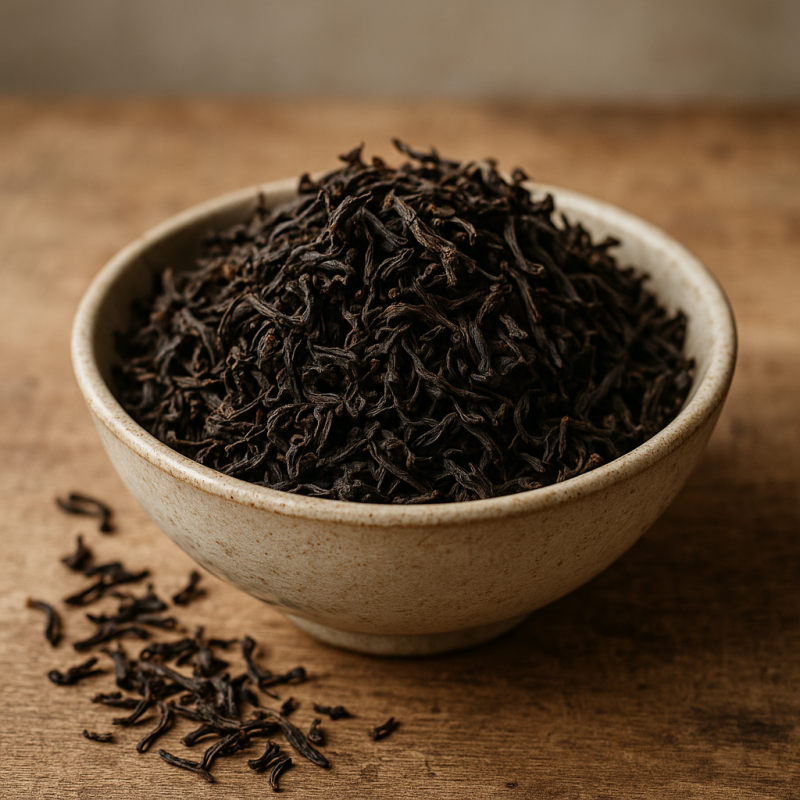
Now, consider the physical form. Loose leaf tea, as the name implies, consists of whole or large, broken pieces of the leaf. This form preserves the complex array of essential oils and chemical compounds that were so carefully developed during processing. When you pour hot water over these leaves, they have ample space to unfurl and expand, releasing their nuanced flavors and aromas slowly and gracefully. It is a gentle extraction.
The tea bag, by contrast, typically contains “fannings” or “dust”—the smallest particles left over from the processing of higher-grade teas. Their small size creates a massive surface area, leading to a rapid, aggressive infusion. This is why a tea bag brews so quickly, but it’s also why the resulting brew is often one-dimensional, dominated by the sharp, bitter notes of tannins without the accompanying subtleties. The confinement of the bag itself further restricts the tea particles from fully interacting with the water. The choice, then, is between a quick, strong, but often flat beverage, and a more patient, layered, and deeply aromatic experience.
| Feature | Loose Leaf Tea | Conventional Tea Bag |
|---|---|---|
| Leaf Quality | Whole or large broken leaves | Dust and fannings (small particles) |
| Flavor Profile | Complex, nuanced, and aromatic | Often one-dimensional, strong, and tannic |
| Aroma | Rich and varied, released as leaves unfurl | Minimal, often smells of paper or dust |
| Brewing | Leaves expand freely, allowing for a full infusion | Confined in a bag, restricting water flow and extraction |
| Re-steeping | Can be infused multiple times, revealing new flavor layers | Generally suitable for only one infusion |
| Sourcing | Often single-origin, traceable to a specific garden or region | Typically a blend of teas from multiple, unspecified sources |
A Tale of Two Teas: The Five Pillars of Black Tea
To truly understand loose leaf black tea is to understand the concept of terroir. It is a term borrowed from the world of wine, but it applies with equal, if not greater, force to tea. Terroir encompasses all the environmental factors that affect a crop’s phenotype—its unique characteristics—including the soil’s specific chemistry, the altitude, the climate, the amount of rainfall and sunlight, and even the surrounding flora. A Camellia sinensis plant grown in the misty, high-altitude slopes of Darjeeling will produce a tea that is fundamentally different from one grown in the low-lying, humid plains of Assam.
This is why single-origin teas are so prized. Unlike a breakfast blend, which combines teas from various regions to achieve a consistent but generic flavor year after year, a single-origin tea is a snapshot of a specific place at a specific time. It tells a story of the soil, the weather, and the hands that crafted it. To explore the world of loose leaf black tea is to become a student of geography and culture. Let us begin our exploration with five of the most iconic and distinct black tea regions. Each represents a pillar of the black tea world, offering a unique sensory vocabulary.
| Tea Variety | Origin | Common Flavor Notes | Body | Best Brewed |
|---|---|---|---|---|
| Assam | Assam, India | Malty, robust, earthy, sometimes spicy | Full | Hot, often with milk and sugar |
| Darjeeling | Darjeeling, India | Muscatel grape, floral, fruity, delicate | Light to Medium | Hot, without milk |
| Ceylon | Sri Lanka | Brisk, citrus, bright, crisp | Medium | Hot or iced, with or without milk |
| Keemun | Anhui, China | Wine-like, stone fruit, cocoa, hint of smoke | Medium | Hot, without milk |
| Yunnan | Yunnan, China | Sweet, malty, chocolate, peppery | Full | Hot, often without milk |
Assam: The Bold Foundation of Breakfast Blends
If loose leaf black tea has a center of gravity, it is Assam. This region in northeastern India is the largest tea-growing area in the world by production. The tea plant here is a distinct variety, Camellia sinensis var. assamica, a robust, broad-leafed plant that thrives in the region’s low altitude, high humidity, and clay-rich soil. These conditions produce a tea that is the very definition of strong and full-bodied.
A History Forged in Empire
The story of Assam tea is deeply intertwined with the history of the British Empire. In the 1820s, a Scottish adventurer named Robert Bruce is credited with “discovering” the indigenous tea plants, though local tribes had been using them for centuries. The British, desperate to break China’s monopoly on the tea trade, saw the potential. The establishment of vast tea plantations in Assam during the 19th century was a monumental and often brutal undertaking, transforming the region’s landscape and society (Heiss & Heiss, 2007). The tea produced here was specifically cultivated to suit the British palate, which favored a strong, dark tea that could stand up to the addition of milk and sugar. This is why Assam forms the backbone of most “English Breakfast,” “Irish Breakfast,” and “Scottish Breakfast” blends.
The Flavor Profile: Unmistakably Malty
The defining characteristic of a good Assam is its powerful malty flavor. Think of the rich, comforting taste of malted milk or a dark, wheaty beer. This is often accompanied by notes of caramel, dark honey, and a satisfying earthiness. A high-quality, orthodox (whole-leaf) Assam will have a deep reddish-brown liquor and a brisk, invigorating character that awakens the senses. While second flush (summer harvest) Assams are prized for their “tippy” quality—containing the golden leaf buds that add a smoother, sweeter complexity—the first flush (spring harvest) can offer a more astringent and brighter cup.
Brewing Your First Cup of Assam
To brew Assam is to embrace its strength. It is a forgiving tea but responds best to fully boiling water (212°F or 100°C) to extract its deep flavors.
- Start with one teaspoon (about 2.5 grams) of loose leaf Assam per 8 ounces of water.
- Bring your water to a rolling boil. Using water that isn’t hot enough will result in a weak, underdeveloped flavor.
- Pour the water over the leaves and steep for 3 to 5 minutes. A 3-minute steep will give you a brisk, lively cup. Pushing it to 5 minutes will yield a much stronger, more robust, and potentially more astringent brew.
- Strain the leaves and serve. This is the classic tea to enjoy with a splash of milk, which softens its tannic edge, and a bit of sugar or honey to enhance its malty sweetness.
Darjeeling: The Champagne of Teas
Traveling west from Assam, we ascend into the Himalayan foothills to the region of Darjeeling. Here, at altitudes of up to 6,500 feet, the tea gardens cling to steep, misty slopes. The tea plants are the smaller-leafed Camellia sinensis var. sinensis, the same variety grown in China. The cool air, rocky soil, and unique weather patterns of this region create a tea that is worlds away from the malty power of Assam. Darjeeling is renowned for its delicacy, its complex aromatics, and a signature flavor note that connoisseurs call “muscatel.”
The Story of Stolen Plants
Unlike Assam, tea was not native to Darjeeling. Its presence there is a direct result of 19th-century corporate espionage. The British East India Company, still seeking to control the tea trade, tasked Scottish botanist Robert Fortune with a secret mission to steal tea plants and seeds from China. The plants he successfully smuggled out were first experimentally cultivated in Darjeeling in the 1840s, and the region’s unique terroir proved to be a perfect match (Rose, 2010). The resulting tea was so unique and prized that, like Champagne from France, authentic Darjeeling is now protected by a Geographical Indication (GI) tag.
A Symphony of Flushes
The character of Darjeeling tea changes dramatically with the seasons.
- First Flush (Spring): Harvested from late February to mid-April, these are the most delicate and prized leaves. They produce a pale, golden-green liquor with a light body, a gentle astringency, and vibrant floral and green fruit notes. It is a far cry from what many people think of as “black tea.”
- Second Flush (Summer): Harvested from May to June, this is when the classic Darjeeling character emerges. The liquor is a beautiful amber color, and the flavor profile is fuller, with the famous “muscatel” note—a complex, wine-like flavor reminiscent of muscat grapes, with hints of ripe peach and apricot.
- Monsoon Flush (Rainy Season): Less complex and often used for blending.
- Autumnal Flush (Post-Monsoon): Harvested in October and November, these teas have a darker, coppery liquor and a fuller, rounder flavor with notes of wood and ripe fruit.
Brewing the “Champagne”
Brewing Darjeeling requires a gentler touch than Assam. Using water that is too hot or steeping for too long can easily scorch the delicate leaves and produce a bitter, unpleasant cup.
- Use one teaspoon (about 2 grams) of loose leaf Darjeeling per 8 ounces of water.
- Use water that is just off the boil. For a first flush, aim for 185-195°F (85-90°C). For second and autumnal flushes, 195-205°F (90-96°C) is appropriate.
- Steep for 2 to 3 minutes. Darjeeling does not need a long infusion to release its flavors. Over-steeping is the most common mistake.
- Strain and serve. Darjeeling is almost always enjoyed plain. Adding milk or sugar would overwhelm its delicate and complex aromatic profile.
Ceylon: The Crisp and Bright Island Classic
Journeying south, we arrive on the island of Sri Lanka, known in the tea world by its colonial name, Ceylon. Tea here is the lifeblood of the nation, and the island’s diverse topography gives rise to a fascinating range of black teas. From the low-grown teas of the Ruhuna district, which produce a strong, dark liquor, to the high-grown teas of Nuwara Eliya and Dimbula, which are light, bright, and fragrant, Ceylon tea offers a wide spectrum of flavors. However, the defining characteristic of a classic high-grown Ceylon is its clean, crisp, and brisk quality, often with pronounced notes of citrus.
From Coffee to Tea
Sri Lanka’s journey to becoming a tea powerhouse was born from disaster. In the mid-19th century, the island was a major coffee producer. But in 1869, a fungal disease called coffee rust swept through the plantations, devastating the industry. Plantation owners, desperate for a new crop, turned to tea. A Scotsman named James Taylor is credited with planting the first commercial tea estate in 1867, and the industry grew with astonishing speed (Ukers, 1935). Today, Sri Lanka is one of the world’s top tea exporters, and its teas are beloved for their versatility.
A Spectrum of Altitudes
The character of Ceylon tea is largely defined by the altitude at which it is grown.
- High-Grown (above 4,000 ft): Teas from regions like Nuwara Eliya, Dimbula, and Uva are the most sought-after. They are light, bright, and fragrant, with a beautiful golden-red liquor. The flavor is crisp and brisk, often with notes of lemon, grapefruit, and a hint of mint or eucalyptus. These teas are what give Earl Grey its classic base.
- Mid-Grown (2,000-4,000 ft): Teas from the Kandy region are more full-bodied with a rich, coppery color.
- Low-Grown (below 2,000 ft): Teas from the Ruhuna district are strong and robust, producing a very dark liquor. They are often used in blends for their color and strength.
The Perfect Iced Tea and More
The bright, brisk nature of high-grown Ceylon makes it an exceptional choice for iced tea. Its clean flavor doesn’t become cloudy or bitter when chilled. It is also a wonderful hot tea, a perfect afternoon pick-me-up.
- Use one teaspoon (about 2.5 grams) of loose leaf Ceylon per 8 ounces of water.
- Use fully boiling water (212°F or 100°C) to bring out its bright, brisk character.
- Steep for 3 to 4 minutes. This is enough time to extract the flavor without introducing too much astringency.
- Strain and serve. Ceylon is versatile. It can be enjoyed plain, with a slice of lemon to accentuate its citrus notes, or with a splash of milk. For iced tea, brew it slightly stronger, then pour over a full glass of ice.
Keemun: The Burgundy of Teas
We now return to China, the birthplace of tea, to explore one of its most famous black teas: Keemun (or Qimen). Produced in Anhui province, Keemun is a relatively young tea, first created in the late 19th century. It quickly gained fame for its unique and complex flavor profile, earning it the moniker “the Burgundy of teas.” Its aroma is layered and sophisticated, with notes of wine, stone fruit, and a subtle smokiness that sets it apart from the Indian and Sri Lankan varieties. It is also a key component in some original English Breakfast blends.
Craftsmanship and Aroma
What makes Keemun so special is a combination of a local tea cultivar and a slower, more meticulous withering and oxidation process. This careful crafting brings out a specific aromatic quality that is often described as being similar to orchids or roses. Unlike the heavy, campfire smoke of Lapsang Souchong, Keemun’s smokiness is a delicate, background note, more akin to toasted pine. This is layered with flavors of unsweetened cocoa, red wine, and dried plums. It is a tea that invites contemplation.
Exploring Keemun Varieties
There are several grades of Keemun, with the highest being Keemun Mao Feng, which includes more leaf buds and has a more delicate flavor. Hao Ya is another premium grade, known for its fine leaves and rich aroma. Even standard grades of Keemun, however, offer a complexity that is deeply satisfying. It is a testament to the skill of the tea masters in Anhui.
Brewing for Nuance
To appreciate the subtleties of Keemun, it is best to brew it with care. Its delicate aromatics can be lost if the water is too hot or the steep is too long.
- Use one teaspoon (about 2 grams) of loose leaf Keemun per 8 ounces of water.
- Use water that is just below boiling, around 200-205°F (93-96°C). A full boil can sometimes mute its floral notes.
- Steep for 2 to 3 minutes. Keemun’s flavor is in its aroma and its initial taste; over-steeping will only bring out bitterness.
- Strain and serve plain. This is a tea to be savored on its own, allowing its wine-like, fruity, and cocoa notes to unfold on the palate.
Yunnan (Dian Hong): The Malty and Sweet Origin
Our final pillar is Yunnan black tea, also known as Dian Hong. Hailing from Yunnan province in southwestern China, a region considered by many to be the birthplace of the tea plant itself, these teas are visually stunning. They are often characterized by a high proportion of beautiful, golden-orange leaf buds. These buds are low in tannins and high in amino acids, which gives the resulting tea a remarkably smooth, sweet, and malty flavor, with a complete lack of astringency.
The Land of Ancient Tea Trees
Yunnan is home to ancient, wild-growing tea trees, some of which are hundreds or even thousands of years old. The teas made from these old-growth trees are called gushu and are highly prized. Yunnan black teas are typically made from the same large-leaf assamica variety found in Assam, but the different terroir and, crucially, the different processing methods result in a tea that is sweeter, smoother, and more complex. While Assam is bold and brisk, Yunnan is rich, mellow, and comforting.
The Taste of Gold
The flavor profile of a good Yunnan black tea is dominated by notes of sweet potato, caramel, and unsweetened chocolate. There is a distinct malty character, but it is a softer, sweeter malt than that of Assam. Many Yunnan teas also have a peppery or spicy note in the finish, which adds to their complexity. The liquor is a brilliant, clear reddish-gold, and the aroma is intoxicatingly sweet. For those who find other black teas too strong or bitter, Yunnan is often a revelation. It showcases the full, rich flavor of loose leaf black tea without any harshness.
A Smooth and Easy Brew
Yunnan is one of the most forgiving black teas to brew. Its low tannin content means it is very difficult to make it taste bitter.
- Use one teaspoon (about 2.5 grams) of Yunnan tea per 8 ounces of water.
- Use water that is just off the boil, around 205°F (96°C).
- Steep for 3 to 5 minutes. Unlike other teas, a longer steep with Yunnan will simply make the flavor richer and deeper, not more bitter.
- Strain and serve. It is best enjoyed plain to appreciate its natural sweetness and complex malty, chocolatey notes. It needs no milk or sugar. You can explore a wonderful selection of premium loose leaf varieties like Yunnan to experience this natural sweetness firsthand.
The Art of Infusion: A Guide to Brewing Perfection
Having journeyed through the great terroirs of black tea, you are now equipped with the knowledge to select a tea that speaks to you. But the finest leaves in the world can be let down by improper brewing. The goal of brewing is not simply to add hot water to leaves; it is to master a controlled extraction, to coax the desired flavors and aromas from the leaf while leaving the unwanted bitterness behind. This art rests on the interplay of four fundamental variables: the amount of leaf, the temperature of the water, the volume of the water, and the duration of the infusion.
A Simple Method for a Perfect Cup
For those beginning their loose leaf journey, this simple “Western-style” method, using a teapot or a mug with an infuser, is the perfect starting point.
Step 1: Measure Your Leaves A general rule of thumb is to use one teaspoon of tea leaves (approximately 2-3 grams) for every 8 ounces (240 ml) of water. However, this is just a starting point. Teas with large, fluffy leaves, like some Yunnan varieties, may require a heaping teaspoon, while dense, tightly rolled teas may need a little less. Do not be afraid to adjust to your personal preference. More leaf will create a stronger, more concentrated brew.
Step-2: Heat Your Water to the Right Temperature This is perhaps the most critical step. As we’ve seen, different black teas require different temperatures. A digital variable-temperature kettle is an invaluable tool for any tea lover.
- For robust teas (Assam, Ceylon, most blends): Use a full, rolling boil (212°F / 100°C). This high heat is needed to break down the leaves and extract their deep, malty flavors.
- For delicate teas (Darjeeling first flush, some Keemuns): Use water that is just off the boil (185-205°F / 85-96°C). Water that is too hot will scald these leaves, destroying their subtle floral and fruity notes and creating bitterness.
Step 3: Time Your Infusion Once the water is at the correct temperature, pour it over the leaves and start a timer.
- General Guideline: 3 to 5 minutes is a good range for most black teas.
- 2-3 Minutes: For delicate teas like Darjeeling or for a lighter, less astringent cup of any black tea.
- 4-5 Minutes: For a strong, robust cup, especially for teas like Assam that are intended to be taken with milk. Never judge by color alone. A tea can look dark but be under-extracted and weak in flavor. Time is your most reliable guide.
Step 4: Separate the Leaf from the Liquor Once your timer goes off, it is imperative to completely separate the leaves from the brewed tea. If you leave them steeping, the tea will continue to extract and will inevitably become bitter. If using a teapot, pour all the tea out into cups or a separate server. If using an infuser basket, remove it from your mug. This single action is the key to a consistently delicious cup.
Advanced Exploration: Re-steeping and Gong Fu Cha
One of the great joys of using high-quality classic loose-leaf teas is the ability to re-steep them. Many whole-leaf teas, especially Chinese varieties like Keemun and Yunnan, can be infused multiple times. The second and third infusions will often reveal new layers of flavor and aroma that were hidden in the first. For these subsequent infusions, you might slightly increase the water temperature or steep time.
For the truly adventurous, this leads to the world of Gong Fu Cha, or “making tea with skill.” This traditional Chinese brewing method uses a very high leaf-to-water ratio in a small vessel, like a gaiwan or a tiny Yixing clay teapot. The infusions are very short—starting at just 10-20 seconds—and a single serving of leaves can yield anywhere from 5 to 15 infusions. Each steep is a snapshot, a fleeting glimpse into the tea’s evolving character. It is a meditative and deeply engaging way to experience the full potential of a fine tea.
The Capabilities of the Cup: Flavor, Aroma, and Wellbeing
A cup of loose leaf black tea is a complex sensory and biochemical event. The experience we perceive as “flavor” is an intricate dance between taste on our tongue and, more importantly, aroma in our olfactory system. The compounds developed during oxidation—theaflavins and thearubigins—are the primary drivers of taste, providing body and astringency. But the vast majority of what we “taste” comes from volatile aromatic compounds that are released by the hot water and travel up to the olfactory receptors in our nasal cavity (Wilson & Clifford, 2012). This is why a tea made from whole leaves, which have protected these fragrant oils, is so much more aromatic than one made from dust.
Beyond the sensory pleasure, black tea has a well-documented effect on our state of mind. It contains caffeine, a stimulant that blocks adenosine receptors in the brain, leading to increased alertness. However, tea’s effect is often described as different from coffee’s—a “calm alertness” rather than a jittery buzz. This is attributed to the presence of L-theanine, an amino acid that is almost uniquely found in the Camellia sinensis plant. L-theanine has been shown to increase alpha brain wave activity, which is associated with a state of relaxed wakefulness (Nobre et al., 2008). It can cross the blood-brain barrier and has been found to modulate levels of neurotransmitters like dopamine and serotonin, contributing to its stress-reducing effects. The synergy between caffeine and L-theanine is what makes tea such a unique beverage for focus and contemplation.
Furthermore, black tea is rich in flavonoids, a class of antioxidants that may contribute to cardiovascular health. Studies have suggested a correlation between regular black tea consumption and improved endothelial function (the health of our blood vessel linings) and reduced risk factors for heart disease (Gardner et al., 2007). While tea is not a medicine, its role as part of a healthy lifestyle is supported by a growing body of scientific inquiry.
The Human Hand in the Garden: Ethics and Sustainability
A final, and crucial, dimension of appreciating loose leaf black tea in 2026 is an awareness of its human and environmental story. The history of tea is fraught with exploitation, and the modern commodity tea market can perpetuate systems that are harmful to both people and the planet. The low prices paid for the fannings and dust that fill most tea bags often come at the expense of the tea pluckers and the soil they depend on.
Choosing high-quality loose leaf tea is an opportunity to make a more ethical and sustainable choice. Many specialty tea companies now prioritize direct trade relationships with tea gardens . This model bypasses the large commodity auctions and brokers, ensuring that a higher percentage of the price goes directly to the farmers and their communities. This not only provides a better livelihood but also incentivizes the production of higher-quality, artisan teas.
Look for certifications like Fair Trade, which guarantees a minimum price and a social premium for workers, and USDA Organic, which ensures the tea was grown without synthetic pesticides and fertilizers . These labels provide a baseline of assurance. However, the most meaningful connection often comes from sourcing tea from companies that are transparent about their relationships with specific gardens. When you know the story of the garden where your Darjeeling was grown or the family that crafted your Keemun, the tea in your cup takes on a deeper resonance. It ceases to be a mere product and becomes a connection to a place, a culture, and a community of people dedicated to the art of the leaf.
Frequently Asked Questions (FAQ)
1. Is loose leaf black tea healthier than tea from a tea bag? The tea leaf itself is the same, so the inherent compounds are similar. However, loose leaf tea is typically of much higher quality, consisting of whole or large leaves that retain more of their essential oils and flavonoids. The brewing process also allows for a better extraction of these compounds. Moreover, some tea bags have been found to contain plastics, which is another factor to consider.
2. How much caffeine is in loose leaf black tea? The caffeine content can vary widely depending on the type of tea, the time of harvest, and the brewing method. Generally, a cup of black tea contains about 40-70 milligrams of caffeine, which is roughly half that of a similar-sized cup of coffee. Teas made from the leaf buds and young leaves, like some first flush Darjeelings or tippy Assams, will often have a higher caffeine content.
3. How should I store my loose leaf black tea? Tea’s greatest enemies are air, light, moisture, and strong odors. The best way to store your tea is in an opaque, airtight container in a cool, dark place like a pantry or cupboard. Avoid storing it in the refrigerator or freezer, as this can introduce moisture and condensation. Do not store it near your spice rack or coffee beans, as the tea will absorb those aromas.
4. Can I brew loose leaf tea without any special equipment? Absolutely. While teapots and infusers are convenient, you can easily brew loose leaf tea with two mugs. Simply place the leaves in one mug, pour the hot water over them, and let them steep. When the time is up, carefully pour the liquid into the second mug, using the rim of the first mug to hold back the majority of the leaves.
5. What does the term “flush” mean in relation to tea? A “flush” refers to a period of new growth on the tea plant. In many regions, especially those with distinct seasons like Darjeeling, the character of the tea changes significantly based on which flush it was harvested from. The “first flush” is the first new growth of spring, “second flush” is the growth that follows in early summer, and so on.
6. Why is my black tea bitter? Bitterness in black tea is almost always a result of over-extraction. This can be caused by two things: using water that is too hot for the specific type of tea (especially delicate ones like Darjeeling), or steeping the leaves for too long. Try reducing your steep time or lowering your water temperature.
7. What is an “orthodox” tea? Orthodox refers to the traditional method of processing tea where the leaves are rolled or handled in a way that keeps them largely whole. This is in contrast to the CTC (Crush, Tear, Curl) method, which uses machines to macerate the leaves into tiny pellets. CTC is used for most tea bags as it produces a strong, quick-brewing tea, while orthodox processing is used for virtually all specialty loose leaf teas to preserve the leaf’s integrity and complex flavor.
A Final Thought on the Journey
Exploring the world of loose leaf black tea is more than just a culinary pursuit; it is an exercise in mindfulness and a connection to a global tapestry of history, agriculture, and human artistry. It invites you to slow down, to engage your senses, and to appreciate the profound complexity that can be found in something as simple as a leaf and hot water. Each cup offers a different story, a different landscape, a different expression of the earth’s bounty. Whether you are drawn to the robust maltiness of an Assam, the ethereal fragrance of a Darjeeling, or the comforting sweetness of a Yunnan, the journey is one of personal discovery. There is no single “best” black tea, only the one that best suits your palate, your mood, and your moment.
References
Gardner, E. J., Ruxton, C. H. S., & Leeds, A. R. (2007). Black tea – helpful or harmful? A review of the evidence. European Journal of Clinical Nutrition, 61(1), 3–18.
He, Y., Chen, J., Li, X., Pan, H., He, X., & Zeng, L. (2022). A review of the chemical composition and health benefits of black tea. Journal of Food Composition and Analysis, 105, 104249.
Heiss, M. L., & Heiss, R. J. (2007). The story of tea: A cultural history and drinking guide. Ten Speed Press.
Li, S., Lo, C., Pan, M. H., Lai, C. S., & Ho, C. T. (2019). Black tea: Chemical analysis and stability. Food & Function, 4(1), 10–18. https://doi.org/10.1039/c2fo30093a
Nobre, A. C., Rao, A., & Owen, G. N. (2008). L-theanine, a natural constituent in tea, and its effect on mental state. Asia Pacific Journal of Clinical Nutrition, 17(S1), 167–168.
Rose, S. (2010). For all the tea in China: How England stole the world’s favorite drink and changed history. Penguin Books.
Ukers, W. H. (1935). All about tea. The Tea and Coffee Trade Journal Company.
Wilson, K. C., & Clifford, M. N. (Eds.). (2012). Tea: Cultivation to consumption. Springer Science & Business Media.