Blog
A Practical 2026 Buyer’s Guide to Loose Green Tea: 3 Steps to the Perfect Brew

Abstract
This guide provides a comprehensive examination of loose green tea, moving the enthusiast from the convenience of pre-packaged teabags to the nuanced world of whole-leaf brewing. It posits that a superior tea experience is contingent not only on the quality of the leaf but on the brewer’s understanding of fundamental principles, including water temperature, steeping duration, and appropriate teaware. The analysis systematically deconstructs the process into three core stages: selecting high-quality leaves, preparing the essential elements for brewing, and mastering the steeping technique itself. By exploring the diverse origins, processing methods, and characteristic flavor profiles of prominent green tea varieties, this work furnishes the reader with a framework for making discerning choices. The inquiry reveals that the perceived complexity of brewing loose green tea can be simplified into a set of accessible, repeatable steps. Ultimately, this guide aims to empower the individual to consistently produce a balanced, aromatic, and non-bitter infusion, transforming the daily act of tea preparation into a rewarding sensory ritual.
Key Takeaways
- Evaluate loose leaf quality by assessing leaf shape, color, and aroma.
- Use water heated to approximately 80°C (176°F) to avoid bitterness.
- A short initial steep of 1-2 minutes is often sufficient for green tea.
- High-quality loose green tea can be infused multiple times.
- Store your tea leaves in an airtight, opaque container away from heat.
- A simple glass or ceramic teapot is perfect for starting your journey.
Table of Contents
- A Practical Guide to Loose Green Tea
- Step 1: The Art and Science of Selecting Loose Green Tea
- Step 2: Assembling Your Toolkit for the Perfect Brew
- Step 3: Mastering the Ritual of Steeping
- Frequently Asked Questions (FAQ)
- Conclusion
- References
A Practical Guide to Loose Green Tea
The journey into the world of loose green tea often begins with a single question: Why does this taste so much better? For many, the first sip of a properly brewed whole-leaf green tea is a revelation. It is a departure from the often flat, astringent character of commercial teabags and an entry into a landscape of complex aromas and flavors, from nutty and vegetal to sweet and floral. This guide is crafted as a patient companion for that journey. We will proceed not with a list of rigid rules, but with an exploration of principles, empowering you to understand the why behind each step.
To truly appreciate any craft, one must first understand its materials. In our case, the material is the leaf of the Camellia sinensis plant, a single species responsible for all the world’s tea. The distinction between green, black, oolong, and white tea arises not from different plants, but from the level of oxidation the leaves undergo after harvesting. Green tea is defined by its lack of oxidation. Immediately after being plucked, the leaves are heated—either by pan-firing, as is common in China, or by steaming, the preferred method in Japan. This heating process, known as “kill-green,” deactivates the enzymes responsible for oxidation, preserving the leaf’s green color and its fresh, vibrant character. This simple, yet profound, act of preservation is what sets green tea apart.
Moving from a teabag to loose leaves is akin to shifting from listening to a compressed music file to a high-fidelity vinyl record. Teabags typically contain “fannings” or “dust”—the smallest broken particles of tea leaves. These small pieces have a large surface area, causing them to infuse very quickly and often release an excess of tannins, which are the compounds responsible for bitterness and astringency. Loose leaf tea, by contrast, consists of whole or large, partial leaves. As they steep, they have the space to unfurl and expand, releasing their aromatic compounds more slowly and gracefully. This measured release allows for a more layered, nuanced, and forgiving infusion. It also enables the leaves to be steeped multiple times, with each infusion offering a new expression of its character.
This guide will walk you through three foundational stages. First, we will learn how to select high-quality loose green tea, understanding the visual and aromatic cues that signal a superior product. Second, we will assemble the simple tools necessary for brewing. Lastly, we will master the brewing process itself, learning how to control temperature and time to coax the very best from your leaves. Think of this not as a technical manual, but as the beginning of a conversation with the tea itself.
Step 1: The Art and Science of Selecting Loose Green Tea
Choosing your first loose green tea can feel daunting. The names are unfamiliar, the shapes are varied, and the descriptions can be poetic to the point of being unhelpful. However, the process of selection can be simplified by focusing on a few key aspects: the appearance of the dry leaf, its aroma, and an understanding of its origin and processing style.
Reading the Leaves: Visual and Aromatic Cues
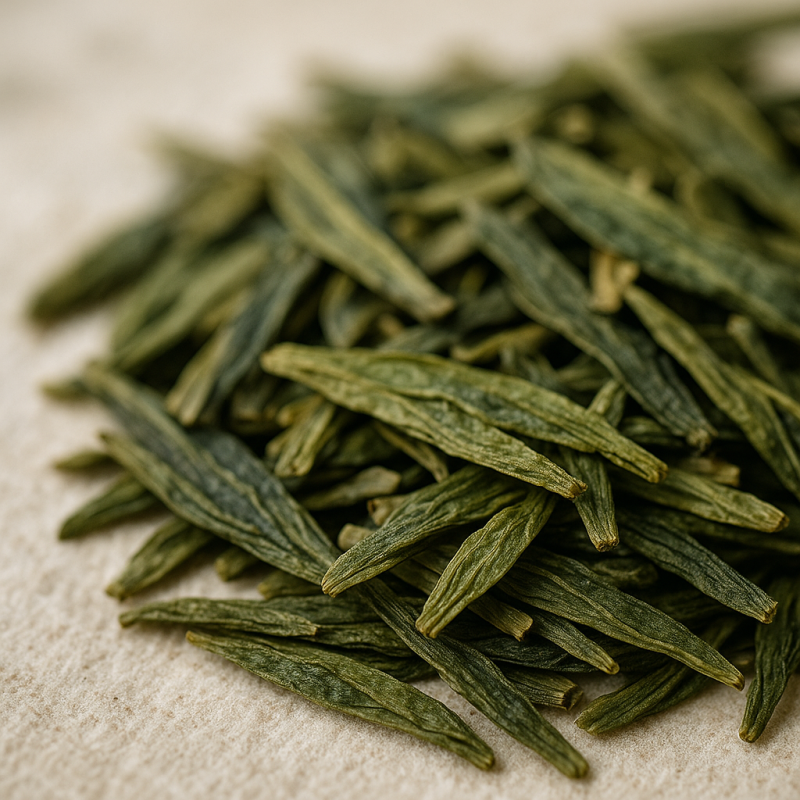
Before you even think about water, the dry leaves themselves have a story to tell. Your senses of sight and smell are your most reliable guides. When you look at a sample of loose green tea, pay attention to the integrity and consistency of the leaves.
- Wholeness: Are the leaves mostly whole and intact, or are they broken into small fragments? A higher proportion of whole leaves generally indicates more careful handling and a higher grade of tea. While some styles, like Gunpowder, are intentionally rolled into pellets, they should still appear uniform and tightly compressed.
- Color: The color should be vibrant. For most Chinese green teas, look for a fresh, verdant spectrum ranging from jade to deep forest green. A dull, brownish, or pale yellow hue can suggest old age or improper storage. Japanese steamed teas, like Sencha, often have a deeper, almost blue-green color.
- Consistency: The leaves within a single batch should be relatively uniform in size, shape, and color. This suggests that they were harvested from the same plants at the same time, a mark of careful sorting and quality control.
Next, bring the dry leaves to your nose. The aroma should be fresh and inviting. What do you smell? High-quality green tea will often have aromas of fresh-cut grass, toasted nuts, sweet peas, or even a light floral scent. If the tea smells dusty, stale, or has no discernible aroma, it is likely past its prime. The goal here is to find a scent that is appealing to you, as this is a strong indicator of the flavors that will be present in the brewed cup.
Understanding the Main Families of Green Tea
While there are thousands of individual green teas, they can be broadly understood through their country of origin and processing method, which gives rise to distinct flavor profiles. The two most dominant traditions are Chinese and Japanese.
- Chinese Green Teas: Typically pan-fired, this method imparts a gentler, toastier, and often nuttier flavor profile. They tend to be smoother and less astringent than their Japanese counterparts.
- Japanese Green Teas: Almost always steamed, this process preserves a more intense vegetal, grassy, and sometimes marine or umami flavor. The steaming results in a brighter green color in both the leaf and the liquor.
To make this more concrete, let us examine some of the most famous examples from each tradition. This is not an exhaustive list, but it provides a solid foundation for exploration. For those just beginning, exploring a curated collection of premium loose leaf teas can be an excellent way to experience these classic profiles firsthand.
| Tea Name | Origin | Processing Highlight | Flavor Profile | Leaf Appearance |
|---|---|---|---|---|
| Dragon Well (Longjing) | Hangzhou, China | Pan-fired and pressed flat | Toasty, chestnut, buttery, smooth | Flat, spear-like, jade green |
| Gunpowder | Zhejiang, China | Steamed, then rolled into pellets | Bold, smoky, slightly astringent | Small, tightly rolled green pellets |
| Biluochun | Jiangsu, China | Pan-fired, delicately rolled | Fruity, floral, brothy, sweet | Tiny, fuzzy, spiral-shaped |
| Sencha | Japan (various) | Steamed, rolled into needles | Grassy, vegetal, umami, oceanic | Needle-like, deep bluish-green |
| Genmaicha | Japan (various) | Sencha mixed with toasted rice | Nutty, savory, popcorn-like | Green needles mixed with brown rice kernels |
Thinking about these profiles, which sounds most appealing to you? Do you gravitate towards the warm, toasty notes of a Dragon Well, or does the fresh, oceanic briskness of a Sencha pique your interest? There is no right answer. Your personal preference is the most important factor.
The Significance of Harvest Time
For many high-quality green teas, particularly in China and Japan, the time of harvest is a crucial determinant of quality and flavor. Teas are often categorized by “flushes,” or periods of growth.
- First Flush (Pre-Qingming): These are the earliest spring harvests, often plucked before the Qingming festival in early April in China. These leaves are the youngest and most tender, having stored nutrients all winter. They are prized for their delicate, complex flavors, higher concentration of sweet amino acids, and lower levels of bitter catechins. They are consequently the most expensive.
- Second Flush: Harvested later in the spring and early summer, these leaves are larger and produce a brew that is often stronger and more robust, though perhaps less nuanced than the first flush.
- Later Flushes: Teas harvested in late summer and autumn are generally used for lower-grade products, including many teabags and flavored blends.
While a first flush tea is a remarkable experience, it is not a requirement for enjoying loose green tea. Many excellent and satisfying teas come from later harvests. The key is that a reputable vendor will be transparent about the harvest season, as it provides important context for the tea’s character and price.
Step 2: Assembling Your Toolkit for the Perfect Brew
One of the most persistent myths about brewing loose leaf tea is that it requires an arsenal of expensive and esoteric equipment. This is simply not true. While the world of teaware is deep and fascinating, you can achieve a perfect brew with items you likely already have or can acquire easily and inexpensively. The focus should be on function and control, not on aesthetics alone. The three pillars of your toolkit are a heating vessel, a brewing vessel, and good water.
The Brewing Vessel: A Space for Leaves to Dance
The primary function of a brewing vessel is to hold the tea leaves and hot water together for a controlled period. The most important feature is that it gives the leaves ample room to expand and that it allows you to separate the liquid from the leaves completely once the steeping is finished. This latter point is the most common reason a green tea becomes bitter: the leaves are left to sit in the water indefinitely.
Here are a few excellent and accessible options:
- The Simple Mug with an Infuser Basket: This is perhaps the most straightforward method. A large, basket-style infuser that sits inside your mug provides plenty of space for the leaves to unfurl. When the steeping time is up, you simply lift the entire basket out. Avoid small, ball-shaped infusers, as they constrict the leaves and function much like a teabag.
- The Glass or Ceramic Teapot: A small teapot (around 250-500ml or 8-16oz) is a wonderful tool. It allows you to brew a controlled amount that you can then decant entirely into your cup or cups. This prevents the tea from over-steeping in the pot. Many teapots come with a built-in strainer at the spout, or you can simply use a small, handheld strainer over your cup as you pour. Glass is particularly rewarding for a beginner, as it allows you to watch the leaves unfurl.
- The Gaiwan: For those wishing to explore the traditional Chinese Gong Fu style of brewing, the gaiwan is the essential tool. It is simply a lidded bowl. You place a larger quantity of leaf in the gaiwan, use short, successive infusions (often just seconds long), and decant the tea into a small cup. This method produces a concentrated, intense brew that highlights the tea’s evolving character over many steepings. While it has a slight learning curve, it is an incredibly intimate and rewarding way to experience tea. We will explore this method in more detail in the next section.
The Water: Temperature and Quality
If the tea leaf is the soul of the brew, water is its body. Given that a cup of tea is over 99% water, its quality and temperature have a profound impact on the final taste.
Let us first address temperature. This is the single most important variable in brewing loose green tea and the primary culprit behind bitterness. The key compounds in green tea that contribute to flavor are amino acids (like L-theanine, which provides sweetness and umami), catechins (a type of polyphenol that provides briskness but also bitterness), and caffeine (which is also bitter). These compounds dissolve in water at different rates and temperatures. The sweet, desirable amino acids dissolve readily at lower temperatures. The bitter catechins and caffeine, however, are extracted much more aggressively at higher temperatures (Kacmaz & Kalkan, 2021).
Therefore, the cardinal rule of brewing green tea is: do not use boiling water.
Boiling water (100°C or 212°F) will shock the delicate leaves, scalding them and extracting an excessive amount of bitter compounds before the sweeter notes have a chance to emerge. The ideal temperature range for most loose green tea is between 75°C and 85°C (167°F and 185°F). A good starting point is 80°C (176°F).
How can you achieve this without a special temperature-controlled kettle?
- The Wait Method: Bring your water to a full boil, then let it cool. In a standard kettle, it will take about 2-3 minutes to drop to the 80-85°C range. In an open mug, it will cool much faster.
- The Transfer Method: Pouring boiling water from one vessel to another will drop its temperature by about 5-10°C each time. You can pour from your kettle into a measuring cup, and then from the measuring cup into your teapot.
- The Addition Method: Add a small amount of cold water to your boiling water. A ratio of about 4 parts boiling water to 1 part cold water will bring you very close to the target temperature.
Regarding water quality, the ideal water for tea is fresh, clean, and has a relatively neutral mineral content. Hard, mineral-heavy tap water can react with the compounds in tea to create a dull, flat taste. Similarly, distilled water, which has no minerals, can produce a thin and lifeless brew. If your tap water has a strong taste of chlorine or other chemicals, using a simple carbon filter pitcher or bottled spring water will make a noticeable improvement.
The Tea-to-Water Ratio: Finding the Right Balance
The final piece of our pre-brewing puzzle is the ratio of tea leaves to water. This will vary depending on your brewing style.
| Brewing Style | Tea-to-Water Ratio (by volume) | Typical Volume | Goal |
|---|---|---|---|
| Western Style (Mug/Teapot) | 1 teaspoon per 8 oz (240ml) | 250-500 ml | A longer, more dilute infusion for easy sipping. |
| Gong Fu Style (Gaiwan) | 1/4 to 1/3 of the gaiwan’s volume | 100-150 ml | Short, concentrated infusions to explore evolving flavor. |
These are starting points, not rigid laws. Think of them as a baseline from which you can adjust to suit your personal taste. If you find the brew too weak, you can add more leaf or increase the steeping time. If it is too strong, you can use less leaf or shorten the time. The beauty of loose leaf tea is this ability to fine-tune and personalize your cup. A visit to a dedicated green tea selection will often provide specific brewing recommendations for each tea, offering a great starting point for your experiments.
Step 3: Mastering the Ritual of Steeping
With our quality leaves selected and our tools prepared, we arrive at the heart of the matter: the act of brewing. This is where we combine leaf, water, and time to create something beautiful. We will approach this step by outlining the process for both a simple, Western-style infusion and the more involved Gong Fu method. The principles, however, remain the same across both.
The Western-Style Infusion: Simplicity and Elegance
This method is perfect for brewing a single, satisfying mug or a small pot of tea to enjoy over a short period. Let’s use a 12oz (approx. 350ml) mug with a basket infuser as our example.
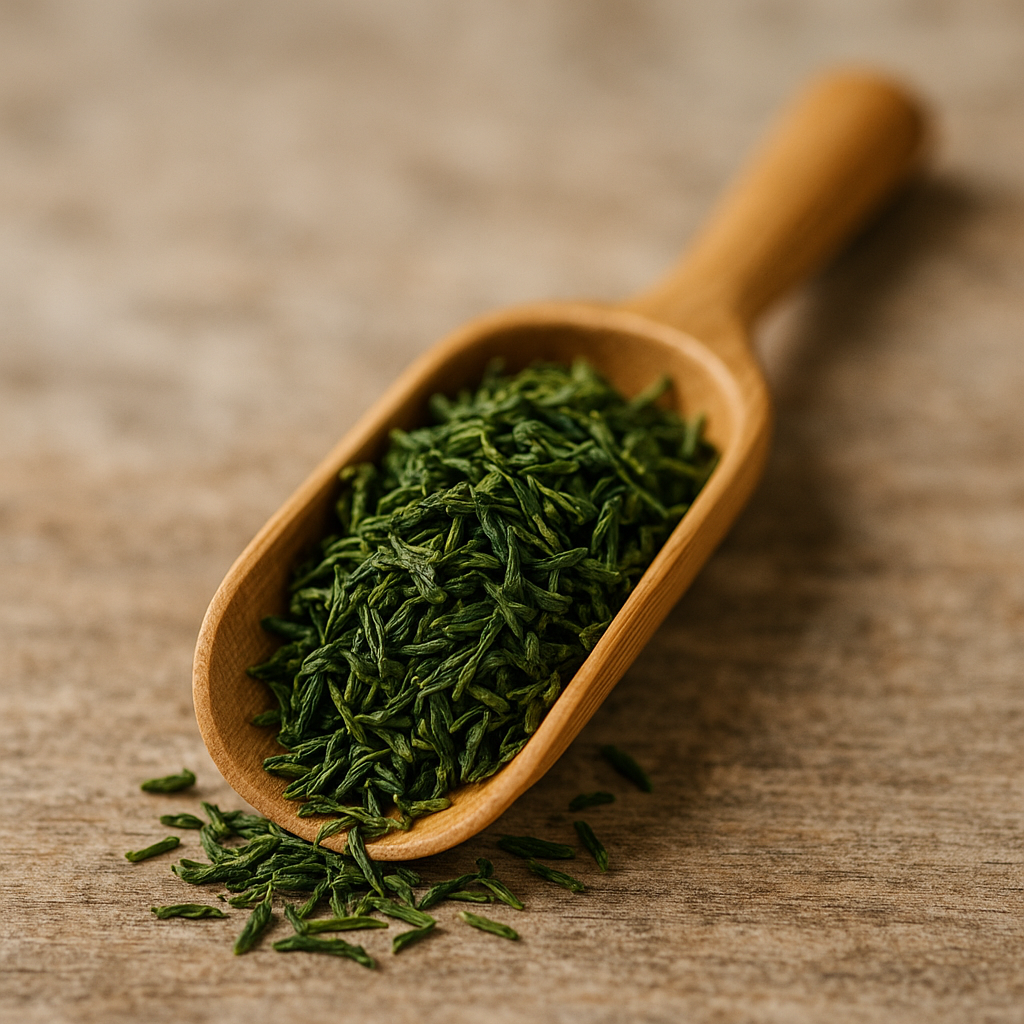
- Measure Your Leaves: Place about 1.5 teaspoons of your chosen loose green tea into the infuser basket.
- Heat Your Water: Heat your water to the target temperature of 80°C (176°F).
- The Awakening Rinse (Optional but Recommended): Place the infuser basket in your mug. Pour just enough of the hot water over the leaves to wet them, and then immediately discard this water. This is not the first steep. This quick rinse serves two purposes: it “wakes up” the compressed leaves, helping them to unfurl, and it washes away any potential dust from processing.
- The First Infusion: Now, pour the hot water over the leaves in the basket, filling the mug. Start a timer. For most green teas, a first infusion of 1 to 2 minutes is a great starting point. Delicate, first-flush teas may need even less time, while robustly rolled teas like Gunpowder may need a bit more.
- Separate and Savor: As soon as your timer goes off, lift the infuser basket completely out of the mug and set it aside on a small dish. This is the most important action for preventing bitterness. Your tea is now ready to drink. Notice the aroma rising from the cup. Take a small sip and let it coat your tongue. What flavors do you perceive?
- The Subsequent Infusions: High-quality loose green tea is not a one-time use product. The leaves in your basket are ready for another round. For the second infusion, you can often use the same water temperature but increase the steeping time slightly, perhaps to 2 or 2.5 minutes. For a third infusion, you might increase it to 3 or 4 minutes. Many green teas will yield at least three flavorful infusions. You will notice the flavor profile changing with each steep; sometimes the second infusion is even more balanced and flavorful than the first.
The Gong Fu Style: A Deeper Conversation
The Gong Fu method uses a higher ratio of leaf to water and very short steeping times to produce a series of small, concentrated infusions. This is less about making a beverage to quench thirst and more about a focused tasting experience. Let’s use a 120ml gaiwan as our example.
- Preheat Everything: Rinse your gaiwan, fairness pitcher (gongdaobei), and tasting cup with boiling water. This ensures that the vessels themselves do not sap heat from the brew. Discard this water.
- Add the Leaves: Fill the gaiwan approximately one-quarter to one-third full with your loose green tea. For a 120ml gaiwan, this will be around 5-7 grams of tea.
- The Awakening Rinse: Pour your 80°C water into the gaiwan, filling it. Immediately use the lid to strain the water off into the fairness pitcher, and then discard this rinse. The aroma that rises from the warmed, wet leaves will be intense and revealing.
- The First Infusion: Refill the gaiwan with hot water. Place the lid on top and wait for just 15 to 30 seconds.
- Decant and Serve: Using the lid to hold back the leaves, pour the entire contents of the gaiwan into your fairness pitcher. This pitcher’s role is to homogenize the brew (as the tea at the bottom of the gaiwan is stronger than the tea at the top) and to make pouring into the small tasting cup easier. From the pitcher, pour the tea into your tasting cup.
- Taste and Repeat: Savor this small, concentrated shot of tea. It will be potent and full-flavored. Now, repeat the process. For the second infusion, you might steep for 20-35 seconds. For the third, 30-45 seconds, and so on, gradually increasing the time with each round. A good quality green tea can yield 5, 6, or even more flavorful infusions in this style. You will be amazed at how the flavor profile shifts and evolves from one steeping to the next.
Adjusting for Bitterness: A Simple Diagnostic
What if, despite your best efforts, your tea is still bitter? Do not be discouraged. This is a learning process. Consider these two variables: temperature and time.
- Was the water too hot? This is the most likely cause. Try letting the water cool for another minute before you pour.
- Was the steep too long? This is the second most likely cause. Try reducing your steeping time by 30 seconds.
By systematically adjusting just one of these variables at a time, you can quickly dial in the perfect parameters for any given tea. The goal is to find the sweet spot where the tea’s flavor is full and present, but the bitterness is kept in the background as a structural element, not a dominant taste. This patient process of discovery is part of the pleasure of working with loose leaf tea. The practice itself becomes a form of mindfulness (Suh, 2021).
Frequently Asked Questions (FAQ)
Why does my loose green tea taste bitter or astringent?
The most common reason for bitterness is using water that is too hot. Boiling water (100°C / 212°F) extracts bitter-tasting compounds called catechins and tannins too aggressively. Try using cooler water, around 80°C (176°F). The second most common reason is steeping the tea for too long. For a first infusion, 1-2 minutes is often plenty. Be sure to remove the leaves from the water completely to stop the brewing process.
How many times can I steep the same loose green tea leaves?
High-quality loose green tea can, and should, be steeped multiple times. Most will yield at least 2-3 flavorful infusions in a Western-style brew, and 5-7 (or even more) short infusions in a Gong Fu style brew. You will notice the flavor evolve with each steeping. Simply increase the steeping time slightly for each subsequent infusion.
What is the main difference between Chinese and Japanese green tea?
The primary difference lies in the “kill-green” process used to halt oxidation. Chinese green teas are typically pan-fired, which gives them a toastier, nuttier, and smoother flavor profile. Japanese green teas are steamed, which results in a more vegetal, grassy, and sometimes savory or umami-rich flavor. This also gives Japanese teas a brighter, deeper green color.
How should I store my loose green tea to keep it fresh?
Oxygen, light, heat, and moisture are the enemies of fresh tea. Store your loose green tea in a completely airtight container that is opaque (not clear). A simple tea tin or a ceramic canister with a good seal is ideal. Keep it in a cool, dark, and dry place, like a kitchen cabinet, away from the stove and any strong-smelling spices. Do not store tea in the refrigerator or freezer, as this can introduce moisture and condensation.
Is loose green tea significantly healthier than tea in bags?
While both come from the same plant, loose leaf tea generally offers a superior experience and potentially greater benefits. The whole leaves of loose tea contain more complex aromatic oils and have not been chopped and exposed to as much air, which can degrade some beneficial compounds like antioxidants. Furthermore, some studies have raised concerns about microplastics being released from certain types of synthetic teabags (Hernandez et al., 2019). Choosing loose leaf tea ensures you are only brewing the leaf itself.
What is “umami” in green tea?
Umami is often described as the fifth basic taste, alongside sweet, sour, salty, and bitter. It is a savory, brothy, and satisfying flavor. In green tea, umami is primarily derived from the amino acid L-theanine. It is most prominent in high-quality, shade-grown Japanese green teas like Gyokuro, but can also be found in many spring-harvested Senchas and some Chinese green teas.
Do I need a special kettle to get the right water temperature?
No, a special kettle is not necessary. While a variable-temperature kettle is a convenient tool, you can easily achieve the ideal temperature range of 75-85°C (167-185°F) with a standard kettle. Simply bring the water to a boil, then let it sit for 2-3 minutes to cool down before pouring it over your leaves.
Conclusion
The journey into loose green tea is a rewarding endeavor that engages all the senses. It is an invitation to slow down, to pay attention, and to participate in a tradition that spans centuries and continents. We have seen that the perceived difficulties of brewing are often just myths. By focusing on a few core principles—selecting quality leaves, using cooler water, and controlling the steeping time—anyone can move beyond the limitations of the teabag and produce a consistently delicious and aromatic cup.
The transition is not merely about achieving a better taste; it is about cultivating a more profound relationship with what we consume. It is an appreciation for the agricultural craft that brings the leaf from a mountainside to our cup, a mindful practice that can serve as a moment of calm in a busy day, and a sensory exploration that continues to evolve with each new tea and every subsequent infusion. The path begins with a single cup, brewed with intention.
References
Hernandez, L. M., Xu, E. G., Larsson, H. C., Tahara, R., Maisuria, V. B., & Tufenkji, N. (2019). Plastic teabags release billions of microparticles and nanoparticles into tea. Environmental Science & Technology, 53(21), 12300–12310.
Kacmaz, M., & Kalkan, F. (2021). Optimization of brewing conditions for green tea using response surface methodology. Journal of the Turkish Chemical Society, Section A: Chemistry, 8(3), 819-828.
Suh, H. (2021). The mindful cup: The value of tea meditation in an anxious world. Journal of Humanistic Psychology, 61(4), 543-558.