
Blog
The Expert Guide to Cold Tea: 3 Proven Methods for the Perfect Brew in 2026

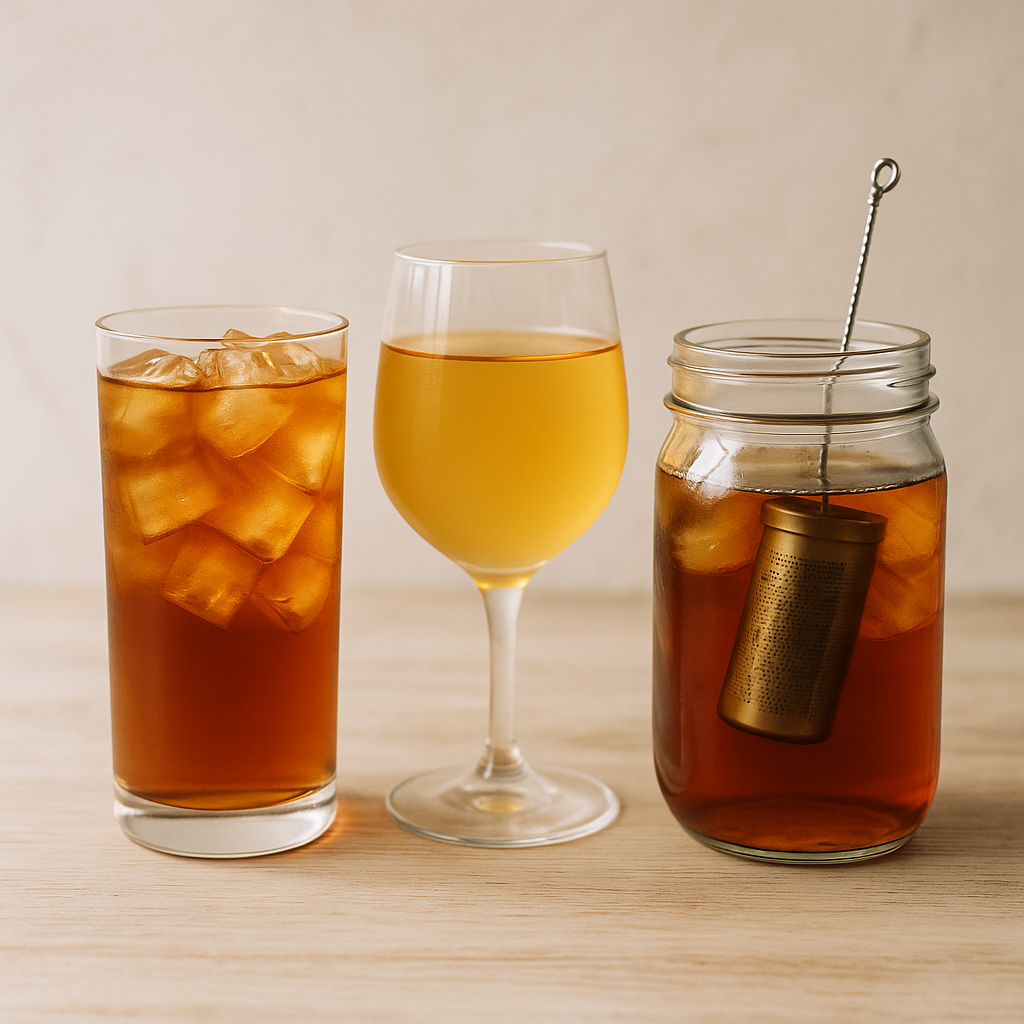
Abstract
This examination delineates three principal methodologies for the preparation of cold tea: cold water infusion, the classic hot-brew-to-chill technique, and solar infusion. It analyzes the distinct chemical kinetics governing each method, elucidating how temperature dictates the extraction of compounds such as polyphenols (tannins), caffeine, and amino acids from the leaves of Camellia sinensis. Cold brewing, a process of slow, ambient-temperature steeping, is shown to yield a beverage with lower astringency and bitterness due to the limited solubility of catechins and caffeine in cold water. Conversely, the traditional method of brewing hot tea and subsequently cooling it results in a more robust extraction, producing a bolder flavor profile but with a higher risk of cloudiness and astringency. Solar infusion is critically assessed for its potential microbiological risks, offering a scientific perspective on its safety and efficacy. The analysis provides a comprehensive framework for understanding how procedural choices fundamentally shape the sensory and chemical profile of the final cold tea beverage.
Key Takeaways
- For the smoothest flavor, use the cold brew method with filtered water.
- Prevent cloudy iced tea by letting hot-brewed concentrate cool before refrigerating.
- Choose robust black teas for the classic hot-brew-to-chill method.
- Mastering cold tea involves controlling temperature, time, and tea-to-water ratio.
- White teas and Japanese green teas are exceptionally suited for cold brewing.
- Always use sterilized glass containers when preparing any form of cold tea.
- Be aware of the food safety risks associated with traditional sun tea.
Table of Contents
- The Philosophy of the Chilled Cup
- A Comparative Look at Cold Tea Methods
- Practical Ratios for Your Cold Tea Journey
- Method 1: The Gentle Art of Cold Brewing
- Method 2: The Classic Iced Tea Approach
- Method 3: Harnessing the Sun with Caution
- Beyond the Brew: Elevating Your Cold Tea Experience
- Frequently Asked Questions (FAQ)
- A Final Thought on the Pursuit of Refreshment
- References
The Philosophy of the Chilled Cup
To consider the nature of cold tea is to engage in a dialogue about transformation. A hot cup of tea is an immediate and radiating presence; it speaks of warmth, comfort, and a certain inward-turning focus. Its steam carries aromas directly and urgently to the senses, demanding attention. A glass of cold tea, by contrast, represents a different state of being. It is a beverage of patience, of gradual change, and of an outward-turning refreshment meant to meet the heat of the day. It does not demand; it offers. The journey from a dried leaf to a glass of iced refreshment is not merely a change in temperature but a fundamental alteration of character, a process governed by the quiet, inexorable laws of chemistry and physics.
Understanding how to prepare a truly excellent glass of cold tea is an exercise in appreciating these transformations. It requires us to move beyond the simple instruction of “add water and wait” and to instead ask why we are doing what we are doing. Why does brewing with cold water produce a liquid so different from one brewed hot and then chilled? What is the nature of the cloudiness that can plague a hastily made pitcher of iced tea? What unseen forces are at work when a jar of tea is left to sit in the sun? To explore these questions is to become not just a maker of tea but a student of its essence.
In this guide, we will undertake a deep and considered exploration of three distinct paths to the perfect glass of cold tea. Each method—the patient cold brew, the classic hot-to-cold technique, and the nostalgic sun tea—is a world unto itself, with its own scientific principles, its own aesthetic character, and its own set of virtues and vices. We will approach these methods not as a simple list of recipes but as interconnected systems of cause and effect. By grasping the underlying science of extraction, we empower ourselves to move beyond rote instruction and into the realm of thoughtful craft. You will learn not only what to do but also how to think about what you are doing, enabling you to adapt, experiment, and ultimately create a beverage that is perfectly attuned to your own palate and principles.
A Comparative Look at Cold Tea Methods
Before we delve into the intricacies of each technique, it is useful to have a comparative overview. Think of this table as a map of the territory we are about to explore. It provides a high-level summary of the time commitment, flavor outcomes, and ideal applications for each of the three primary methods of preparing cold tea. This will help you orient yourself and choose a starting point that best suits your immediate needs, whether you are seeking immediate refreshment or a patient alchemical process.
| Feature | Method 1: Cold Brew | Method 2: Classic Iced Tea | Method 3: Sun Tea (with caution) |
|---|---|---|---|
| Temperature | Cold/Room Temperature (4-20°C / 40-68°F) | Boiling (100°C / 212°F), then chilled | Lukewarm/Warm (30-55°C / 86-131°F) |
| Time | Long (8-12 hours) | Short (Brew: 5-10 min; Chill: 1-2 hours) | Medium (3-5 hours) |
| Flavor Profile | Smooth, sweet, low astringency, nuanced | Bold, robust, strong, potentially astringent | Mellow, often flat, can be “cooked” |
| Caffeine Level | Lower | Higher | Variable, generally lower than hot brew |
| Pros | Very forgiving, produces smooth flavor, highlights delicate notes, low bitterness. | Fast to brew, extracts a strong flavor, good for robust teas and milk tea bases. | Nostalgic, uses no electricity for brewing, hands-off process. |
| Cons | Requires advance planning, less effective for some robust black teas. | Can become bitter or cloudy if not done correctly, higher astringency. | Significant food safety risk (bacterial growth), inconsistent results. |
Practical Ratios for Your Cold Tea Journey
The ratio of tea to water is one of the most critical variables in your control. While personal preference is the ultimate arbiter, having a solid starting point is invaluable. The following table provides recommended ratios for brewing different types of loose-leaf tea. Consider these as well-tested foundations from which your own experimentation can begin. Notice how denser, more tightly rolled teas may require slightly less volume than light, fluffy teas like white peony.
| Tea Type | Grams of Loose Leaf per Liter of Water | Recommended Cold Brew Time |
|---|---|---|
| Green Tea (e.g., Sencha) | 10-12 grams | 6-8 hours |
| White Tea (e.g., Silver Needle) | 8-10 grams | 8-10 hours |
| Oolong Tea (Lightly Oxidized) | 12-15 grams | 8-10 hours |
| Oolong Tea (Heavily Oxidized) | 10-12 grams | 10-12 hours |
| Black Tea (e.g., Keemun, Darjeeling) | 8-10 grams | 10-12 hours |
| Herbal Tisanes (e.g., Mint, Chamomile) | 15-20 grams | 8-12 hours |
Method 1: The Gentle Art of Cold Brewing
Of all the paths to a sublime glass of cold tea, the cold brew method is perhaps the most emblematic of patience yielding reward. It is a technique of quiet persuasion rather than forceful extraction. If hot brewing is a passionate, fiery debate, cold brewing is a long, thoughtful conversation where subtleties are allowed to emerge over time. The result is a beverage of unparalleled smoothness and sweetness, a pure expression of the tea leaf’s soul, stripped of its harsher defenses.
The Science of Patience: Extraction Without Heat
To appreciate the magic of cold brewing, one must first understand what happens when a tea leaf meets water. The leaf contains a vast array of chemical compounds, each contributing to the final taste and aroma. The most significant among these are polyphenols (including tannins and catechins, which cause bitterness and astringency), L-theanine (an amino acid responsible for umami and a sense of calm focus), and caffeine.
Heat acts as an aggressive solvent. When you pour boiling water over tea leaves, you initiate a rapid and somewhat indiscriminate extraction. The heat and energy violently agitate the water molecules, causing them to pull out all sorts of compounds from the leaf structure very quickly. This includes the desirable aromatic oils and the L-theanine, but it also includes a high concentration of the bitter-tasting catechins and astringent tannins. This is why a hot-brewed tea, if left to steep for too long, can become unpleasantly bitter.
Cold water operates on an entirely different principle. It is a gentle, patient solvent. The key lies in the differential solubility of the tea’s components. Aromatic compounds and the amino acid L-theanine are readily soluble even in cold water. In contrast, the larger polyphenol molecules (tannins and catechins) and caffeine are significantly less soluble at lower temperatures (Lin et al., 2008).
Imagine the tea leaf as a library. Hot water rushes in, grabs every book it can off the shelves, and throws them into a pile. You get a lot of information very quickly, but it’s jumbled and some of the books are dense, difficult texts (the tannins). Cold water, on the other hand, enters the library and spends hours carefully selecting the most lyrical poetry and engaging stories (the aromatics and L-theanine), leaving most of the dense, difficult texts behind on the shelves.
The result of this selective, slow extraction is a cold tea with a dramatically different chemical and sensory profile. It is naturally sweet, as the bitterness that would normally mask the leaf’s inherent sugars is largely absent. It is exceptionally smooth and light on the palate, lacking the astringent “pucker” that can come from a high concentration of tannins. It also contains less caffeine, making it a wonderful option for all-day sipping without the jitters.
A Step-by-Step Guide to Perfect Cold Brew
The beauty of the cold brew method is its profound simplicity and forgiving nature. It is difficult to “over-steep” a cold brew; the process is so gentle that an extra hour or two rarely results in a ruined batch.
- Select Your Vessel: A clean glass pitcher or a large Mason jar is ideal. Ensure it has a well-fitting lid to prevent the tea from absorbing any stray odors from your refrigerator. There are also specialized cold brew pitchers with built-in infusers, which can be quite convenient.
- Measure Your Tea: Refer to the ratio table above as your starting point. A good general rule is approximately 10 grams of loose-leaf tea per liter of water (or about 2 teaspoons per cup). Do not feel the need to be overly precise at first. You will adjust this to your taste over time.
- Combine Tea and Water: Place your loose-leaf tea directly into the pitcher. If you prefer not to have to strain the tea later, you can use a large, disposable tea filter or a reusable cloth bag. Pour cold, filtered water over the leaves. The quality of your water matters immensely; if your tap water has a strong taste, it will manifest in your final brew. Filtered water provides a clean canvas for the tea’s flavor.
- Steep with Patience: Cover the vessel and place it in the refrigerator. Now, you simply wait. The steeping time can range from 8 to 12 hours, depending on the tea and your desired strength. Lighter teas like white and green teas may be ready in as little as 6-8 hours, while darker oolongs and black teas can benefit from a full 12 hours.
- Strain and Serve: Once the steeping time is complete, it is time to separate the leaves from the liquid. If you used an infuser or filter bag, simply remove it. If the leaves are loose in the pitcher, pour the tea through a fine-mesh sieve into a serving pitcher or directly into glasses.
Your cold brew tea is now ready. Serve it over ice, or simply enjoy it chilled as is. You will likely find it needs no sweetener, as the natural sweetness of the tea is so prominent. Store any remaining tea in a sealed container in the refrigerator for up to 3-4 days.
Selecting the Ideal Teas for Cold Brewing
While any tea can be cold-brewed, certain types are particularly well-suited to this gentle method, their delicate nuances highlighted in a way that hot brewing might obscure.
- White Teas: This is where the cold brew method truly sings. The delicate, honey-like sweetness and subtle melon notes of a Silver Needle or White Peony are preserved and amplified. The absence of bitterness allows their ethereal quality to shine.
- Japanese Green Teas: Teas like Sencha and Gyokuro, which can be notoriously tricky to hot-brew without introducing bitterness, are transformed by cold brewing. The method preferentially extracts their high L-theanine content, resulting in a brew that is incredibly savory (umami), sweet, and refreshing, with almost no astringency.
- Lightly Oxidized Oolongs: High-mountain Taiwanese oolongs, with their bright, floral, and creamy profiles, are stunning when cold-brewed. The process captures their orchid-like fragrance and buttery texture perfectly.
- Aromatic Herbal Tisanes: Botanicals like mint, chamomile, and hibiscus also work beautifully. Cold-brewed mint tea is exceptionally smooth and refreshing, lacking the slight harshness that can sometimes come from a hot infusion.
You can certainly experiment with more robust black teas. While you may not get the same malty punch as a hot brew, you will discover a different side to their personality—often revealing underlying notes of fruit or cocoa that are usually masked by tannins. The journey of discovery is part of the joy.
Method 2: The Classic Iced Tea Approach
This is the method most of us grew up with, the one that conjures images of large pitchers of amber liquid sweating on a picnic table. The classic approach involves brewing a concentrated batch of hot tea and then diluting and chilling it. It is a method of speed and strength, capable of producing a bold, bracing beverage that can stand up to a generous amount of ice, a squeeze of lemon, and perhaps even a splash of milk. While it lacks the delicate subtlety of cold brew, it possesses a straightforward, robust charm. However, mastering it requires navigating a few scientific pitfalls to avoid the common scourges of bitterness and cloudiness.
Hot Brew, Rapid Chill: The Thermodynamics of Flavor
Unlike the slow persuasion of cold brewing, the classic method is a frontal assault. By using boiling or near-boiling water, you are maximizing the extraction of all compounds from the tea leaf. As discussed, this means you get a full-spectrum flavor profile, including a high concentration of polyphenols (tannins) and caffeine. This is what gives classic iced tea its characteristic “briskness” and deep color.
The primary challenge of this method arises during the cooling process. Tea is a colloid, a solution in which microscopic particles are suspended. In hot tea, the high temperature keeps all the extracted compounds, including the caffeine and polyphenols, dissolved and happily moving about. As the tea cools, these compounds have a tendency to bind together, forming larger particles. When these particles become large enough to scatter light, the tea appears cloudy or hazy. This phenomenon is often called “tea cream” (not because it contains dairy, but because of its appearance) (Mizuno et al., 2004).
The main culprits in this process are theaflavins (which give black tea its bright color and briskness) and caffeine. They form complexes that are less soluble at cooler temperatures. Chilling the tea too rapidly—for instance, by pouring hot tea directly over a full glass of ice or placing a hot pitcher directly into the refrigerator—exacerbates this issue, causing a “shock” that forces these compounds out of solution almost instantly, resulting in a muddy, cloudy appearance. While perfectly safe to drink, cloudy tea can be less visually appealing and may have a slightly duller, more astringent taste.
Bitterness is the other potential pitfall. Because you are extracting everything so forcefully with hot water, precise timing is paramount. Steeping the tea for even a minute too long can lead to an over-extraction of tannins, resulting in a brew that is harsh and astringent.
Mastering the Classic Brew: A Refined Technique
With an understanding of the underlying science, we can devise a technique that mitigates these issues and produces a clear, flavorful, and balanced iced tea every time. The key is to brew a concentrate and cool it intelligently.
- Brew a Concentrate: Instead of brewing a large pitcher at drinking strength, you will brew a smaller, more concentrated batch. Use double the amount of tea you would normally use for the same volume of hot tea. A good starting point is about 20 grams of loose-leaf tea (or 10-12 tea bags) for a 1-liter (4-cup) concentrate. Using a concentrate allows for better control and makes the cooling process more manageable.
- Mind the Time and Temperature: Bring your water to the appropriate temperature for the tea you are using (boiling for black tea, slightly cooler for green). Pour the water over the leaves and steep for a precise amount of time. For most black teas, 3-5 minutes is sufficient. For green teas, aim for 2-3 minutes. It is better to err on the side of a shorter steep time; you can always make it stronger next time, but you cannot remove bitterness once it’s there.
- Strain and Cool Gradually: Immediately strain the tea concentrate into a heat-proof pitcher, separating the liquid from the leaves to halt the brewing process. Now comes the most important step: do not put it in the refrigerator yet. Let the concentrate cool on the counter until it reaches room temperature. This gradual cooling process gives the polyphenols and caffeine less of a shock, significantly reducing the chances of cloudiness. Some professionals even suggest adding a small amount of lukewarm water to the concentrate right after brewing to begin the dilution and cooling process.
- Dilute and Chill: Once the concentrate is at room temperature, you can dilute it with an equal amount of cold, filtered water. Stir well. At this point, your tea is at a lower temperature and can be safely placed in the refrigerator to chill completely without becoming cloudy.
- Serve Correctly: Serve the chilled tea in tall glasses filled with ice. Because you have already diluted the tea to drinking strength, the melting ice will not make it overly weak. Garnish as desired with lemon, mint, or other flavorings.
An alternative “quick chill” method used by some restaurants involves pouring the hot, strained concentrate directly over a large volume of ice in a separate pitcher. The goal is to chill it almost instantly. This can work, but it requires getting the ratios of hot concentrate to ice exactly right to achieve the perfect dilution and temperature simultaneously. The gradual cooling method is more reliable for home use.
Teas That Stand Up to the Chill
The classic method favors teas with a strong backbone, teas that have enough character to not get lost in the bold extraction process or diluted by ice.
- Assam Black Tea: This Indian tea is the quintessential base for a robust iced tea. Its rich, malty, and full-bodied character is perfect for this method.
- Ceylon Black Tea: From Sri Lanka, Ceylon teas are known for their brisk, crisp, and slightly citrusy notes. They make an incredibly refreshing and bright iced tea.
- English or Irish Breakfast Blends: These blends, typically made from a combination of Assam, Ceylon, and Kenyan teas, are designed to be strong and robust. They are a natural choice for a classic iced tea. You can even find excellent options in convenient tea satchels for easy brewing and cleanup.
- Fruity Black Teas: Flavored black teas, such as those with notes of peach, raspberry, or passionfruit, also hold up well to this method, as their strong flavor base complements the added fruitiness.
While you can use green tea, its delicate nature can easily be overwhelmed by the hot brewing process, leading to bitterness. If you choose to use green tea for this method, be extra vigilant about using cooler water (around 80°C / 176°F) and a very short steeping time.
Method 3: Harnessing the Sun with Caution
Sun tea holds a powerful nostalgic appeal. It evokes a sense of rustic simplicity, of using the natural power of the sun to gently coax flavor from tea leaves. The image is idyllic: a large glass jar, filled with water and tea bags, sitting on a porch railing, slowly darkening in the afternoon light. It feels wholesome and effortless. However, from a food science perspective, this beloved tradition is fraught with potential risks that warrant serious consideration. As your guide, it is my responsibility to approach this topic with a blend of respect for tradition and a firm grounding in microbiological safety.
A Word of Caution: The Science of Sun Tea Safety
The fundamental problem with traditional sun tea lies in its temperature. A jar of water sitting in the sun on a warm day will typically reach a temperature between 30°C and 55°C (86°F to 131°F). This temperature range is often referred to by food safety experts as the “danger zone.” It is not hot enough to kill most bacteria, but it is the perfect warm, wet environment for them to multiply rapidly (Buck et al., 1979).
Tap water is not sterile, and tea leaves themselves are a raw agricultural product that can carry microorganisms from the soil and processing environment. When you combine these in a jar and place it in the sun, you are essentially creating a perfect incubator. The primary bacterium of concern is Alcaligenes viscolactis, a common organism found in soil and water that can cause stomach upset and other gastrointestinal issues. While the risk of serious illness is relatively low for healthy individuals, it is a risk nonetheless, particularly for children, the elderly, or those with compromised immune systems.
Think of it this way: to pasteurize a liquid and make it safe, you need to hold it at a high temperature for a specific duration (e.g., 63°C / 145°F for 30 minutes). Sun tea does the opposite; it holds the liquid at an ideal bacterial growth temperature for several hours. The slow, gentle warmth that seems so appealing is, from a microbe’s point of view, a luxury resort with a complimentary buffet.
A Safer Approach to Solar Infusion
Given these risks, I cannot in good conscience recommend the traditional method of making sun tea. However, the appeal of a hands-off, room-temperature infusion remains. A much safer alternative is to simply embrace the cold brew method. By placing your jar in the refrigerator instead of the sun, you keep the temperature below 4°C (40°F), which is too cold for most bacteria to multiply effectively. You will achieve a far superior, smoother, and, most importantly, safer beverage.
If the ritual of using ambient warmth is what you seek, consider a “counter-top tea.” You can leave your jar of tea and water on your kitchen counter at room temperature (around 20-22°C / 68-72°F) for a few hours. This is still a compromise, as it is warmer than a refrigerator, but it avoids the dangerously ideal incubation temperatures of direct sun. If you choose this method, it is vital to limit the brewing time to no more than 4 hours and to refrigerate it immediately afterward.
If You Must: Best Practices for Sun Tea
If nostalgia proves too powerful to resist and you decide to proceed with making sun tea, it is absolutely essential to follow harm-reduction practices to minimize the risks.
- Scrupulous Sanitation: This is non-negotiable. Your brewing jar and its lid must be scrupulously clean. The best practice is to sterilize them by washing them thoroughly with hot, soapy water and then rinsing them with a very weak bleach solution (1 teaspoon of bleach per gallon of water), followed by a final rinse with clean water.
- Use High-Quality Water: Start with filtered or distilled water rather than tap water to minimize the initial bacterial load.
- Keep it Short: Limit the brewing time in the sun to a maximum of 3 to 4 hours. This is less time than tradition often dictates, but it gives bacteria less time to multiply to dangerous levels.
- Refrigerate Immediately and Consume Quickly: As soon as the tea is brewed to your desired strength, strain it and place it immediately in the refrigerator. Do not let it sit out. Consume the sun tea within 24 hours.
- Consider the Source: Using high-quality loose-leaf tea or tea bags from a reputable supplier may offer a slightly lower risk profile than older, lower-quality teas that have been stored for long periods.
Ultimately, the flavor produced by sun tea is not unique. It is a mellow, warm-brewed tea that can be easily and more safely replicated by simply letting a pitcher of cold brew sit on your counter for a few hours. The cold brew method offers a more delicious, more consistent, and vastly safer result.
Beyond the Brew: Elevating Your Cold Tea Experience
Creating a perfect base brew is the foundation, but the artistry of cold tea extends far beyond that. Just as a chef considers every component of a dish, a true tea enthusiast can consider the elements that complement and elevate the final beverage. This is where you can move from craft to art, personalizing your creation to suit the moment, the meal, or the mood.
The Role of Water Quality
We have touched upon this, but its importance cannot be overstated. Water constitutes over 99% of your final beverage. Its chemical composition will have a profound effect on the taste of your tea. Tap water can contain chlorine, which imparts an unpleasant chemical taste, and varying levels of minerals (hardness). Very hard water, high in calcium and magnesium, can make tea taste flat and dull. Very soft water can lead to over-extraction and a thin taste. The ideal is a water that is clean, neutral, and has a balanced, relatively low level of total dissolved solids (TDS). Using a simple activated carbon filter pitcher can make a dramatic improvement by removing chlorine and other off-tastes, providing a clean slate for the tea’s true character to emerge.
Sweeteners, Garnishes, and Infusions
While a well-made cold brew often needs no adornment, adding sweeteners or other flavors can be a delightful variation.
- Sweeteners: Granulated sugar does not dissolve well in cold liquid. If you wish to sweeten your cold tea, it is best to make a simple syrup. Gently heat equal parts sugar and water in a saucepan until the sugar is fully dissolved, then let it cool. This syrup can be stirred easily into your chilled tea. You can also experiment with other sweeteners like honey, agave nectar, or maple syrup, each of which will add its own distinct flavor notes.
- Garnishes and Co-Infusions: Fresh ingredients can be added either during the brewing process or just before serving.
- Mint: A few sprigs of fresh mint added to a pitcher of cold brewing black or green tea adds a wonderful layer of cool, clean flavor.
- Citrus: Slices of lemon, lime, or orange can be added to the pitcher or used as a garnish. The acidity brightens the flavor of the tea, particularly robust black teas.
- Berries: A handful of fresh raspberries or sliced strawberries can be muddled at the bottom of a glass before the tea is poured over, or they can be added to the brewing pitcher for a subtle fruity infusion.
- Herbs and Spices: Consider more adventurous pairings. A sprig of basil with green tea, a slice of fresh ginger with oolong, or a cinnamon stick with black tea can create complex and memorable flavor combinations.
The Aesthetics of the Serve: Glassware and Ice
The final presentation is the culmination of your efforts. Serving your carefully crafted cold tea in a beautiful vessel enhances the entire experience. A tall, clear glass allows the color and clarity of the tea to be appreciated.
The type of ice you use also plays a role. Standard ice cubes from a freezer tray work perfectly well. However, for a more elegant presentation and slower dilution, consider using larger ice cubes made in a silicone mold. A single large cube or sphere melts much more slowly than several small cubes, chilling your drink without quickly watering it down. Crushed ice, on the other hand, provides rapid cooling and a satisfying texture, perfect for a mint-julep-style tea drink on a sweltering day. The choice of ice is not merely practical; it is an aesthetic and functional decision that completes the beverage.
Frequently Asked Questions (FAQ)
Why is my iced tea cloudy and how do I fix it?
Cloudiness in iced tea, often called “tea cream,” is caused by polyphenols (tannins) and caffeine binding together and precipitating out of the solution when the tea is chilled too quickly. This is most common with the classic hot-brew-to-chill method. To prevent it, let your hot tea concentrate cool to room temperature on the counter before placing it in the refrigerator. If your tea is already cloudy, adding a small amount of boiling water can sometimes help redissolve the particles and clear the liquid.
Can I cold brew any type of tea?
Yes, virtually any tea or herbal tisane can be cold-brewed. The method is incredibly versatile. However, it particularly excels with more delicate teas like white teas, Japanese greens, and light oolongs, as it highlights their nuances without introducing bitterness. When cold brewing robust black teas, you will get a much smoother, less astringent version of their typical flavor profile.
Does cold brew tea have less caffeine?
Yes, cold brew tea generally contains significantly less caffeine than its hot-brewed counterpart. Caffeine is much more soluble in hot water than in cold water. Studies have shown that a cold-brewed tea can have anywhere from one-half to two-thirds less caffeine than the same tea brewed hot for a standard duration. This makes it an excellent choice for those who are sensitive to caffeine or who wish to enjoy tea in the evening.
How long can I store cold tea in the refrigerator?
Properly stored in a sealed, clean container, cold-brewed or classic iced tea will typically last for 3 to 4 days in the refrigerator. Sun tea, due to the higher risk of bacterial contamination, should be consumed within 24 hours. After a few days, the tea’s flavor will begin to degrade, and it may start to taste stale, even if it is still safe to drink.
Is sun tea safe to drink?
Traditional sun tea carries a food safety risk. The lukewarm temperature it is brewed at (30-55°C or 86-131°F) is an ideal breeding ground for bacteria, including Alcaligenes viscolactis. While the risk of serious illness is low for healthy individuals, it is not zero. A much safer and more effective method is to make cold brew tea in your refrigerator, which keeps the liquid below the “danger zone” for bacterial growth.
A Final Thought on the Pursuit of Refreshment
We began this exploration by considering cold tea as a beverage of patience and transformation. Having journeyed through the science of extraction, the particulars of technique, and the art of elevation, we can now see the depth of that statement. To make a truly exceptional glass of cold tea is to engage in a partnership with nature, to understand the properties of a leaf and the power of water, and to guide them toward a desired outcome. Whether you choose the quiet, meditative path of the cold brew or the bold, direct approach of the classic method, you are participating in a tradition of refreshment that spans cultures and centuries. May your pitcher always be full, your glass always clear, and your spirit always refreshed.
References
Buck, G. W., & Pyle, B. H. (1979). The microbiology of sun-brewed tea. Journal of Food Protection, 42(4), 302-305.
Celestial Seasonings. (n.d.). Cold brew iced tea blends. Retrieved January 13, 2026, from
Greedy Girl Gourmet. (2024). Complete guide to types of Chinese teas. https://www.greedygirlgourmet.com/complete-guide-to-types-of-chinese-teas/
In Pursuit of Tea. (2021). The taste index: How to pick a tea based on the flavors you love. https://inpursuitoftea.com/blogs/the-ipot-journal/tea-flavor-guide
Lin, S. D., Liu, E. H., & Mau, J. L. (2008). Effect of tasting temperature on the sensory characteristics of oolong tea. Journal of Food Science, 73(6), S250-S254. https://doi.org/10.1111/j.1750-3841.2008.00832.x
Mizuno, S., Obata, H., & Kubota, K. (2004). Formation of the cream-like precipitate in a black tea infusion. Food Science and Technology Research, 10(1), 107-111.
Red Rock Tea House. (2025). Tea brewing 101: Mastering loose leaf tea preparation by type. https://www.redrockteahouse.com/blogs/grandmas-tea-tales/tea-brewing-101-mastering-loose-leaf-tea-preparation-by-type
Simply Recipes. (n.d.). For the best iced tea, don’t boil the water. Retrieved January 13, 2026, from https://www.simplyrecipes.com/cold-brew-iced-tea-tip-8649057
ZeniaTea. (2026). An expert’s guide to 7 good tea brands to discover in 2026. https://zeniatea.com/good-tea-brands-guide-2026/